


Many pilgrims arriving in Katra ask a very practical question: can the Vaishno Devi Yatra really be completed in one day? The question usually comes from limited leave, tight travel plans, or physical concerns about sustaining a long journey. The short answer is yes—it is possible. The longer, more important answer is that it depends on how you define “one day” and what you expect that day to feel like.
The Vaishno Devi Yatra is not only about walking distance. It includes registration checks, sustained uphill movement, waiting near the shrine, and a return journey that often feels harder than expected. For some pilgrims, compressing all of this into a single day works. For others, it becomes rushed and physically draining.
This article explains what a one-day yatra actually involves, who it realistically suits, where people misjudge time and energy, and when spreading the journey over more than one day leads to a better overall experience.
What “One Day” Really Means in the Context of the Yatra
When pilgrims talk about completing the yatra in one day, they usually mean starting from Katra, reaching the shrine, completing darshan, and returning to Katra within a single calendar day. This is different from a casual day walk—it often means being active for 16 to 20 hours, sometimes longer.
The route climbs steadily into the Trikuta Mountains, and movement is regulated by checkpoints and crowd management. Walking speed alone does not determine total time. Waiting at Banganga, Ardhkuwari, and near the shrine can add hours that are hard to predict.
A one-day yatra usually involves an early start—often before sunrise or late at night—and a late return. Rest is limited, and recovery is delayed until the journey is fully complete. Understanding this helps pilgrims decide whether “possible” also means “suitable” for them.
How Most Pilgrims Attempt a One-Day Yatra
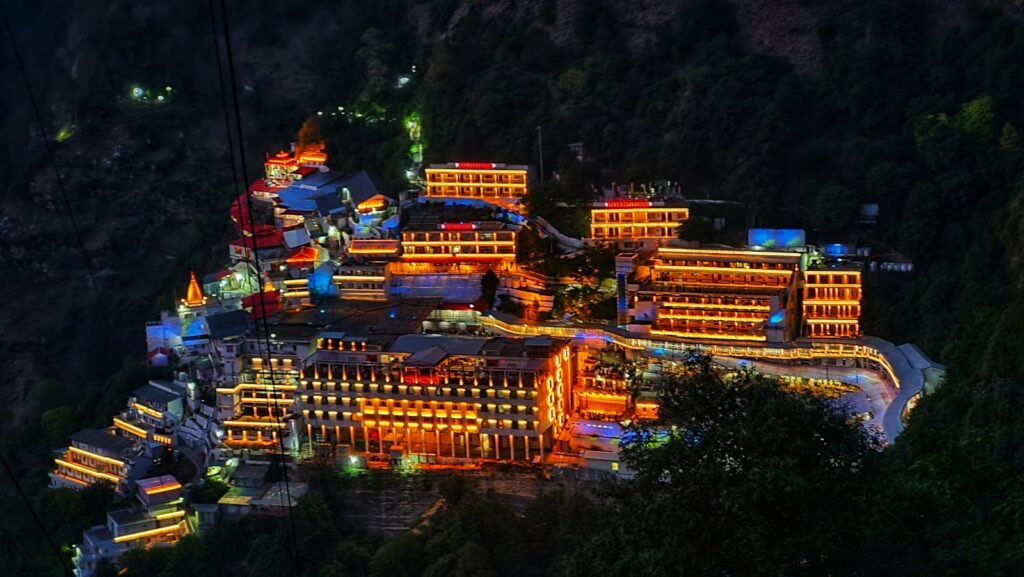
Pilgrims who successfully complete the yatra in one day usually follow a similar pattern. They rest in Katra, start very early (or late at night), walk steadily without long halts, complete darshan as soon as possible, and begin the return journey without extended rest.
This approach works best when crowds are moderate and weather conditions are stable. Even then, it requires sustained focus and energy management. Many first-time pilgrims underestimate how tiring the return walk can be after darshan, especially when muscles are already fatigued.
Some pilgrims attempt a one-day yatra impulsively, deciding on the spot after reaching Katra. These attempts often feel more stressful because they lack buffer time for delays or rest.
Those who approach a one-day plan calmly, with realistic expectations, tend to cope better—even if the day feels long.
Walking, Waiting, and Returning: Where the Time Actually Goes
A common mistake is assuming that walking is the main time component. In reality, waiting plays an equally important role.
| Yatra Phase | What Consumes Time |
|---|---|
| Start from Katra | Registration and verification |
| Uphill walk | Pace, rest, crowd density |
| Shrine area | Darshan queues |
| Return journey | Fatigue, joint strain |
Even fast walkers can lose hours near Vaishno Devi Bhawan during busy periods. On a one-day schedule, this waiting time compresses rest and increases fatigue later.
Planning a one-day yatra without accounting for waiting almost always leads to exhaustion.
Who a One-Day Yatra Usually Works For
| Traveler Type | One-Day Yatra Suitability | Why |
|---|---|---|
| Physically fit adults | Moderate to high | Better endurance |
| Experienced pilgrims | High | Familiarity with pace |
| First-time pilgrims | Low to moderate | Misjudged fatigue |
| Families | Low | Group coordination |
| Senior citizens | Low | Recovery needs |
Physically active pilgrims with prior experience are most comfortable attempting a one-day yatra. First-time visitors often find it doable but extremely tiring. Families and senior citizens usually report that the pace feels rushed and uncomfortable.
Suitability depends less on age alone and more on stamina, joint health, and comfort with long periods of activity.
How Season and Crowd Levels Affect a One-Day Plan
Season plays a major role in whether a one-day yatra feels manageable.
| Condition | Impact on One-Day Yatra |
|---|---|
| Summer heat | Increases fatigue |
| Monsoon rain | Slows walking |
| Winter cold | Stiffens joints |
| Peak season | Longer waiting times |
| Off-season | Smoother flow |
Crowd density often matters more than weather. During peak periods, even well-paced pilgrims struggle to keep a one-day schedule due to extended queues.
Choosing off-peak days or starting at unconventional hours improves the chances of success.
Common Assumptions That Make One-Day Yatras Harder
Many pilgrims assume that determination alone is enough. In reality, physical recovery matters as much as motivation. Others believe starting late saves energy, but late starts often collide with crowd peaks.
Another misconception is that reaching the shrine is the end of the effort. In a one-day yatra, the return journey is often the most challenging part due to accumulated fatigue.
Understanding these realities helps prevent disappointment and physical strain.
Practical Guidance for First-Time Pilgrims Considering One Day
If you are attempting the yatra in one day for the first time, plan conservatively. Rest properly before starting. Eat lightly. Hydrate consistently. Walk at a pace you can maintain for hours, not minutes.
Avoid rigid deadlines. Accept that delays may happen. If fatigue becomes overwhelming, stopping is safer than forcing completion within the day.
A one-day yatra should be a choice made for practical reasons, not a test of endurance.
One Day vs Two Days: How the Experience Differs
| Approach | How It Feels |
|---|---|
| One day | Long, demanding, compressed |
| Two days | Balanced, less rushed |
| Extended | Comfortable, flexible |
Many pilgrims who complete the yatra in one day later say they would choose two days if time allowed. The experience often feels calmer when effort and waiting are spread out.
Frequently Asked Questions
Is it possible to do Vaishno Devi Yatra in one day?
Yes, many pilgrims do, but it is physically demanding.
Is one day enough for first-time pilgrims?
It can be, but it often feels rushed and tiring.
Do senior citizens usually do it in one day?
Most prefer spreading the yatra over more days.
Does starting at night help?
Sometimes, but only if you are well rested.
What is the hardest part of a one-day yatra?
The return journey after darshan.
Is a two-day yatra better?
For most people, yes—it reduces stress and fatigue.
Closing Perspective
Completing the Vaishno Devi Yatra in one day is possible, but it is not the most comfortable or balanced option for everyone. It suits pilgrims who are physically prepared, mentally flexible, and comfortable with long hours of sustained activity. For many others, allowing more time leads to a calmer, safer, and more grounded experience. The yatra does not reward speed—it rewards steadiness. Choosing a timeline that respects your body often matters more than proving what you can fit into a single day.