

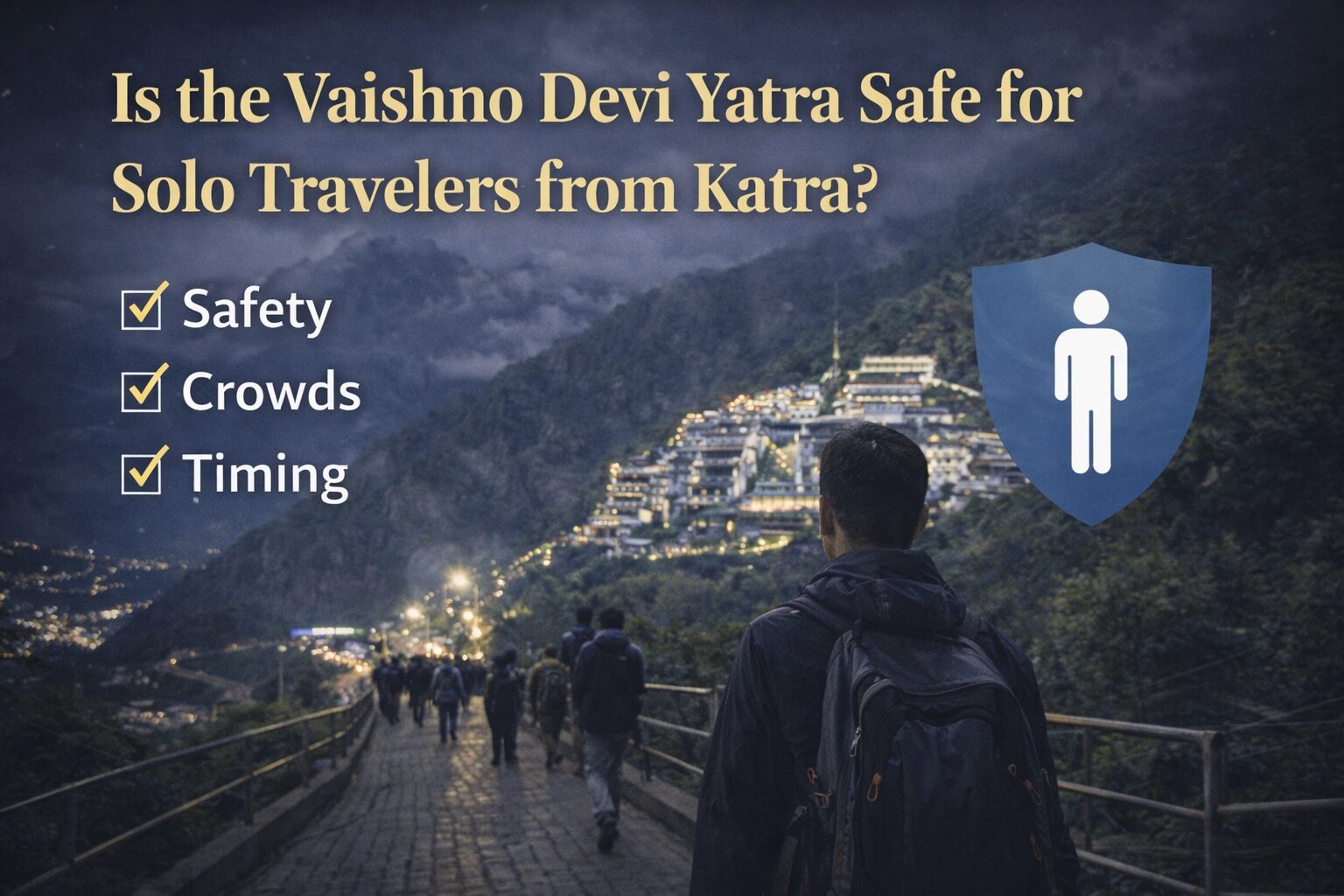

For many people planning a solo pilgrimage, safety is the first concern that shapes every other decision. When arriving in Katra alone, it is natural to wonder whether the Vaishno Devi Yatra is designed for individual travelers or mainly for families and groups. Stories online often swing between reassurance and alarm, leaving first-time solo pilgrims unsure what to believe.
The reality is more grounded. Vaishno Devi is one of the most regulated and continuously monitored pilgrimage routes in India. At the same time, it is a long, physically demanding journey through mountain terrain, where personal judgment and preparation still matter.
This article looks at solo travel on the Vaishno Devi Yatra in a calm, experience-aware way. It explains how safety works on the ground, what solo pilgrims typically experience, where caution is genuinely needed, and how traveling alone compares to moving in a group—without exaggeration or false reassurance.
Understanding Solo Travel Safety in the Context of the Yatra
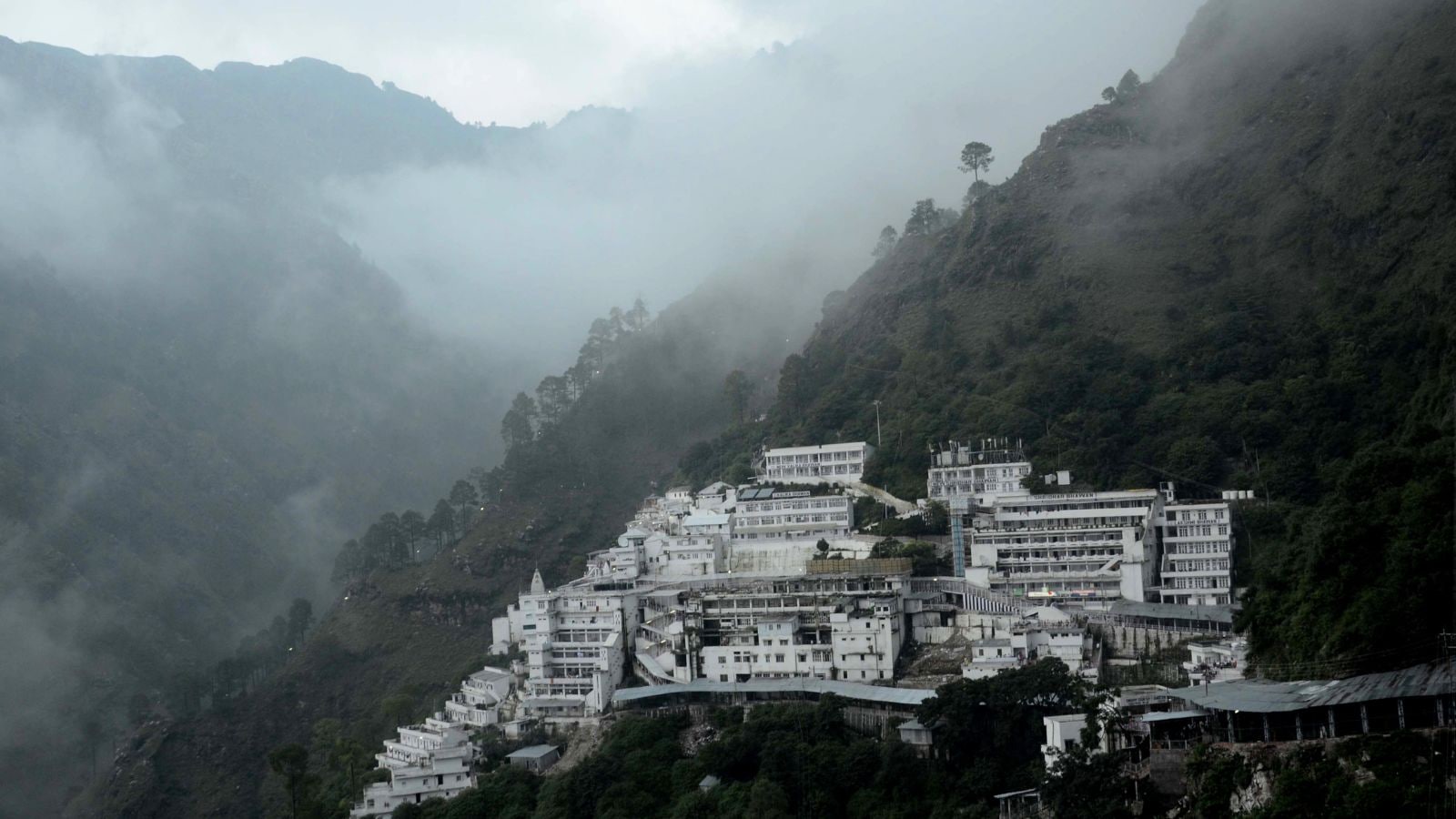
The Vaishno Devi Yatra is structured around controlled movement rather than individual navigation. From Banganga onward, the route toward the shrine in the Trikuta Mountains is clearly defined, continuously used, and actively managed.
This structure matters for solo travelers. You are not entering an isolated trail or unmarked mountain path. The route is shared by thousands of pilgrims daily, with security personnel, medical aid posts, lighting, and checkpoints operating around the clock. These systems exist precisely because people of all ages and travel styles—including solo pilgrims—use the route.
That said, safety here is not absolute or automatic. The yatra demands physical endurance, patience during waiting periods, and awareness of personal limits. Solo travelers do not have the immediate backup of companions, which makes pacing, hydration, and rest choices more important.
Understanding safety as a combination of infrastructure and personal decision-making helps solo pilgrims approach the journey realistically rather than fearfully.
How Most Solo Pilgrims Actually Experience the Yatra
Most solo pilgrims report that they do not feel “alone” on the route in a literal sense. The yatra path is almost always active, especially between Banganga, Ardhkuwari, and Bhawan. Even during night hours, clusters of pilgrims move together at similar speeds.
Solo travel often allows for better pace control. Without needing to match others’ energy levels, many solo pilgrims walk more steadily, take breaks when needed, and avoid the pressure that sometimes arises in groups.
However, solo pilgrims also notice fatigue more clearly. There is no shared distraction or conversation, which can make physical tiredness feel more pronounced. This is not unsafe, but it does require honest self-assessment.
Most solo travelers who struggle do so not because of security concerns, but because they underestimate the cumulative physical and mental effort of the yatra.
On-Ground Safety Measures That Support Solo Travelers
From Banganga to Vaishno Devi Bhawan, safety infrastructure is consistent and visible. The route is well lit, monitored, and staffed.
| Safety Element | What It Means for Solo Travelers |
|---|---|
| Security staff | Presence at regular intervals |
| Lighting | Clear visibility even at night |
| Medical aid | Help available along the route |
| Checkpoints | Regulated movement, not isolation |
| Crowd flow | Rarely completely alone |
These measures significantly reduce risks associated with traveling alone. Unlike remote treks, the Vaishno Devi Yatra does not rely on self-navigation or wilderness survival skills.
The main safety risks for solo travelers are internal rather than external: exhaustion, dehydration, poor pacing, or ignoring early signs of discomfort.
Solo vs Group Travel: A Practical Safety Comparison
| Aspect | Solo Travelers | Group Travelers |
|---|---|---|
| Pace control | High | Often uneven |
| Physical awareness | High | Sometimes ignored |
| Immediate support | Lower | Higher |
| Mental pressure | Lower | Can be higher |
| Flexibility | High | Limited |
Solo travel removes group pressure but also removes shared responsibility. For some, this leads to better judgment. For others, it requires more discipline.
Neither mode is inherently safer. Safety depends on how well the traveler understands their own limits and the structure of the yatra.
Timing and Seasonal Factors That Matter More When Traveling Alone
Season and time of day influence solo travel safety primarily through fatigue and comfort rather than security.
In summer, solo pilgrims often prefer early morning or night starts to avoid heat. In winter, cold temperatures can increase stiffness and slow reaction times, making steady pacing important. During monsoon months, wet surfaces require extra caution, especially when walking alone.
Night yatra is generally safe, but solo travelers must be more attentive to tiredness and alertness. Walking late at night after a long travel day is one of the most common mistakes.
Solo travel works best when timing aligns with natural energy levels rather than crowd avoidance alone.
Common Fears Solo Travelers Have—and What Actually Happens
Many solo pilgrims worry about getting lost. This is highly unlikely. The route is linear, well marked, and continuously populated.
Another concern is personal security. Incidents are rare, and the presence of other pilgrims and security staff acts as a strong deterrent.
Some worry about medical emergencies when alone. Medical aid posts exist throughout the route, and pilgrims nearby usually assist when someone appears unwell.
The most realistic challenge solo travelers face is mental fatigue—feeling overwhelmed by distance or tiredness without someone to share the experience. This is manageable with pacing and rest.
Practical Guidance for Solo Pilgrims on the Yatra
If you are traveling alone, preparation matters more than companionship. Rest before starting the yatra. Eat lightly, hydrate regularly, and avoid rushing.
Walk at a pace you can maintain for hours. Take short breaks before fatigue builds. Keep identification and RFID accessible, and remain aware of how your body feels.
Avoid starting late at night after a full day of travel. If you feel disoriented or overly tired, pause—facilities remain open, and resting is always safer than pushing forward.
Solo travel rewards attentiveness more than speed.
How Solo Travel Compares for Different Types of Individuals
| Solo Traveler Type | Safety Experience |
|---|---|
| First-time pilgrims | Safe with pacing and rest |
| Experienced walkers | Comfortable and controlled |
| Senior solo travelers | Cautious, slower pace needed |
| Spiritual solo travelers | Mentally focused, steady |
Senior citizens traveling alone can complete the yatra safely, but usually benefit from conservative pacing and additional rest. First-time solo pilgrims often do well if they resist the urge to rush.
Frequently Asked Questions
Is the Vaishno Devi Yatra safe for solo travelers?
Yes, the route is well monitored and widely used, making it generally safe for solo pilgrims.
Will I be alone on the route?
Rarely. Most sections have continuous pilgrim movement.
Is night yatra safe for solo travelers?
Yes, but it requires alertness and adequate rest beforehand.
Are women safe traveling solo?
Many women travel solo without issues, especially during active hours.
What is the biggest risk for solo pilgrims?
Overexertion and fatigue, rather than security concerns.
Should first-time pilgrims avoid solo travel?
Not necessarily, but they should plan conservatively.
Closing Perspective
The Vaishno Devi Yatra is one of the few mountain pilgrimages where solo travel is not only common, but structurally supported. Safety here comes from a combination of robust infrastructure and personal awareness. Traveling alone does not mean traveling unprotected—but it does mean listening carefully to your body and respecting the pace the journey demands. When approached with realistic expectations and calm planning, solo travel on the Vaishno Devi Yatra can feel steady, secure, and deeply personal, without needing to rely on constant companionship.