

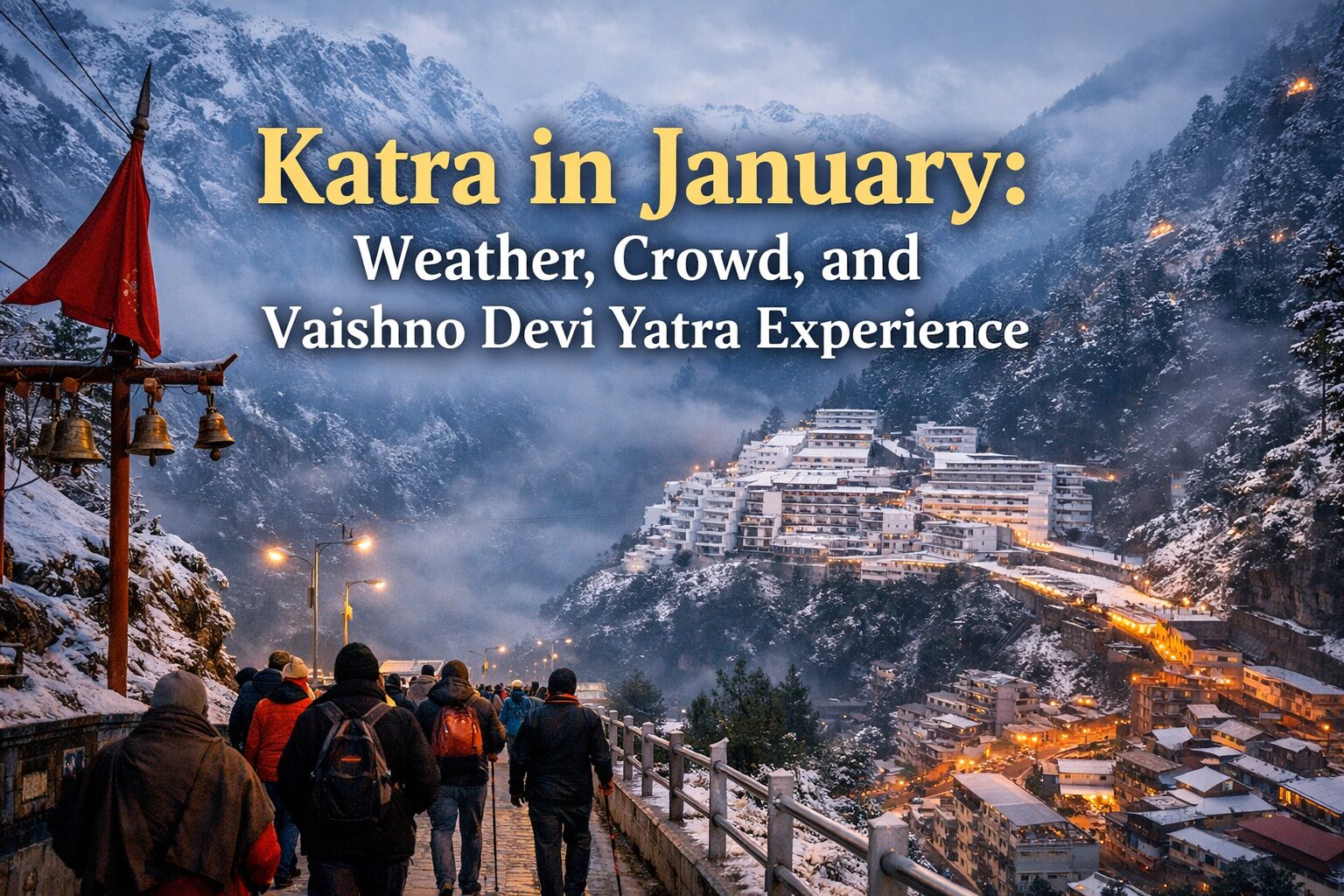

Katra in January: Weather, Crowd & Vaishno Devi Yatra Experience
Planning your Vaishno Devi trip in the heart of winter? January in Katra is cold, quieter, and deeply spiritual. This guide walks you through exactly what to expect – from weather and crowd levels to the actual yatra experience – so you can decide if January is the right month for you.
What to Expect in Katra in January
January is mid-winter in Katra and across the Vaishno Devi region. The town is functional and welcoming, but conditions are quite different from the busy, milder months of October or March–April.
- Weather: Cold to very cold, especially at night and at Bhawan.
- Crowd levels: Noticeably thinner than peak season, except on specific festival or weekend days.
- Yatra experience: Slower, more peaceful, but physically more demanding due to low temperatures.
- Accessibility: Yatra generally remains open; occasional disruptions may occur higher up due to fog or rare snowfall.
January Weather in Katra & on the Vaishno Devi Yatra Route
Understanding the weather difference between Katra town and the higher altitudes (Bhawan, Bhairon Temple) is crucial. You will start your yatra at Katra but finish it in much colder conditions at the top.
Temperature Overview
| Location | Day (Approx.) | Night (Approx.) | Feel |
|---|---|---|---|
| Katra town (base) | 10–15°C | 4–8°C | Cool to cold, especially early morning & late night |
| Ardhkuwari (mid-point) | 6–10°C | 2–6°C | Cold, wind-chill can make it feel colder |
| Bhawan (Vaishno Devi temple) | 2–6°C | 0–4°C or lower | Very cold; icy wind, chances of frost |
Note: These are typical ranges; actual conditions can be a few degrees higher or lower depending on specific weather systems.
Snowfall & Rain
- Katra town: It is uncommon to see snowfall at the base. Light winter showers or dense fog are more likely than snow.
- Higher stretches: Areas near Bhawan and Bhairon Temple can see snowfall or sleet in peak winter spells, especially late January.
- Impact on yatra: Pathways may become wet, slippery, and colder; authorities sometimes issue advisories or temporary restrictions on certain stretches for safety.
Daylight & Visibility
January days are short, with early sunsets. Fog or low clouds can reduce visibility at both Katra and along portions of the track, particularly:
- Late night and early morning hours
- On sections exposed to open valleys or strong winds
This makes good lighting, reflective clothing, and cautious walking especially important if you plan night trekking.
Crowd Levels in January: How Busy Is Katra?
One of the biggest reasons many devotees choose January is the reduced crowd compared with festival seasons and school holidays.
General Crowd Pattern
- Early to mid-January: After New Year, the rush typically drops. Weekdays are often calm, with more manageable queues at registration and darshan.
- Weekends: Saturdays and Sundays are still busier than weekdays, but usually more relaxed than peak-season weekends.
- Festival days: If Makar Sankranti or other significant dates fall in January, expect a noticeable jump in pilgrim numbers around those days.
- Republic Day weekend (26 January): Can see moderate to high footfall due to public holidays.
Practical Impact of Lower Crowds
- Registration counters: Shorter lines for yatra slips and enquiries.
- On the track: More walking space and less jostling, especially on steeper or narrower portions.
- Darshan time: Depending on the exact day and time, darshan can feel more relaxed compared with the compressed, hurried experience of peak months.
- Accommodation: Better chances of getting decent rooms and sometimes more flexible check-in options.
Overall, if you are comfortable with cold weather, January often offers a quieter, more introspective yatra compared with the crowded festive season.
How the Yatra Experience Feels in January
The spiritual essence of the Vaishno Devi yatra remains the same year-round. What changes in January is the physical and sensory experience: the feel of the cold air, the pace of walking, and the rhythm of the day.
Walking Conditions
- Track surface: Generally well-maintained, but can be damp, occasionally slippery in places due to dew, fog, or rare snowfall higher up.
- Steep sections: You will feel the cold more sharply on resting; warm layers are important even if you heat up while climbing.
- Rest stops: Tea stalls and refreshment points operate, though opening hours may be slightly shorter than in peak months.
Darshan & Waiting Time
- Queues: Typically more manageable. On non-peak days, movement can be steady rather than stop-and-go.
- Waiting areas: Enclosures and waiting halls can feel very cold if you stay still for long; carry extra layers or a shawl specifically for waiting before darshan.
- Early morning darshan: Spiritually intense, but the cold is at its harshest. Proper head and ear covering is highly recommended.
Services & Facilities in Winter
Core services for pilgrims normally function in January, including:
- Accommodation run by the shrine board and private hotels
- Cloak rooms and blanket facilities near Bhawan
- Food stalls offering tea, coffee, basic meals, and snacks
- Pony, palki (palanquin), and battery car services (subject to conditions and route rules)
However, some smaller shops or seasonal vendors might operate shorter hours due to the cold and reduced footfall. It is wise to carry essential medicines and winter gear from Katra itself rather than relying on purchases mid-yatra.
What to Pack for Katra in January
Packing correctly can make the difference between a memorable winter pilgrimage and a highly uncomfortable one. The key is layering so you can adapt to changing temperatures as you climb.
Clothing Essentials
- Base layer: Thermal innerwear (top and bottom) for both men and women.
- Mid layer: Warm sweaters or fleece jackets; 1–2 pieces depending on your tolerance to cold.
- Outer layer: Windproof jacket; if possible, water-resistant to handle drizzle or wet conditions.
- Leg wear: Thick track pants or warm leggings; consider thermal tights underneath if you feel cold easily.
- Head & ears: Woollen cap or beanie that covers the ears; ear muffs or a scarf for extra protection.
- Hands & feet: Woollen gloves and thick socks (carry an extra pair in case one gets damp).
Footwear
- Closed shoes with good grip: Sports shoes or trekking shoes with anti-slip soles are ideal.
- Avoid: Open slippers, heels, or worn-out soles; they increase the risk of slipping on damp patches.
Practical Add-ons
- Small backpack: To carry water, snacks, documents, and extra layers.
- Rain/wind protection: Lightweight poncho or windcheater, especially if forecasts indicate rain.
- Personal medicines: For cold, cough, acidity, pain relief, and any regular prescriptions.
- Torch or headlamp: Very useful for night trekking or power fluctuations.
- Reusable water bottle: To stay hydrated without relying only on bottled water stops.
Remember, while blankets may be available near Bhawan, these are typically for use within designated areas. For the trek itself, you should be self-sufficient in warmth.
Travel to Katra in January: Getting There Safely
Katra is well connected by rail, road, and air (via Jammu). January travel is generally smooth, with some considerations around fog and winter conditions.
By Train
- Nearest station: Shri Mata Vaishno Devi Katra (SVDK), directly connected to many major cities.
- Winter concerns: Dense fog in North India can cause delays, particularly in the first few weeks of January.
- Planning tip: Keep some buffer time in your itinerary for possible late arrivals or rescheduled trains.
By Air
- Nearest airport: Jammu (IXJ), about 45–60 minutes from Katra by road under normal conditions.
- Weather impact: Occasional fog or low visibility can delay or cancel flights, more likely in early mornings and late evenings.
- Transfer: Taxis and shared cabs are usually available outside the airport for Katra.
By Road
- From Jammu: Well-paved highway; state transport buses, private buses, and cabs all operate.
- Driving yourself: Road conditions are usually fine, but night driving in fog is not advisable.
- Hills & bends: The approach to Katra includes hilly stretches with curves; drive cautiously and avoid speeding.
It is wise to keep electronic tickets and identity proofs easily accessible for hotel check-ins and yatra registration.
Accommodation in Katra in January
Katra offers a wide range of accommodation options, from basic lodges to mid-range hotels and a few higher-end stays. In January, availability is generally better than during major festive peaks.
Types of Stays
- Shrine Board accommodation: Clean, reasonably priced guest houses and dormitories; closer to yatra facilities, but can fill up during special dates.
- Budget hotels & lodges: Abundant near the bus stand and market; facilities vary, so check reviews where possible.
- Mid-range hotels: Offer better heating, hot water reliability, and in-house dining, which can be very comforting in winter.
Winter-Specific Considerations
- Room heating: Confirm availability and type of heating (blowers, heaters, central heating where applicable).
- Hot water: Check timing restrictions; some budget properties provide hot water only during certain morning hours.
- Blankets & bedding: Ensure sufficient warm blankets or ask for extra covers on arrival.
Pricing is approximate and may vary, but January often sees moderate tariffs compared to top peak periods, especially on weekdays.
Health, Safety & Comfort Tips for a January Yatra
Cold weather, altitude changes, and the physical effort of the yatra can stress the body. A few practical precautions go a long way.
Who Should Take Extra Care
- Elderly pilgrims or those with joint, back, or respiratory issues.
- People with heart conditions, asthma, or chronic illnesses — always consult your doctor before planning.
- Young children who may struggle with the cold and long walk.
On the Trek
- Walk at a steady, comfortable pace; cold can mask early fatigue, but overexertion can catch up quickly.
- Take short breaks to sip water or warm beverages to stay hydrated and maintain body temperature.
- Avoid sitting on very cold or damp surfaces; use a shawl or spare layer as a barrier if you need to sit.
- Do not ignore symptoms like chest pain, extreme breathlessness, or dizziness; seek medical help at available posts.
Using Ponies, Palkis & Battery Cars
For those unable to walk the entire route, services like ponies, palkis, and battery cars (on specific routes) are available, subject to official guidelines and weather conditions.
- Book or confirm early on busy dates (festivals, long weekends).
- Wear warm, secure clothing; loose shawls can flap and be uncomfortable on ponies.
- Follow instructions from authorized handlers or staff strictly for safety.
Food & Hydration
- Opt for light, warm meals — khichdi, soups, simple curries, or parathas.
- Avoid heavy, oily food right before intense walking.
- Even if you do not feel thirsty in the cold, drink water regularly to avoid dehydration.
Who Is January Best For?
January is not the easiest month weather-wise, but it offers a deeply serene yatra for those prepared for the cold.
January Is Ideal If You:
- Prefer less crowded temples and quieter paths.
- Are comfortable walking in cold conditions with proper winter clothing.
- Value a more introspective and unhurried spiritual experience.
- Can be flexible about travel delays due to winter fog or low visibility.
Consider Another Month If You:
- Absolutely cannot tolerate cold or have medical issues aggravated by low temperatures.
- Are travelling with very young children or fragile elderly family members without adequate support.
- Need completely predictable transport schedules with minimal risk of delays.
Common Mistakes to Avoid in January
- Underestimating the cold at Bhawan: Many dress for Katra’s milder chill and are unprepared for much lower temperatures at the top.
- Starting too late in the day: This can force you to trek through the coldest late-night hours and increase fatigue.
- Ignoring weather forecasts: Not checking for predicted heavy fog or snow spells before travel.
- Wearing the wrong footwear: Slippery or thin-soled shoes significantly raise the risk of falls on damp stretches.
- Skipping essentials to keep the bag light: Leaving behind gloves, caps, or thermals often leads to discomfort and unnecessary purchases on the way.
Sample January Yatra Plan (1.5–2 Days)
This is a simple, practical outline you can adapt to your own pace and preferences.
Day 1: Arrival & Preparation
- Arrive in Katra by train, road, or flight via Jammu.
- Check into your hotel; rest for a few hours, especially after a long journey.
- Collect your yatra slip and keep it safely.
- Have an early, light dinner and organize your backpack (layers, water, torch, medicines).
- Start the yatra late evening or early night if you want early morning darshan at Bhawan.
Day 2: Darshan & Return
- Reach Bhawan in the early hours; store extra luggage in cloak rooms if needed.
- Have darshan, taking your time to compose yourself after the trek.
- Rest, eat a simple meal, and then begin the descent back to Katra.
- Return to Katra by evening; stay overnight to rest, especially in cold, tired conditions.
- Depart the next morning for your onward journey.
Some pilgrims prefer breaking the ascent with a night halt at Ardhkuwari or Sanjichhat. In January, this can be helpful for those who find continuous walking in cold weather challenging.
FAQs About Visiting Katra in January
1. Is January a good month to visit Katra and Vaishno Devi?
January is a good month if you are comfortable with cold weather and want to avoid peak-season crowds. The yatra is quieter and often more peaceful, but temperatures near Bhawan can be very low, so thorough winter preparation is essential.
2. Does it snow in Katra in January?
It is rare for Katra town itself to receive snowfall. However, the higher reaches near Bhawan and Bhairon Temple can experience snowfall or sleet in January during strong winter spells, which can affect walking conditions.
3. Are hotels and services open in January?
Yes, hotels, eateries, and yatra-related services generally remain open in January. You may find some seasonal shops operating shorter hours, but most essential facilities, including shrine board accommodations and food outlets along the track, are available.
4. What is the best time of day to start the yatra in January?
Many pilgrims prefer starting in the late afternoon or early evening so they can reach Bhawan during the night or early morning. This helps avoid trekking entirely in the coldest late-night hours. However, your health, pace, and preference for day vs night walking should guide your decision.
5. Is the yatra safe for senior citizens in January?
Many senior citizens complete the yatra in January, but it demands extra care. Consult a doctor beforehand, dress warmly in layers, consider using ponies or battery cars (where allowed), and avoid rushing. If there are serious heart, lung, or mobility issues, a milder month may be safer.
6. What should I wear during darshan at Bhawan in winter?
Wear full thermals, a warm sweater or fleece, a windproof jacket, woollen socks, and a cap that covers your ears. It is also wise to carry a shawl or extra layer specifically for the waiting period before darshan, when you will be relatively still.
7. Are train and flight delays common in January?
In North India, fog and low visibility can lead to train and flight delays, especially in the first half of January. Build some flexibility into your schedule and track updates from your airline or rail operator before departure.
8. Can children do the Vaishno Devi yatra in January?
Children do undertake the yatra in January, but the cold and long walking distance can be hard for them. Dress them in multiple warm layers, cover head and ears properly, and monitor for signs of exhaustion. If they are very young or unwell, consider postponing to a milder month.
9. Are blankets available near Bhawan?
Blanket facilities are generally available through official counters near Bhawan for use within designated areas. These are helpful for resting or spending time near the temple in the cold, but you should still carry your own warm clothing for the trek.
10. Do I need any special permits for the yatra in January?
You do not need special winter permits, but every pilgrim must obtain the standard yatra registration slip before starting. This can usually be done at designated counters in Katra or through official online systems, subject to the shrine board’s prevailing rules.
11. Is medical help available on the route?
Basic medical facilities and first-aid services are typically available at key points along the route and at Bhawan. For known health issues, carry your regular medicines and a written note of your condition and prescriptions, and seek immediate help if you feel unwell.
12. How many days do I need for a January visit to Katra?
Most pilgrims plan for 2–3 days: one day for arrival and preparation, one for the yatra and darshan, and one for rest and return. If you are travelling from far or with elderly family members, allowing an extra day for rest and weather-related delays is sensible.
Final Thoughts
Katra in January offers a distinct form of devotion: fewer crowds, clear mountain air, and a sense of quiet focus that many pilgrims cherish. The trade-off is the winter cold and the possibility of slower travel or minor disruptions. With realistic expectations, warm clothing, and a flexible schedule, a January yatra to Vaishno Devi can be a deeply meaningful and memorable experience.