

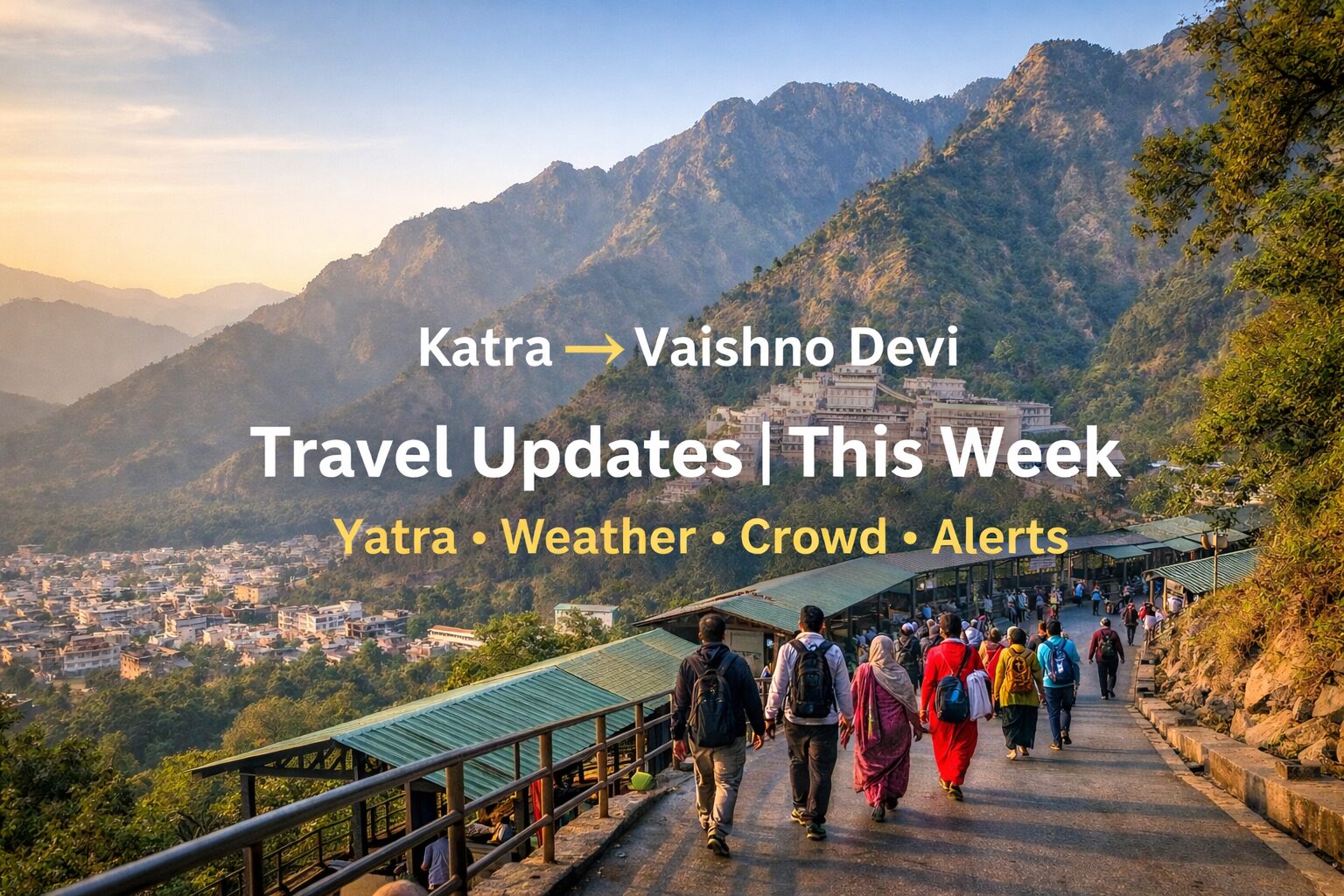

Katra–Vaishno Devi Weekly Travel Update (January 13–19, 2026)
This weekly update covers conditions for pilgrims traveling to Katra and undertaking the Vaishno Devi yatra between 13 January and 19 January 2026. It focuses on current winter weather, yatra operations, crowd patterns, transport, and practical guidance so you can make informed decisions if you are traveling now or in the next few days.
Current Yatra Status & Operational Updates
As of mid-January 2026, the Vaishno Devi yatra from Katra is operational, with routine winter-season precautions in place. The main track from Ban Ganga to Bhawan remains open, subject to temporary regulation during periods of poor visibility or rain/snow at higher altitudes.
Key operational points for this week:
- Yatra registration is required for all pilgrims. On-the-spot registration at Katra counters is functioning, but you should factor in some waiting time during early mornings and evenings.
- Online yatra slip booking continues to be available via the Shrine Board’s digital channels; however, on-ground verification at Katra is still mandatory before you start the trek.
- Helicopter services (Katra–Sanjichhat) are scheduled but remain highly weather-dependent. Expect possible same-day cancellations or delays during fog, low clouds, or strong winds, particularly in the morning.
- Pithu, pony, and palki services are generally running, but may be briefly halted if the track becomes slippery due to rain or sleet.
- Sanitation, cloakrooms, and free drinking water facilities along the track and at Bhawan are functional with standard winter load.
For broader, non-date-specific planning details (route options, timings, and seasonal patterns), you may also want to refer to this contextual resource: Katra Vaishno Devi Travel Guide: Yatra, Stay & Best Time to Visit.
Weather Conditions & Forecast Impact (13–19 January 2026)
This week falls in the core winter period in Jammu & Kashmir, including the Chillai Kalan phase in the Valley. While Katra itself tends to be milder than higher Himalayan areas, pilgrims should still plan for cool to cold conditions, especially at night and near Bhawan.
Expected Conditions
- Katra town (base): Cool days, cold nights. Daytime temperatures are likely in the low to mid-teens (°C), dipping into single digits at night. Early mornings and late evenings feel colder due to wind chill and humidity.
- Mid-track (Adhkuwari region): Noticeably cooler than Katra, especially in shaded sections. Enhanced wind chill in exposed stretches; track can feel damp and chilly.
- Bhawan area: The coldest segment of your journey. Night and pre-dawn conditions can approach or drop close to freezing, particularly if there is cloud cover, wind, or precipitation.
There is a moderate possibility of light rain around Katra and rain/snow mix at higher altitudes on one or two days within this week, especially if a western disturbance passes through North India. Even when snowfall is light, it can make flagged or steep sections of the track more slippery, and may temporarily slow down movement or prompt short-term regulations.
For the most reliable, updated regional forecast for Jammu and surrounding areas, refer to the India Meteorological Department’s official weather portal before your travel dates and again on the morning of your yatra.
Weather-Related Advice for Pilgrims
- Plan your trek timing around the cold: if possible, avoid starting the main climb very late at night unless you are well prepared for near-freezing temperatures at Bhawan.
- Carry layered clothing: inner thermal layer, a warm mid-layer (fleece or sweater), and a windproof/water-resistant outer layer. Avoid relying on a single heavy coat.
- Use good-quality footwear with decent grip. Thin-soled or smooth footwear increases the risk of slips, especially on damp sections or stairs.
- Be mentally prepared for short-notice changes to helicopter schedules and pony/palki availability if visibility drops or rain/snow sets in.
Conditions may change based on weather or official advisories, sometimes on very short notice in winter.
Crowd Levels & Rush Expectations This Week
Mid-January is generally moderate to relatively low in terms of crowd intensity compared to peak holiday and festival periods. However, actual footfall varies by weekday and by the presence of any nearby festivals or long weekends.
- Weekdays (Tuesday–Thursday): Typically the lightest rush of the week. Yatra registration queues and security checks are usually manageable, and walking pace is smoother.
- Weekends (Friday evening to Sunday): Noticeable increase in pilgrims, especially those arriving from nearby states for short pilgrimages. Expect more congestion near Yatra Registration Counters, Ban Ganga, and Adhkuwari.
- Night vs Day: The late-night and early morning slots remain popular with many pilgrims, but in winter some choose daytime treks to avoid severe cold, distributing crowds slightly more evenly through the day.
At current seasonal levels, crowding is unlikely to halt the yatra, but it can add to waiting time at security points, langar/food stalls, and darshan queues. Those traveling with children, elderly family members, or anyone with health conditions should account for possible delays and extra rest stops.
Transport & Connectivity Updates
Reaching Katra
By Rail (Shri Mata Vaishno Devi Katra Railway Station)
- Train services to and from Katra are operating on their regular winter schedule, with occasional delays possible due to fog across North Indian routes (especially plains of Punjab, Haryana, and Uttar Pradesh).
- If you have tight connections (e.g., same-day yatra after arrival), build in buffer time of several hours to account for potential fog-related delays in the mornings.
By Road
- Road connectivity between Jammu and Katra is normal for this period, though early-morning fog can slow traffic.
- For those coming from longer distances by bus or car, be aware that some hilly segments before Jammu can be affected by rain-induced landslides, though these are more common in the monsoon than in January.
By Air (to Jammu)
- Flights to Jammu Airport are operating, but winter fog and low visibility in North India can cause delays or rescheduling, mainly in early morning and late evening slots.
- Consider planning your yatra to start the day after your scheduled arrival in Jammu to reduce stress if your flight is delayed.
Helicopter Services (Katra–Sanjichhat)
- Helicopter operations are scheduled but remain strictly subject to weather and visibility. This week’s cool, occasionally foggy mornings can lead to shifting or partial service during certain hours.
- Pilgrims with elderly or medically fragile companions should have a backup plan, such as overnight stays mid-track or use of ponies/palkis, in case flights get cancelled.
- Keep printed or digital copies of your booking and reach the helipad well in advance, but be prepared for possible waiting, especially after any weather-related backlog.
Accommodation & Facilities Availability
Katra Town
- Accommodation availability in Katra is generally comfortable this week, with multiple options from basic dharamshalas to mid-range hotels.
- Because this is not a peak holiday week, last-minute bookings are usually possible, but families and larger groups are still better off reserving in advance.
- Check that your accommodation provides reliable hot water and adequate blankets or room heating, as nights can be quite cold.
On the Track & at Bhawan
- Rest shelters along the track are operational, offering shaded/covered areas where you can pause, warm up slightly, and regroup.
- Cloakrooms for luggage and shoes at Bhawan continue to run, but can see short queues at common peak times (early morning and late evening).
- Food stalls and basic medical facilities are functional; however, relying entirely on track food is not ideal if you have specific dietary needs. Carry light, dry snacks as backup.
Safety Advisories & Official Guidelines
Although conditions are relatively stable this week, winter introduces certain risks that pilgrims should consciously manage.
- Health Fitness: Those with heart, respiratory, or major joint issues should obtain medical advice before attempting the full trek, particularly overnight in cold conditions.
- Hydration & Nutrition: Cold weather often masks thirst. Drink water regularly and avoid undertaking the climb on an empty stomach.
- Slippery Sections: After rain or light snow, some parts of the track can become slick. Use railings where available, avoid rushing, and keep hands free (or use a small backpack rather than multiple bags).
- Children & Elderly: Keep group members close, especially at crowded or stair-heavy sections. Plan for more frequent short breaks.
- Security Checks: Expect standard security and baggage screening. Carry only essential items on the trek and keep identification documents accessible.
- Weather & Advisory Changes: Shrine Board and local administration may adjust movement or facilities if conditions deteriorate. Always follow on-ground instructions from officials and signages.
During this period, conditions remain manageable for most pilgrims who are reasonably fit and well prepared for winter walking, but they can become more demanding if weather turns wet or very cold. Planning conservatively is advisable.
What Pilgrims Should Expect This Week (13–19 January 2026)
If you are traveling during this specific week, you can broadly expect the following:
- Weather: Cool to cold, with a noticeable chill in the evenings and near Bhawan. One or two days may see light rain or higher-altitude snowfall, which can slow movement.
- Crowds: Manageable to moderate, with more activity over the weekend but generally below the year’s peak levels.
- Yatra Pace: Most reasonably fit pilgrims can complete the trek with breaks, but winter conditions may add extra time. Start early enough so you are not forced into rushing in the dark or in the coldest hours.
- Facilities: Basic infrastructure is in place and functioning; however, you should still carry your own essentials such as medicines, warm layers, and snacks.
- Uncertainty Factors: Fog (affecting trains, flights, and helicopters) and intermittent rain/snow at higher reaches remain the main variables that could alter your day-of plan.
Practical Tips Based on Current Conditions
- 1. Time Your Start Wisely
In this season, consider beginning from Katra in the late morning or early afternoon so that you cover colder, windier segments either before midnight or after sunrise, depending on your pace and rest stops. - 2. Dress in Layers, Not Bulk
Wear a base thermal layer, a light sweater/fleece, and a windproof outer jacket. This approach lets you adjust to changing temperatures as you climb and descend. - 3. Footwear & Foot Care
Use closed, well-gripped shoes and avoid new footwear that hasn’t been broken in. Carry one pair of warm socks in your small daypack to change into if your feet get damp. - 4. Keep Essentials Handy
A small backpack with water, light snacks, basic medicines, a thin scarf/cap, and gloves is usually sufficient. Avoid heavy or multiple bags, which make walking and managing security checks more tiring. - 5. Plan for Buffer Time
If you are coming by train or air, give yourself at least half a day’s gap before starting your trek to absorb possible delays and allow some rest. - 6. Respect Your Pace
Winter walking can be more demanding, especially on stairs and inclines. Take short, regular breaks instead of long, exhausting stretches. - 7. Check Weather & Local Updates on Arrival
On reaching Jammu or Katra, inquire locally about any recent weather disruptions, track conditions, or changes in yatra procedures before finalizing your trek timing. - 8. Keep Elderly and Children Comfortable
Ensure they have extra warm layers, caps, and gloves. Avoid exposing them to the coldest hours at Bhawan; if possible, plan darshan for early morning after sunrise or earlier in the evening.
FAQ: Vaishno Devi Yatra via Katra (13–19 January 2026)
1. Is it safe to do the Vaishno Devi yatra this week in winter conditions?
For most reasonably fit adults, the yatra remains broadly safe this week, provided you are prepared for cold weather, walk at a comfortable pace, and follow official instructions. Those with serious health issues should consult a doctor first and consider slower schedules or partial assistance (pony/palki) where appropriate.
2. Will there be snowfall on the way to Vaishno Devi this week?
Katra itself rarely sees snowfall, but higher reaches near Bhawan can experience light snow in January. This week, there is a moderate chance of rain or light snow at altitude on one or two days. Even if snowfall occurs, authorities usually manage the track, though it can become slippery and slower.
3. Are helicopter services reliable during this period?
Helicopter services operate but are highly dependent on visibility and weather. In winter, early-morning fog and low clouds can cause delays or cancellations. Always have an alternative plan for reaching Bhawan and avoid scheduling urgent return connections on the same day as your planned helicopter ride.
4. How crowded should I expect it to be at Bhawan this week?
Crowd levels are generally moderate in mid-January, with relatively lighter flows on weekdays compared to weekends. You may still encounter queues at darshan and facilities, but they are usually more manageable than during major festivals or holiday peaks.
5. What kind of clothing is best for the yatra during this week?
Layered winter clothing is recommended: thermals, a warm inner layer, and a windproof outer jacket, along with a cap, gloves, and warm socks. Avoid overly heavy or restrictive clothing that makes climbing stairs harder. Comfortable, closed shoes with good grip are important.
6. Can elderly family members undertake the yatra right now?
Many elderly pilgrims do undertake the yatra in winter, but it should be planned cautiously. Consider shorter walking segments, more frequent rest breaks, and use of ponies, palkis, or helicopter services if advised by their doctor. Avoid exposing them to the coldest late-night hours near Bhawan whenever possible.
7. Are dharamshalas and hotels in Katra easily available this week?
Yes, accommodation is generally easier to obtain in mid-January than in peak months, and you can often find options even at shorter notice. That said, pre-booking is still sensible if you have specific needs (such as family rooms, proximity to the main market, or assured heating and hot water).
8. Will fog affect my travel to Katra?
Fog is a known winter factor in North India and may affect both trains and flights, particularly in the early morning. It can also slow road traffic on some stretches. Build extra time into your schedule and avoid planning tight same-day connections between arrival and yatra start.
9. Are food and drinking water easily available on the route?
Yes, there are multiple food outlets and drinking water points along the track and at Bhawan. However, choices may be limited for those with specific dietary restrictions. Carry basic dry snacks and, if needed, any special items that suit your medical or dietary requirements.
10. What should I do if the weather turns bad suddenly during the trek?
If there is sudden rain, sleet, or cold winds, use available shelters along the track, add layers, and avoid rushing on wet or slippery sections. Follow instructions from security and Shrine Board staff, and be open to pausing your progress until conditions stabilize.
Quick Weekly Summary (13–19 January 2026)
- Yatra Status: Operational from Katra to Bhawan, with standard winter precautions; services subject to short-term regulation in adverse weather.
- Weather: Cool to cold, colder near Bhawan; moderate chance of light rain or higher-altitude snow on one or two days.
- Crowds: Moderate overall, lighter on weekdays, higher on weekend days and popular time slots.
- Transport: Trains, roads, and flights functioning; fog may cause delays, particularly in early morning. Helicopters operating but weather-dependent.
- Accommodation: Generally available in Katra; confirm heating and hot water. Basic facilities on the track and at Bhawan are functional.
- Risks: Cold stress, slippery patches after rain/snow, and travel delays due to fog or visibility.
- Best Approach: Dress in layers, walk at a comfortable pace, build buffer time into travel plans, and stay flexible for weather-related changes.
Conditions remain broadly favorable for a well-prepared yatra this week, but staying attentive to weather forecasts and local advisories will help you adjust plans safely and comfortably.