

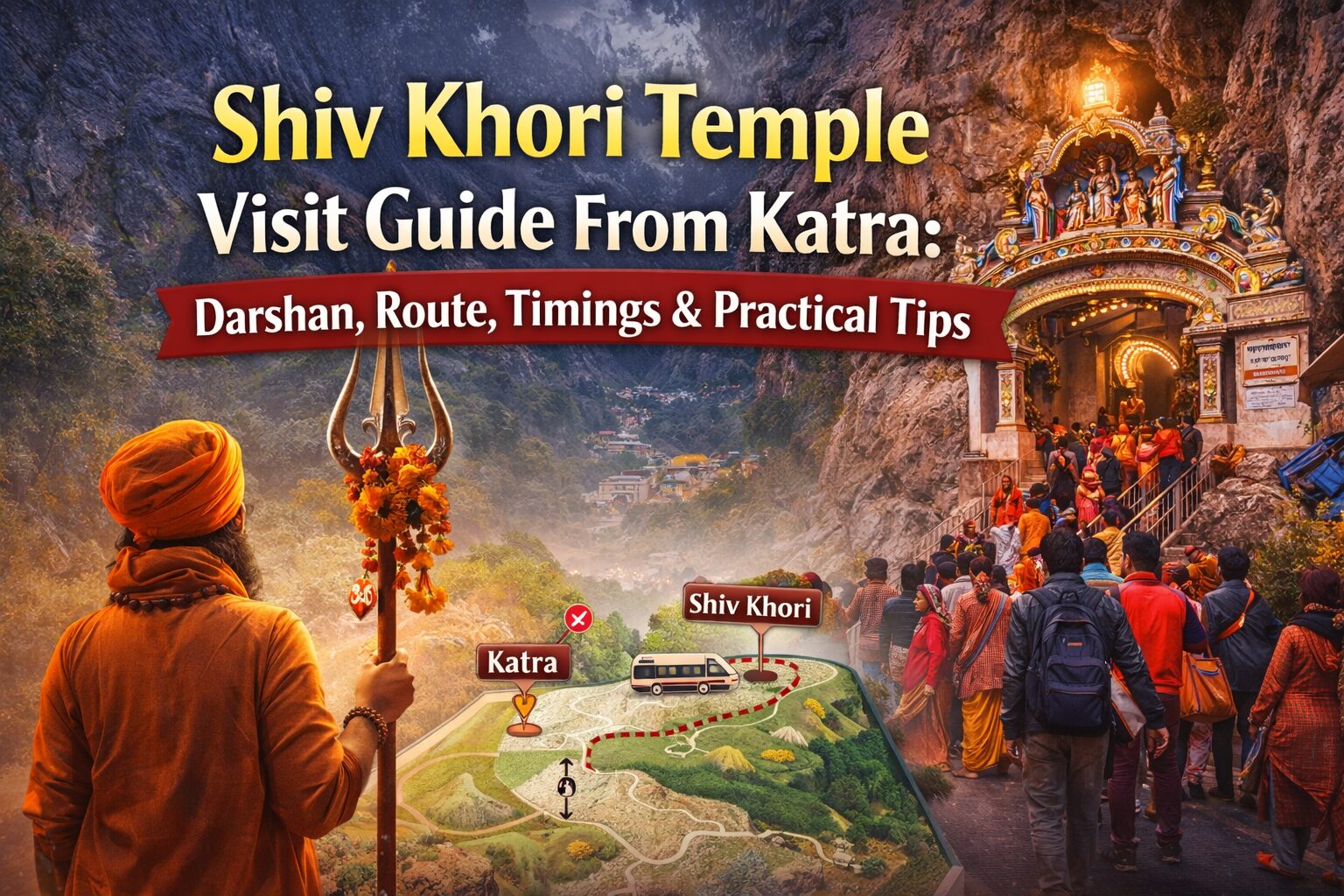

Shiv Khori Temple Visit Guide From Katra: Darshan, Route, Timings & Practical Tips
Planning a visit to Shiv Khori from Katra is one of the most rewarding extensions to a Vaishno Devi yatra. This naturally formed cave shrine dedicated to Lord Shiva is known for its sacred atmosphere, scenic drive through the hills of Reasi district, and comparatively less commercialized surroundings. This guide walks you through the complete journey from Katra to Shiv Khori, including route options, timings, what to expect inside the cave, and practical tips for a comfortable darshan.
Overview: Why Combine Katra With a Shiv Khori Visit
Katra is already a major pilgrimage base town for the Mata Vaishno Devi shrine. Shiv Khori, located near the village of Ransoo in Jammu and Kashmir’s Reasi district, lies roughly 80–90 km from Katra by road and can comfortably be covered as a day trip for most travellers.
Shiv Khori literally means “Shiva’s cave”. The natural limestone cave is famous for its self-manifested (swayambhu) Shiva lingam and naturally formed shapes said to represent various gods and mythological forms. The main cave is about 200 metres long, narrow in parts, and offers a powerful sense of old-world devotion that many visitors find deeply moving.
Key Highlights of a Shiv Khori Visit From Katra
- Scenic 3–4 hour drive (one way) through hills and rural Jammu
- Holy cave with naturally formed lingam and symbolic rock formations
- Moderate 3–3.5 km trek from the base camp at Ransoo to the cave
- Possibility to complete it as a same-day trip from Katra, if planned well
- Less crowded than Vaishno Devi on most days, but busy during Shivratri and Mondays in Shravan
Where Is Shiv Khori and How Far Is It From Katra?
Shiv Khori is situated in Reasi district of Jammu & Kashmir. The base village for the trek and darshan arrangements is Ransoo.
| Route | Distance (Approx.) | Travel Time (Approx.) |
|---|---|---|
| Katra to Ransoo (base camp for Shiv Khori) | 80–90 km | 3–4 hours by road, depending on traffic and road conditions |
| Ransoo to Shiv Khori Cave (on foot) | 3–3.5 km | 1–1.5 hours of walking/pony ride, depending on fitness level |
Road conditions in the hills can vary by season. Travel times are approximate and can increase during monsoon, winter, or festival crowds.
How to Reach Shiv Khori From Katra
You have three main ways to travel from Katra to Shiv Khori: local buses, shared cabs, or private taxi. Choice depends on your budget, comfort preferences, group size, and timing flexibility.
1. By Local Bus
Local buses and mini-buses sometimes operate between Katra, Reasi, and Ransoo, though the frequency can vary. This is the most economical option but also the least predictable in terms of timing and comfort.
- Boarding point: Katra bus stand
- Route: Typically Katra – Reasi – Ransoo (may involve a change at Reasi)
- Pros: Cheapest; a more local travel experience
- Cons: Limited schedules, slower, more crowded; not ideal for tight timelines or seniors
Pricing is approximate and may vary, but bus fares usually remain budget-friendly.
2. By Shared Cab or Tempo Traveller
Shared jeeps, cabs or tempo travellers often operate on pilgrimage routes from Katra, particularly in main seasons. You may find them near the bus stand or main taxi stand areas.
- Pros: Faster than buses, mid-range cost, flexible stops for tea and snacks
- Cons: Comfort depends on vehicle and crowding; departure may depend on filling all seats
In peak pilgrimage seasons, it is common for tour operators to offer Vaishno Devi + Shiv Khori packages which include transport, often as a day trip.
3. By Private Taxi (Most Convenient)
Hiring a private taxi from Katra is the most convenient and flexible option, especially for families, seniors, and those who value comfort and control over their schedule.
- Availability: Easy to book from the Katra taxi stand or through hotels and guesthouses
- Inclusions: Typically includes pickup from your hotel, round-trip to Ransoo, waiting time during trek and darshan, and drop back to Katra
- Pros: Custom timings, more comfortable, safer for late return, easier for those travelling with children or elders
- Cons: More expensive than bus/shared cab
Pricing is approximate and may vary depending on vehicle type, season, fuel prices, and negotiation. It is wise to clarify whether tolls, parking, and driver waiting charges are included.
Best Time to Visit Shiv Khori From Katra
You can visit Shiv Khori throughout the year, but certain seasons and times of day offer better comfort and smoother darshan.
By Season
- October to March (Cool & Pleasant): Generally considered the most comfortable period. Days are mild and nights can be cold, especially in December–January. Carry warm layers.
- April to June (Warm to Hot): Days can get warm, especially in low-lying stretches on the drive, but the hilly terrain is still manageable. Early morning or late afternoon treks are more comfortable.
- July to September (Monsoon): Roads can be slippery, and there is a higher risk of landslides or travel delays in hilly regions. Check local weather and road updates before travelling; allow buffer time.
Festival and Special Days
- Maha Shivratri: The grand annual mela at Shiv Khori draws very large crowds. The atmosphere is highly devotional but also busy; expect queues, security checks, and longer wait times.
- Sawan / Shravan Month (Mondays especially): The holy month of Shravan in the Hindu calendar, particularly Mondays, brings additional rush of devotees.
- Other Hindu festivals and long weekends: Generally more crowded, with higher demand for transport.
If you prefer a quieter, more contemplative visit, choose non-festival weekdays and start early from Katra.
Shiv Khori Temple Timings & Darshan Pattern
Exact timings can vary slightly by season and management decisions, but the shrine typically follows a broad pattern.
- Temple opening: Early morning (often around sunrise)
- Temple closing: After evening aarti (post-sunset)
- Main rush hours: Late morning to early afternoon, and special puja timings
Darshan inside the cave is usually in a moving line due to the cave’s narrowness. Photography is often restricted inside the cave; follow the instructions of temple staff.
For the most current timings, festival schedules, or any temporary restrictions, check with local tourism authorities, your hotel in Katra, or official shrine information before your visit.
Trek From Ransoo to Shiv Khori Cave
The road journey from Katra ends at Ransoo, the base camp and starting point of the trek. From here, you need to cover approximately 3–3.5 km on foot (or via pony/palki) to reach the Shiv Khori cave entrance.
Trail Conditions
- Mostly well-paved pathway with gradual inclines
- Railings at many points, with viewpoints overlooking the valley
- Shops, tea stalls, and small eateries along sections of the route
- Basic seating/rest points for those who want to take breaks
Time & Difficulty
- Walking time: 1–1.5 hours one way for an average adult
- Difficulty level: Easy to moderate, depending on fitness level and weather conditions
- Suitable for: Most adults, older children, and reasonably fit seniors with adequate breaks
Pony, Palki and Other Assistance
Porters, ponies, and dandi/palki services may be available for seniors, those with mobility issues, or anyone unable to walk the entire distance. Availability and prices can fluctuate with season and demand.
Pricing is approximate and may vary. It is best to:
- Confirm rates clearly in advance
- Check if the price is one-way or return
- Factor in tips or extra waiting charges if applicable
What to Carry on the Trek
- Comfortable walking shoes or sports sandals with good grip
- Light woollen or shawl in cooler months
- Water bottle (you can refill or buy along the way)
- Basic snacks (though food stalls are available)
- Rain protection (umbrella or lightweight raincoat) in monsoon
Inside the Shiv Khori Cave: What to Expect
The Shiv Khori cave offers a different experience from many built temples. It is natural, relatively narrow, and has low ceilings in some sections, which contributes to a deep cave-like ambience that many pilgrims find powerful.
Cave Layout & Experience
- Entrance: A relatively wider portion where crowds gather before entering the narrower stretch
- Main passage: Around 200 meters long; some parts require bending or moving single-file
- Natural formations: Stalactites and stalagmites that are believed to resemble Shiva lingam and other deities
- Sanctum: The main self-manifested Shiva lingam, considered the most sacred point of the shrine
Temple administration and security usually regulate the flow of devotees. During busy times, you may need to move continuously through the cave, with limited time to stand still in the narrowest parts.
Safety & Comfort Inside the Cave
- Some sections can be dimly lit; follow instructions carefully.
- Watch your head and footing; surfaces may be damp or uneven.
- Those with severe claustrophobia or respiratory issues may feel discomfort in the tighter sections.
- Children and elders should be escorted closely to avoid tripping or slipping.
Photography and videography rules can be strict inside; always respect the shrine’s regulations and other pilgrims’ privacy.
Suggested Day Itinerary: Katra to Shiv Khori and Back
With proper planning, many travellers complete a same-day trip from Katra to Shiv Khori. The sample plan below assumes a private taxi for flexibility.
Sample One-Day Itinerary
- 06:00 – 07:00: Depart from Katra
Start early to avoid heat, traffic, and crowds. Have a light breakfast at your hotel or near the Katra bus/taxi stand. - 09:30 – 10:00: Arrive at Ransoo
Depending on road conditions and halts for tea or photos, expect to reach the base camp in 3–4 hours. - 10:00 – 11:30: Trek/pony ride to Shiv Khori cave
Walk at a comfortable pace. Take short breaks; hydrate regularly. - 11:30 – 13:00: Darshan inside Shiv Khori cave
Time required depends on crowd levels. Allow extra time on Mondays and festival days. - 13:00 – 14:00: Return trek to Ransoo
Descend carefully; it can be easier than the climb but tiring for knees. - 14:00 – 15:00: Lunch at Ransoo
Several small eateries serve simple vegetarian food, tea, cold drinks, and snacks. - 15:00 – 18:00: Drive back to Katra
Plan to reach Katra before late evening, especially in winter when it gets dark early.
Adjust timings based on your group’s pace, mode of transport, weather, and crowd conditions. If travelling with elderly family members or very young children, you may want to start even earlier to keep the day relaxed.
Food, Facilities & Staying Options
Food Along the Route
- On the Drive: Small dhabas and tea stalls can be found along the Katra–Reasi–Ransoo road. Food is usually simple, North-Indian style, and predominantly vegetarian.
- At Ransoo: There are basic restaurants and langar (community kitchen) arrangements at times, depending on the season and local management.
- On the Trek: Tea stalls, cold drinks, light snacks like pakoras, biscuits, and chips are generally available.
If you have specific dietary requirements or prefer very hygienic, packaged food, carrying dry snacks from Katra is a good idea.
Toilets and Basic Amenities
- Public toilets are usually available at Ransoo and at some points along the trek.
- Carry tissues, hand sanitizer, and basic toiletries as facilities may be basic.
- Drinking water is sold widely; still, having your own bottle is useful.
Accommodation
Many pilgrims prefer to stay in Katra and visit Shiv Khori as a day excursion.
- Staying in Katra: Wide range of options from budget guesthouses and dharamshalas to mid-range hotels and some higher-end properties near the town centre.
- Staying near Shiv Khori: Limited accommodation near Ransoo; mostly basic lodges or guesthouses. This may suit travellers who want a slower pace or to attend specific early morning or late evening rituals.
For those combining Vaishno Devi and Shiv Khori in one trip, staying in Katra provides greater flexibility for transport, food choices, and other services.
Costs & Budgeting for a Shiv Khori Visit From Katra
Overall, a day trip to Shiv Khori from Katra can be planned on a modest budget, though costs can rise with private transport and comfort preferences. Pricing is approximate and may vary depending on the season, demand, and negotiation.
Main Expense Heads
- Transport: Bus, shared cab, or private taxi from Katra to Ransoo and back
- Trek Assistance: Optional pony, dandi/palki, or porter charges
- Food & Water: Meals at dhabas, snacks on trek, bottled water
- Offerings: Flowers, prasad, and donations if you choose
- Miscellaneous: Parking fees (if applicable), cloakroom charges, or small purchases
To keep costs predictable, it helps to agree on clear rates before starting the journey—especially with drivers, pony owners, and porters.
What to Wear & Pack
Clothing Suggestions
- Comfortable, respectful attire suitable for a temple visit
- Layered clothing in winter: inner thermals (optional), sweater/fleece, windproof jacket
- Light cotton clothes with a shawl or light jacket in summer and shoulder seasons
- Rain jacket or umbrella in monsoon season
Footwear
- Closed shoes or trekking sandals with good grip
- Avoid brand new shoes to prevent blisters
- Easy-to-remove footwear if you prefer to take off shoes near sacred sections
Essential Items
- Valid ID proof for all adult travellers
- Basic medicines: pain relievers, band-aids, medicines for acidity or motion sickness
- Personal hygiene items: tissues, sanitizer, masks if you prefer, any doctor-prescribed medication
- Small backpack to carry water, prasad, and personal items
- Light towel or napkin; weather-appropriate head covering if desired
Safety, Health & Practical Advice
Pilgrimage routes in hilly regions are generally safe but require practical precautions. Planning with these in mind ensures a smoother experience, especially for families and seniors.
Health & Fitness
- Consult a doctor if you have heart, lung, joint, or serious mobility issues.
- Walk slowly and steadily; the goal is to conserve energy, not to rush.
- Stay hydrated but avoid over-drinking just before entering the cave, as toilets are limited near the inner sections.
- Those with claustrophobia should be aware of the narrow cave passage and may decide based on comfort level.
Weather & Road Safety
- Check weather forecasts for Katra, Reasi, and Ransoo before planning your day.
- In monsoon, keep track of any news about landslides or road blocks in the region.
- Prefer daylight travel on hilly stretches and avoid last-minute night driving wherever possible.
- Always wear seatbelts and avoid leaning out of moving vehicles, especially on curves and narrow sections.
Respecting Local Customs & Environment
- Dress modestly and behave respectfully around the shrine and local villages.
- Avoid littering on the trek or near the cave; use dustbins wherever available.
- Do not touch or deface cave walls or natural formations.
- Follow instructions given by shrine authorities, policemen, and volunteers at all times.
Mistakes to Avoid on a Shiv Khori Trip From Katra
- Starting too late from Katra: A late start compresses your day, increases trek heat, and raises stress if roads are slow on the way back.
- Underestimating the trek: While not extremely difficult, the 3+ km walk still needs comfortable footwear, hydration, and pacing.
- Ignoring weather conditions: Setting out without checking forecasts can lead to avoidable discomfort in heavy rain or winter chills.
- Not clarifying prices in advance: Always agree on transport, pony, or porter charges clearly to avoid disputes later.
- Carrying bulky bags: Large or heavy luggage can be a burden on the trek and inside the cave; keep it minimal.
- Skipping basic medical checks: Those with known health issues should travel with clearance from their doctor and carry essential medicines.
Who Is a Shiv Khori Visit From Katra Best For?
A trip to Shiv Khori from Katra can suit a wide range of travellers, but it aligns particularly well with certain profiles.
- Devotees on a Vaishno Devi Yatra: Ideal as a spiritually connected extension, often planned either before or after the main Vaishno Devi trek.
- Families: Manageable for children and elders if you plan adequate rest, choose comfortable transport, and use pony services if needed.
- Senior Citizens: Possible with support—shorter walking segments, rest breaks, and reliance on ponies or palkis where necessary.
- Solo and Small-Group Travellers: Offers a blend of devotional experience and scenic countryside travel, without the intense crowds of some larger shrines (outside peak days).
- Travellers Interested in Caves & Natural Formations: The combination of geology and mythology makes the cave especially interesting for curious visitors.
Frequently Asked Questions About Visiting Shiv Khori From Katra
1. Can I do Shiv Khori as a one-day trip from Katra?
Yes, many travellers complete a round trip from Katra to Shiv Khori in one day. You need roughly 3–4 hours each way by road plus 3–4 hours for trek and darshan. Starting early morning from Katra is recommended to keep the day comfortable.
2. How long is the walk from Ransoo to Shiv Khori cave?
The trek from Ransoo base camp to the cave is about 3–3.5 km. Most people take 1–1.5 hours to walk it one way, depending on pace, fitness, and halts. Pony and palki services may be available for those who prefer not to walk.
3. Is the Shiv Khori cave very narrow or difficult to pass through?
Some sections of the cave are narrow and require moving in a single line, with low ceilings where you may need to bend slightly. For most visitors it is manageable, but those with severe claustrophobia or serious mobility issues may find it challenging.
4. What are the typical Shiv Khori temple timings?
The shrine usually opens in the early morning around sunrise and closes after the evening aarti. Exact timings can change with season and management decisions, so it is wise to confirm locally before visiting, especially if you are planning early or late darshan.
5. Are there any special days when Shiv Khori is very crowded?
Yes, Maha Shivratri is the biggest festival at Shiv Khori and draws heavy crowds. Mondays during the Shravan month and other major Hindu festival days can also be busy. On such days, expect longer queues and allow extra time for darshan.
6. Can I visit Shiv Khori and Vaishno Devi on the same trip?
Absolutely. Many pilgrims plan both shrines in one itinerary, using Katra as their base. You can do Vaishno Devi first and Shiv Khori later, or the reverse, depending on your schedule, fitness, and available days.
7. Are food and water easily available on the route?
Yes, there are small dhabas and tea stalls along the road and trek, and basic eateries at Ransoo. Bottled water and simple vegetarian food are widely available, though travellers with specific dietary preferences may want to carry additional snacks from Katra.
8. Is the route from Katra to Shiv Khori safe for families and seniors?
Under normal conditions, the route is considered safe and is used regularly by pilgrims of all ages. However, since it is a hilly area, you should travel during daylight, choose reliable transport, check weather and road conditions, and ensure regular rest and hydration for seniors.
9. Do I need any special permits to visit Shiv Khori?
For most domestic visitors, no special permit is required to visit Shiv Khori. Basic registration or ticketing procedures, if any, are usually handled at the base camp or entrance. Always carry valid ID proof for all adult travellers.
10. What is the best time of year to plan a Shiv Khori visit from Katra?
October to March is widely preferred due to comfortable temperatures, though it can be cold in December–January. April to June is warmer but manageable, especially if you start early. Monsoon months (July–September) require extra caution due to potential rain-related disruptions.
Closing Thoughts
A visit to Shiv Khori from Katra adds a deep, distinctly different dimension to a Vaishno Devi journey. The natural limestone cave, the relatively serene surroundings, and the scenic hill drive together create a memorable day of spiritual travel. With realistic expectations about the trek, careful transport planning, and attention to health and weather, most travellers find the experience both manageable and uplifting.