

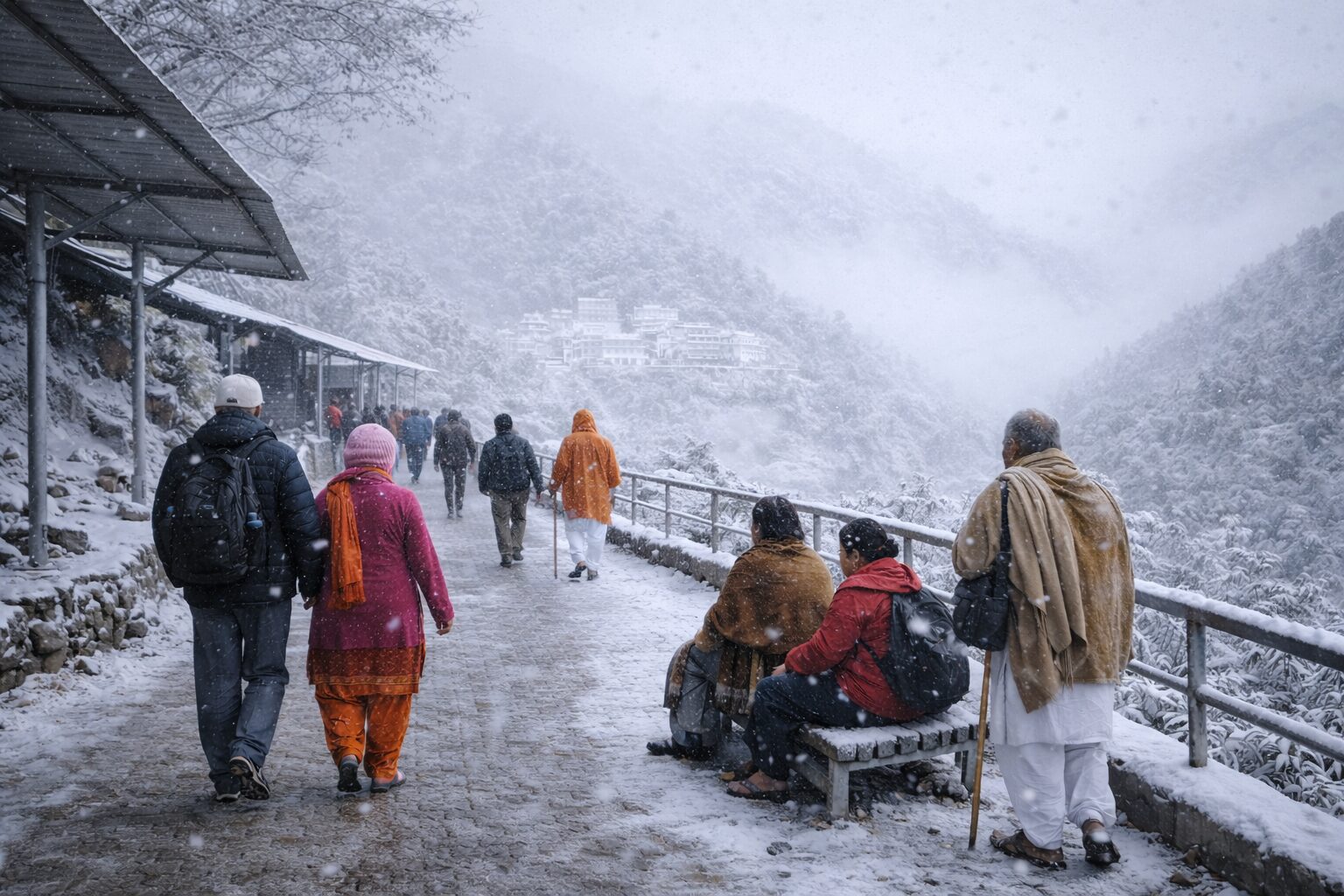

Snowfall at Bhawan, Rain in Katra
On January 23, 2026, the Vaishno Devi Yatra — one of India’s most frequented hill pilgrimages — has been significantly impacted by season’s first snowfall in the Trikuta Hills and persistent rain in the plains of Katra and the Jammu region. This article lays out the latest verified developments, clearly explains how weather is affecting the yatra, and provides practical, reliable guidance for pilgrims currently in transit, en route, or planning travel in the coming hours and days.
The Shrine Board temporarily suspended the yatra early today due to heavy snow and rain, and later reopened movement after weather conditions and ground assessments improved. This back-and-forth has created confusion and uncertainty for thousands of pilgrims. The situation remains dynamic; conditions may change with additional precipitation at higher elevations.
For updated background on pilgrimage norms, timing, and operational details, refer to this comprehensive guide:
🔗 Katra Vaishno Devi Travel Guide: Yatra, Stay & Best Time to Visit
Official Shrine Board advisories remain the authoritative source for Yatra status and safety updates.
1. Latest Weather and Yatra Status Summary
Key Developments (January 23, 2026)
✔️ Snowfall began late last night and continued across the Trikuta Hills, covering the Vaishno Devi shrine area and upper trekking route.
✔️ Heavy rain is ongoing in Katra and the Jammu plains, breaking a prolonged dry spell.
✔️ Due to safety concerns, the Shrine Board initially suspended the yatra early today, asking pilgrims to stay back at Katra and suspending fresh pilgrimage movement from the base camp.
✔️ In later hours, the yatra was allowed to resume once authorities judged conditions improved sufficiently for limited movement.
✔️ Local conditions are still challenging: steep sections are slippery, and intermittent snowfall continues at higher elevations.
2. What’s Happening on the Ground
Weather Conditions
- Trikuta Hills / Upper Trek to Bhawan: Snowfall through the night and into today has blanketed upper routes, making the surfaces slippery and steadily accumulating snow.
- Katra & Lower Plains: Intermittent to persistent rain with cold winds and reduced visibility in low and mid-elevation segments.
Impact on Track Conditions
- Upper slopes: Snow layers and moisture considerably reduce foot traction.
- Mid slopes: Snow melt and rain create slush; rock debris and runoff may appear.
- Lower slopes: Rain and fog reduce visibility; trekking pace slows.
These conditions raise slip and fall risk, especially near Ban Ganga, Adhkuwari, Sanjichhat, and Bhawan — the steepest and most exposed sections of the path.
3. Breakdown of Travel Sequence Today
a) Early Morning Suspension
Shortly after heavy snowfall and extended rain began overnight, authorities halted yatra movement from Katra base camp to avoid exposing pilgrims to early-morning snow-covered slopes and uncertain track safety. Registration counters were operational but new batches were temporarily not permitted to proceed.
b) Later Reopening of the Yatra
As daylight improved and snow cleared on crucial segments, limited movement resumed. RFID and registration counters reopened, allowing some pilgrims to proceed with extra caution.
This pattern — temporary suspension followed by reopening — underscores how rapidly conditions can evolve in the Trikuta range during winter weather.
4. Weather Advisory: What Pilgrims Should Expect
A. Trek & Track Conditions
- Snow-covered upper segments: Expect slippery patches along the climb — especially above Adhkuwari and nearing Bhawan.
- Rain-soaked lower sections: Muddy and slick walking surfaces.
- Visibility challenges: Fog and persistent precipitation may reduce sightlines — slow down and keep safe spacing.
- Rockfall and slush runoff: Always a risk in freezing/thaw cycles; stay attentive.
B. Crowd and Movement Dynamics
- Heavy weather tends to create stop-and-go crowding on narrower paths.
- Shelter areas and rest points may become congested as pilgrims wait out brief precipitation.
- Battery cars and pony services may operate at reduced pace or intermittently depending on ground conditions.
5. Transport, Access & Peripheral Effects
a. Road & Highway Status
Rain and snow in surrounding districts have affected regional road movement — sections of NH-44 and other links see slow traffic and may have intermittent closures if snow accumulates further.
b. Rail, Taxi & Local Mobility
- Trains into Katra remain operational but may be delayed by wet conditions near the station approach and local roads.
- Shared taxis and hired vehicles operate with caution; plan extra travel time.
c. Helicopter & Ropeway Services
High winds, snowfall at elevation, and poor visibility continue to disrupt aerial services sporadically — even when the yatra is technically open.
6. Official Safety Recommendations
From Shrine Board & Meteorological Guidance:
✔️ Trek in daylight only where feasible.
✔️ Prioritize traction footwear and warm, waterproof garments.
✔️ Keep slow, steady pace — avoid rushing.
✔️ Respect all instructions from on-ground volunteers and board officials.
✔️ Elderly or medically fragile pilgrims should reassess plans and consider waiting for clearer conditions.
Official Shrine Board channels remain the only authoritative source for immediate yatra status changes and emergency guidance.
7. Practical Preparation Tips for Pilgrims in Current Weather
Gear & Wear
- Waterproof jackets and trekking boots with grip.
- Warm layers, gloves, caps.
- Microspikes / traction accessories (if available).
Day-Of Essentials
- Insulated water bottle.
- Light, high-energy snacks.
- Flashlight or headlamp for early morning or late evening movement.
- Basic first-aid items.
Mental & Planning Readiness
Weather conditions may deteriorate or improve swiftly — maintain flexible plans and stay tuned to official announcements throughout the day.
8. Timeline for Next 36–48 Hours (Expected)
Meteorological forecasts and local advisories indicate continued precipitation — rain at lower elevations and snow higher up — for at least the next 36 hours. Snow accumulation may deepen on the upper track if the snowfall continues, and intermittent rain may persist in the plains.
Pilgrims preparing to travel tomorrow or the next day should plan for slower movement and check live weather updates and Shrine Board communications before departing.
9. Frequently Asked Questions About the Current Situation
Q: Why was the Vaishno Devi yatra suspended earlier today?
A: Authorities halted movement from the base camp due to persistent rain in Katra and snowfall covering the upper track, posing safety risks.
Q: Is the yatra allowed now?
A: Yes — after conditions improved in daylight hours, the board authorized limited movement. Continue to check official updates for any new suspensions.
Q: Can I travel to Katra now?
A: Travel to Katra is possible, but be prepared for rainy conditions in plains and cold, snowy terrain above base camp. Plan buffer time and gear accordingly.
Q: Are helicopter or aerial services operating?
A: These services are impacted by weather — wind and snowfall may cause temporary suspensions even after yatra reopens.
Q: How dangerous is the track now?
A: Slick and snowy slopes require very cautious pacing. Professional trekking gear and awareness are essential; slip risk remains elevated.
Q: Should elderly pilgrims postpone?
A: Given current weather and ground conditions, postponement or waiting in Katra until clearer weather is sensible for at-risk individuals.
10. Final Considerations
Today’s snowfall in the Trikuta Hills and rain in the Jammu plains mark a significant winter weather event — the first of this season — and have materially influenced pilgrimage operations, track safety, and logistical movement. From temporary suspension to cautious reopening, conditions highlight the need for preparedness, flexibility, and constant attention to official advisories.
Pilgrims currently in Katra or planning to arrive should stay informed via Shrine Board advisories and be ready for potential changes, including renewed suspensions if weather worsens again.
This advisory reflects the most current verified information available as of January 23, 2026; conditions remain subject to rapid change in mountain weather.