

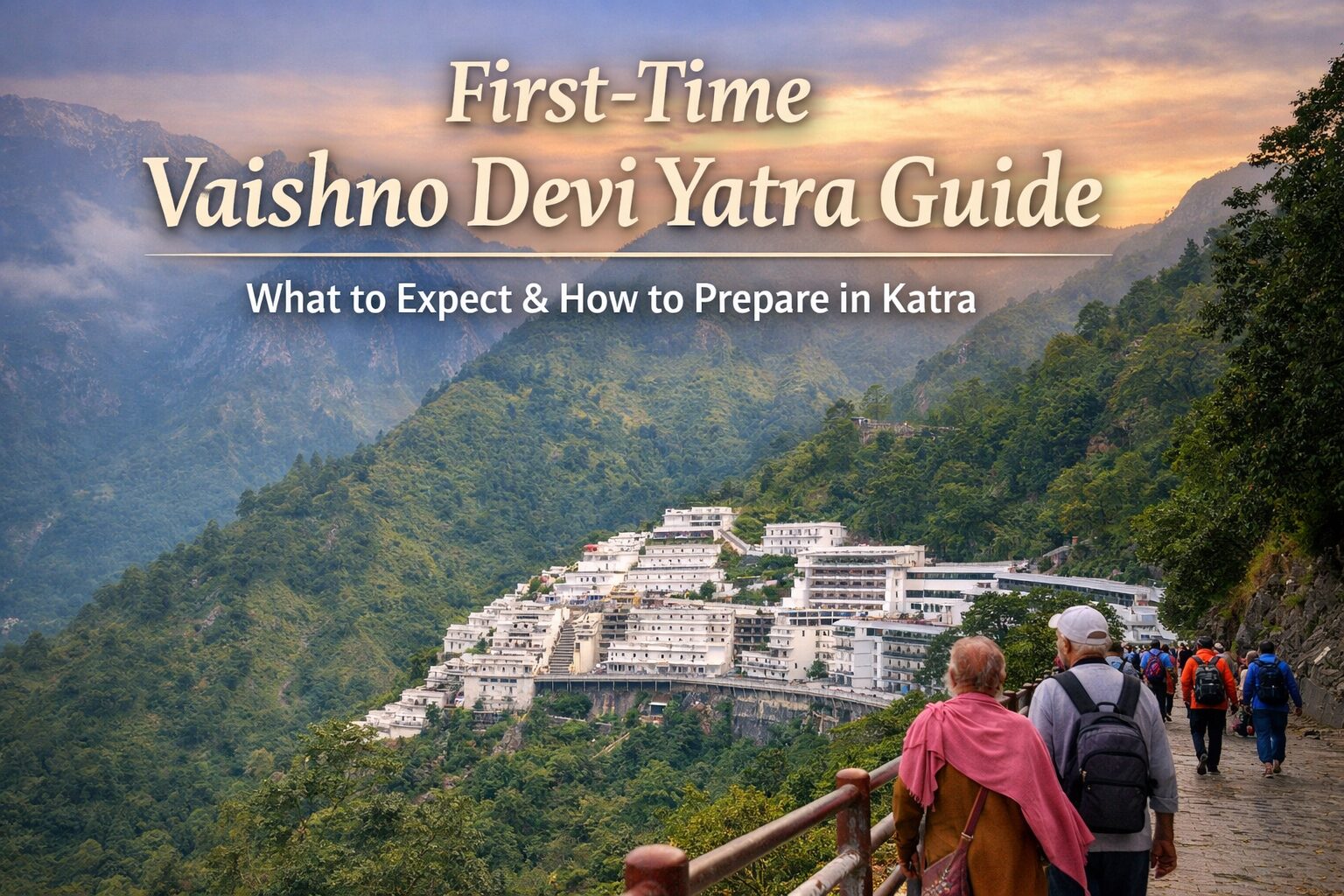

For many travelers, arriving in Katra marks the beginning of a journey that is as emotional as it is physical. The Vaishno Devi Yatra is not simply a trek to a shrine; it is a lived experience shaped by belief, preparation, and personal pace. First-time visitors often arrive with mixed expectations—some spiritual, some logistical—and a fair amount of uncertainty.
Understanding what the journey involves before you begin can make a meaningful difference. The terrain, weather, crowds, and systems in place all influence how the yatra feels on the ground. This guide is written to help you anticipate those realities calmly and clearly. Rather than offering shortcuts or rankings, it focuses on how the pilgrimage typically unfolds, what choices pilgrims face along the way, and how different travelers experience it. The goal is not to optimize the journey, but to help you approach it informed, steady, and prepared.
Understanding the Yatra in the Context of Katra
Katra functions as both a town and a threshold. Nearly every visitor here shares a common purpose: reaching the shrine of Mata Vaishno Devi, located high in the Trikuta Mountains. Over time, Katra has evolved to support this single flow of movement, with infrastructure, services, and rhythms shaped around pilgrimage cycles rather than conventional tourism.
The yatra itself begins after registration and proceeds along a well-defined mountain track. While the route is engineered for safety and accessibility, it remains a genuine uphill walk that demands time and stamina. This dual nature—organized yet physically real—is important to understand. Many first-time visitors underestimate the cumulative effect of altitude, distance, and waiting periods.
Katra’s role is not just logistical. For pilgrims arriving from far away, it is where intentions settle and preparations become real. The town can feel busy and functional, especially during peak periods, but it also offers moments of pause before ascent. Travelers who treat Katra as a transitional space, rather than a destination in itself, often adjust more smoothly to the pace of the journey.
How Most First-Time Travelers Experience the Journey
First-time pilgrims tend to follow a similar arc, regardless of age or background. The initial excitement on arrival is usually followed by a period of adjustment once the walk begins. The path is shared by people of all ages, moving at different speeds, with frequent stops for rest, refreshments, or prayer.
The early stretch from Katra to Banganga often feels manageable, with wide paths and steady foot traffic. As the climb continues, especially beyond Ardhkuwari, fatigue becomes more noticeable. This is where first-time visitors often reassess their pace and expectations.
Emotionally, the experience can shift between focus and distraction. Crowds, announcements, weather changes, and physical strain all compete for attention. Travelers who allow themselves to move without rushing—accepting pauses as part of the journey—often report a more settled experience. The yatra is rarely silent or solitary, but it is structured enough that most people eventually find a rhythm that suits them.
Options Along the Route: What They Mean in Practice
While the yatra route is singular, the way pilgrims move along it varies. These options are not about convenience alone; they shape how the journey feels physically and mentally.
Walking the Entire Route
Most pilgrims choose to walk the full distance. This allows for flexibility—stopping when needed, moving at a personal pace, and engaging fully with the environment. For first-time visitors, this option offers the clearest sense of progression, though it requires honest self-assessment of fitness and time.
Assisted Travel Options
Facilities such as ponies, palanquins, and battery-operated vehicles exist to support those who need them. These are commonly used by senior citizens, families with young children, or travelers with limited mobility. Using them does not shorten the spiritual intent of the journey, but it does change the physical experience and reliance on scheduling.
| Travel Mode | Physical Demand | Flexibility | Typical Use Case |
|---|---|---|---|
| Walking | Moderate to high | High | Most first-time pilgrims |
| Pony / Palanquin | Low | Medium | Elderly, injured travelers |
| Battery Vehicle | Low | Low | Shorter assisted segments |
Understanding these options ahead of time helps travelers make decisions without pressure once on the route.
What Works for Different Travel Styles
Not all pilgrims approach the yatra with the same priorities. Some move with devotional focus, others with family coordination in mind, and some as part of a broader regional trip. Recognizing your travel style can help set realistic expectations.
Solo travelers often appreciate the autonomy of walking, adjusting pace as needed. Families tend to move more slowly, with frequent stops and shared decision-making. Senior citizens usually benefit from structured assistance and pre-planned rest points.
| Traveler Type | Common Challenges | What Helps Most |
|---|---|---|
| Solo pilgrims | Fatigue, timing | Flexible pacing |
| Families | Coordination, rest needs | Planned breaks |
| Senior citizens | Endurance, stability | Assisted options |
| Tourists extending stay | Scheduling | Buffer days in Katra |
There is no single “correct” way to do the yatra. Aligning choices with your group’s needs tends to reduce stress and uncertainty.
Seasonal and Timing Considerations
The time of year significantly affects how the yatra feels. Weather, daylight hours, and crowd density all shift with the seasons.
Summer months bring heavy footfall and warmer temperatures, making hydration and early starts important. Monsoon season introduces rain and slippery surfaces, requiring cautious movement. Winter offers clearer air and fewer crowds, but cold conditions and occasional route adjustments.
Timing within a day also matters. Many first-time pilgrims begin early in the morning or late at night to avoid congestion. While this can reduce waiting times, it also means navigating in low light or cooler temperatures.
Seasonal awareness is less about choosing the “best” time and more about preparing for the conditions you are likely to face.
Common Misconceptions First-Time Visitors Have
One frequent misunderstanding is assuming the yatra is physically easy because it is well-managed. While infrastructure is strong, the distance and elevation are real. Another misconception is that faster movement leads to a better experience. In practice, rushing often increases fatigue and stress.
Some visitors expect constant availability of facilities without delays. During peak periods, queues and waiting times are part of the reality. Accepting this ahead of time helps maintain calm.
Finally, many assume that Katra itself requires extensive sightseeing time. For most pilgrims, it functions best as a place to rest, prepare, and recover rather than explore extensively.
Guidance for Families and Elderly Travelers
Families traveling together benefit from setting shared expectations before starting. Children may tire unpredictably, and elders may need more frequent pauses. Using assistance services is common and generally well-integrated into the system.
For elderly travelers, pacing and warmth are key considerations. Even short walks can feel strenuous at altitude. Taking advantage of rest areas and not hesitating to stop early for the day can make the journey more manageable.
The yatra accommodates diverse abilities, but it rewards those who listen to their bodies rather than adhering to rigid plans.
Frequently Asked Questions
Is prior registration necessary before starting the yatra?
Yes, registration is mandatory and helps regulate the flow of pilgrims. It is usually completed before beginning the ascent.
How long does the journey typically take?
For first-time walkers, it often spans several hours each way, depending on pace, rest stops, and crowd conditions.
Can elderly pilgrims complete the yatra comfortably?
Many do, especially with assisted travel options and adequate rest. Planning conservatively helps.
Is the route safe at night?
The path is well-lit and monitored, but night travel requires attention to footing and weather.
Does weather disrupt the yatra?
Occasionally, especially during heavy rain or snowfall. Temporary pauses are part of safety management.
Is Katra suitable for an extended stay after the yatra?
Some travelers rest for a day before continuing onward, but most treat it as a transitional stop.
Closing Perspective
Approaching the Vaishno Devi Yatra for the first time is less about mastering logistics and more about understanding the journey’s rhythm. Katra offers structure, the route offers challenge, and the experience unfolds somewhere in between. Travelers who prepare thoughtfully, allow flexibility, and respect their own limits often find the pilgrimage steadier and more meaningful. There is no need to rush or compare experiences. With clear expectations and calm planning, the journey becomes not just manageable, but grounded in its purpose.
[…] Vaishno Devi Bhawan is often quieter emotionally than expected. Relief usually outweighs excitement, as the […]
[…] Vaishno Devi Yatra is often described as a walk, but it functions more like a sequence of managed stages. Once […]
[…] Vaishno Devi Yatra can be suitable for many elderly people with knee problems, provided: […]
[…] of the simplest ways to understand the spiritual meaning of the Vaishno Devi Yatra is to see it as a layered […]