


Katra Weather Forecast Today (January 21, 2026) for Vaishno Devi Yatra: Travel Advisory
Wednesday, January 21, 2026 – Winter conditions continue over Katra and the Vaishno Devi track, with cold mornings and evenings and a relatively milder window through the afternoon. Pilgrims should be prepared for a noticeable temperature drop as they gain height from Katra to Bhawan and especially around Bhairon Baba.
For broader planning around routes, stays and timings beyond just today’s weather, you can refer to the Katra Vaishno Devi Travel Guide: Yatra, Stay & Best Time to Visit.
Today’s outlook suggests mostly dry conditions, but cold air, occasional light mist or haze in pockets, and a sharper chill on exposed, windy stretches of the track. Layering well and pacing the climb will matter more than speed.
Today’s Weather at a Glance
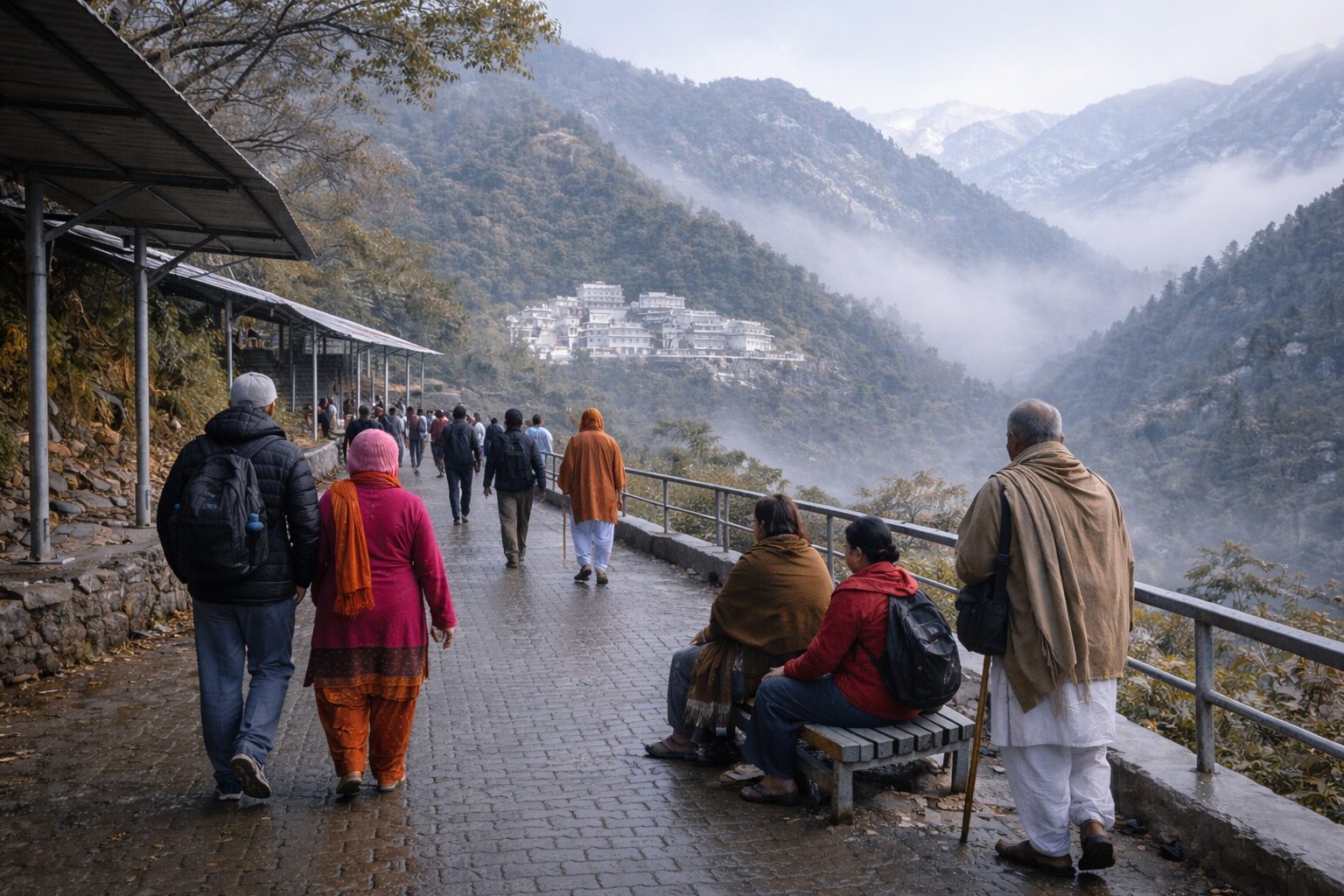
| Time of day | Conditions | Temp (approx.) | Walking comfort | Weather |
|---|---|---|---|---|
| Early morning (3–7 am) | Cold, possible fog patches | 4–8°C | Challenging | 🌫️ |
| Morning (7–11 am) | Cool, partly hazy | 8–12°C | Manageable | 🌤️ |
| Afternoon (11 am–3 pm) | Pleasant, mostly clear | 12–15°C | Comfortable | 🌤️ |
| Evening (3–8 pm) | Cool to cold, light breeze | 8–11°C | Manageable | 💨 |
| Night (after 8 pm) | Cold, more chill at height | 5–9°C | Challenging | 🌫️ |
What this means for pilgrims today
- The most comfortable walking window for most pilgrims will be late morning to early afternoon, especially between Adhkuwari and Sanjichhat.
- Early morning and late night yatras will feel significantly colder, particularly on open, windy bends and around Bhawan and Bhairon Ghati.
- Light fog or haze in the lower stretches near Katra and Banganga before sunrise may reduce visibility briefly; stick to the main track and railings.
- Those with respiratory or heart issues should avoid the coldest window (late night to early morning) and walk slower on steeper sections.
- Dry conditions are likely to keep the track generally safe underfoot, but the cold metal railings and handrails can feel very chilly – gloves are helpful.
Weather impact on Vaishno Devi Yatra operations
Today’s pattern favours normal Yatra operations. No widespread rain or snowfall is expected around Katra, and the cold, while sharp at altitude, is typical for late January. However, temperatures near Bhawan and Bhairon Baba can be several degrees lower than Katra, especially before sunrise and after sunset.
- Yatra status: The weather itself is unlikely to trigger suspensions, but always follow the latest shrine board advisories for any operational or crowd-related restrictions.
- Battery car and ropeway: Cool, dry conditions are usually suitable for services to run. Pilgrims should still be prepared for waits in open areas where wind can increase the chill.
- Darshan queues: Standing still in shaded or elevated areas will feel colder than walking. Keep an extra inner layer handy just for queue time.
- Seniors and children: Extra care is needed in the early morning and night slots, when perceived temperature can feel close to near-freezing at the highest points.
For any last-minute updates on Yatra arrangements, facilities and official advisories, refer to notifications from the Shri Mata Vaishno Devi Shrine Board, especially if you are starting late at night or in a vulnerable health group.
Walking and trekking conditions on the Katra–Bhawan route
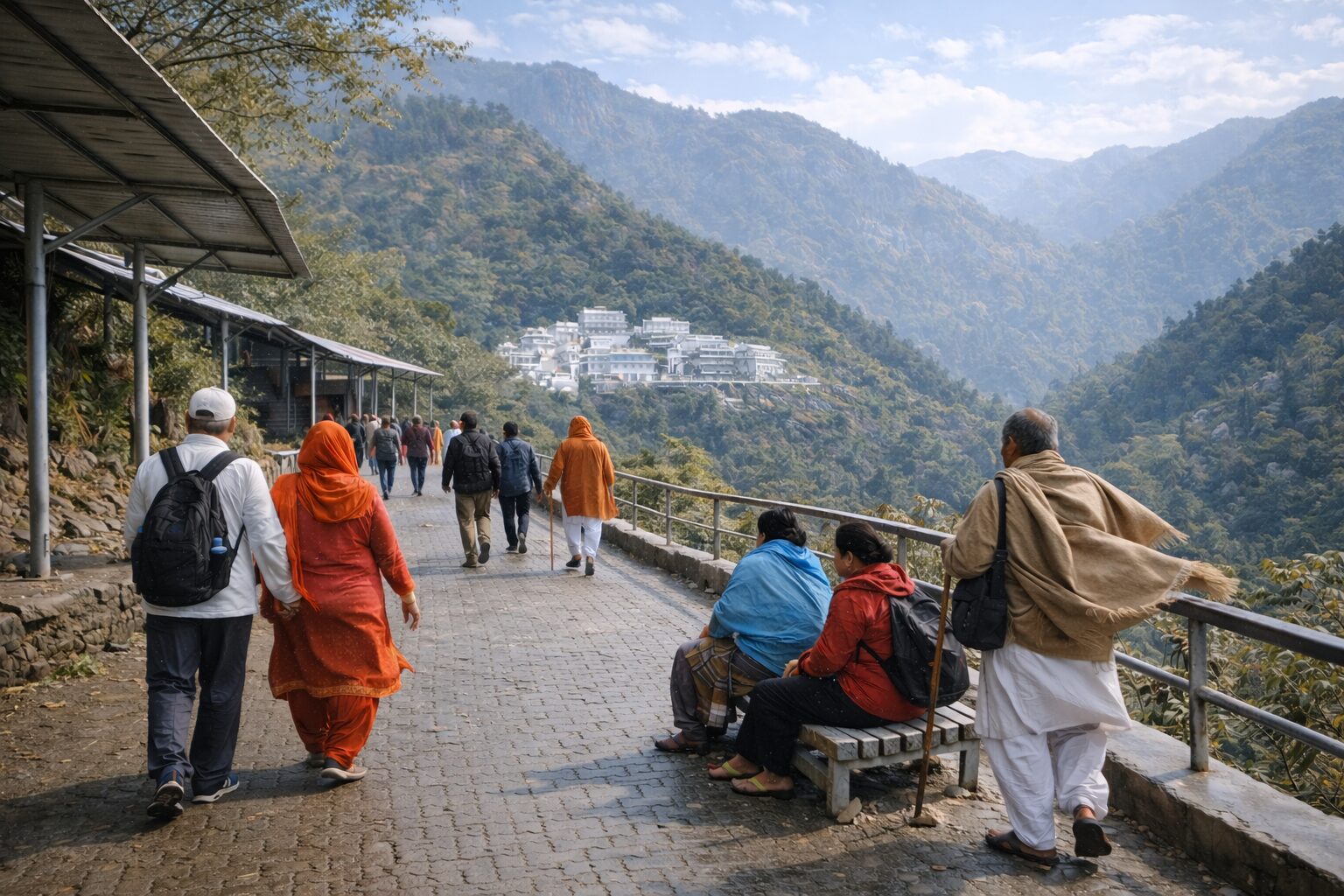
The main track from Banganga to Bhawan is expected to stay dry and mostly clear through the day, with cold air but no major weather disruption. The experience will vary significantly with time of day and altitude.
Track conditions by segment
- Katra to Banganga: Early morning may see some light fog or haze, which usually lifts as the sun gets stronger. The concrete path can feel cold to the feet if you are walking barefoot; proper socks under prasad chappals help.
- Banganga to Adhkuwari: Gentle to moderate climb, more shaded in stretches. Cold pockets linger longer here in the morning, so keep your ears and head covered.
- Adhkuwari to Sanjichhat: Steeper sections, more exposed to wind. During afternoon, this is pleasant but can feel quite cold if the breeze picks up, especially when you halt.
- Sanjichhat to Bhawan: Higher and cooler. Even in afternoon, wind chill can make it feel colder than the temperature suggests. Nights feel distinctly harsh here in January.
- Bhawan to Bhairon Baba (for those proceeding further): This is usually the coldest, windiest stretch and not advisable for those poorly dressed for winter or with knee/heart issues, especially after sunset.
Footwear and clothing guidance
- Footwear: Well-gripped sports shoes with socks are strongly recommended; avoid thin, slippery soles. If walking barefoot, consider thick socks for at least part of the track.
- Layers: Use three layers – a thermal inner, a full-sleeve mid-layer, and a wind-resistant outer jacket. This allows you to adjust as you warm up on the climb.
- Accessories: Woollen cap, muffler/neck warmer, ear cover, and light gloves make a big difference in the early morning and late night chill.
- Rain gear: Not a priority today, but a compact windcheater helps against breeze, especially if you’re sensitive to cold.
Crowd movement and timing choices due to weather
In late January, many pilgrims deliberately choose daytime for the climb to avoid the harshest cold, which can lead to relatively heavier movement from late morning to late evening on some days. That said, weather today is more of a comfort factor than a constraint.
- Coolest but quieter: Post-midnight to early morning (3–7 am) usually sees lighter footfall but is the coldest and least comfortable for families and senior citizens.
- Most comfortable: 9 am–3 pm is the best compromise between comfort and visibility. Crowds can be moderate but manageable, and the track is easiest to walk in this window.
- Evening slot: 4–8 pm is popular, but temperatures start dropping quickly as soon as the sun dips, especially around Sanjichhat and Bhawan.
- Queue management: Layer assuming you will stand still for stretches near Bhawan – it will feel colder than during the walk.
If you are travelling with small children, elderly family members, or anyone with a chronic condition, planning your darshan timing around the late-morning to early-afternoon window is the most weather-friendly choice today.
Transport and delay considerations
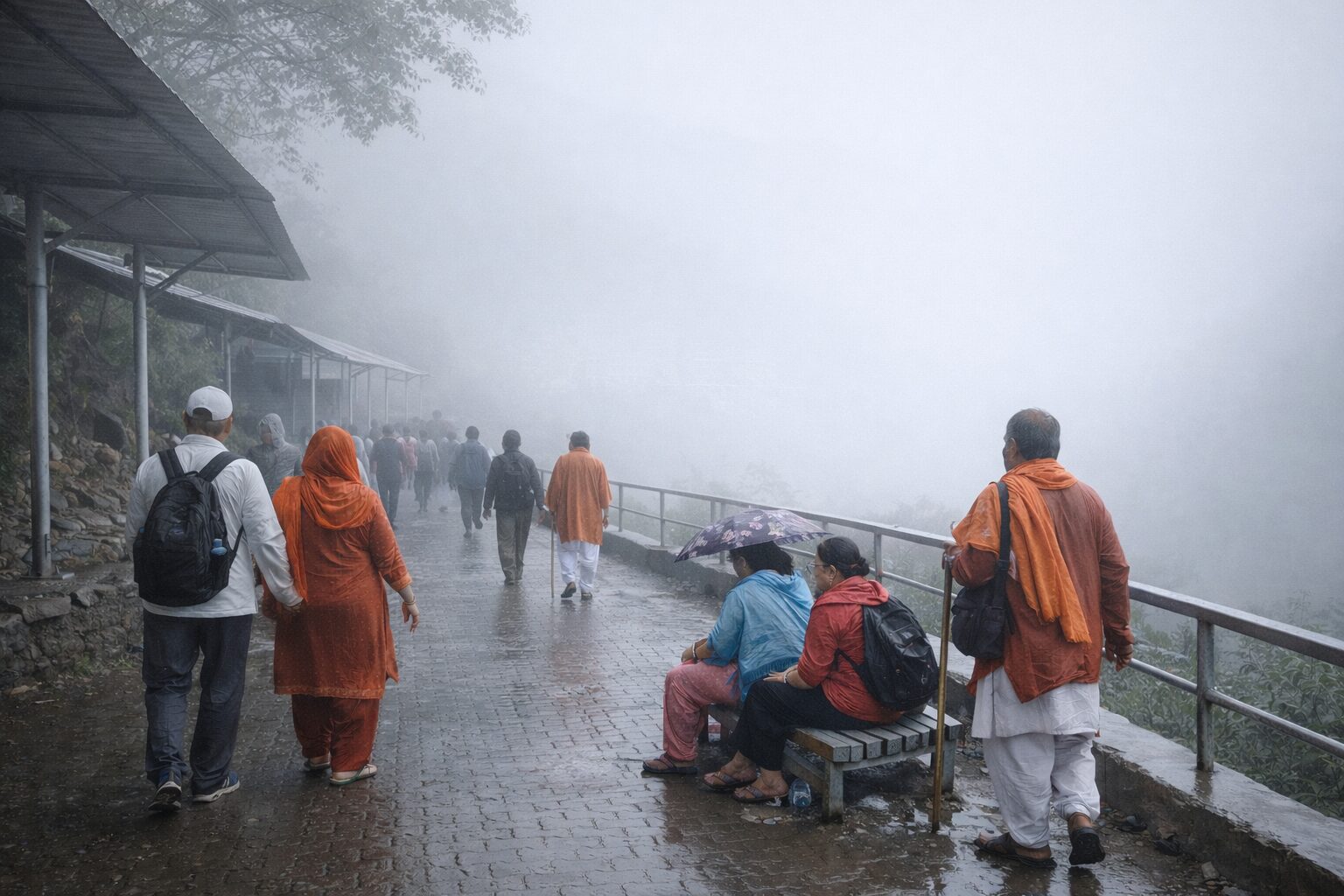
At this time of year, weather-related disruption is more likely on the approach to Katra than on the Yatra track itself. Early-morning fog or low visibility over the plains and lower hills on some days can affect trains and road traffic into Jammu and Katra, even if conditions later improve.
Getting to and from Katra
- Rail travel: Winter fog can occasionally delay trains into Jammu and Katra, especially morning arrivals. If you have a same-day Yatra in mind, keep some buffer in your plan.
- Road travel: Buses and taxis from Jammu to Katra usually continue operating, but speeds can be lower in early morning or evening if visibility drops. Night-time chill is also higher on open stretches.
- Flights into Jammu: On some winter days, morning departures and arrivals may be rescheduled or slightly delayed due to visibility at origin/destination. Always reconfirm your flight status on the airline or airport portal.
On the Yatra itself
- Ponies and palkies: Animals can be more cautious on colder mornings when the track is damp with dew. This usually does not stop services but makes slow, steady movement more important.
- Battery cars: Generally unaffected by today’s expected conditions, though queues are in open areas – dress warm and keep head and ears covered while waiting.
- Ropeway: Wind and visibility can affect operations on some days; while today’s conditions look mostly favourable, any suspension or slowdown will be for safety reasons.
Safety advisories in today’s winter pattern
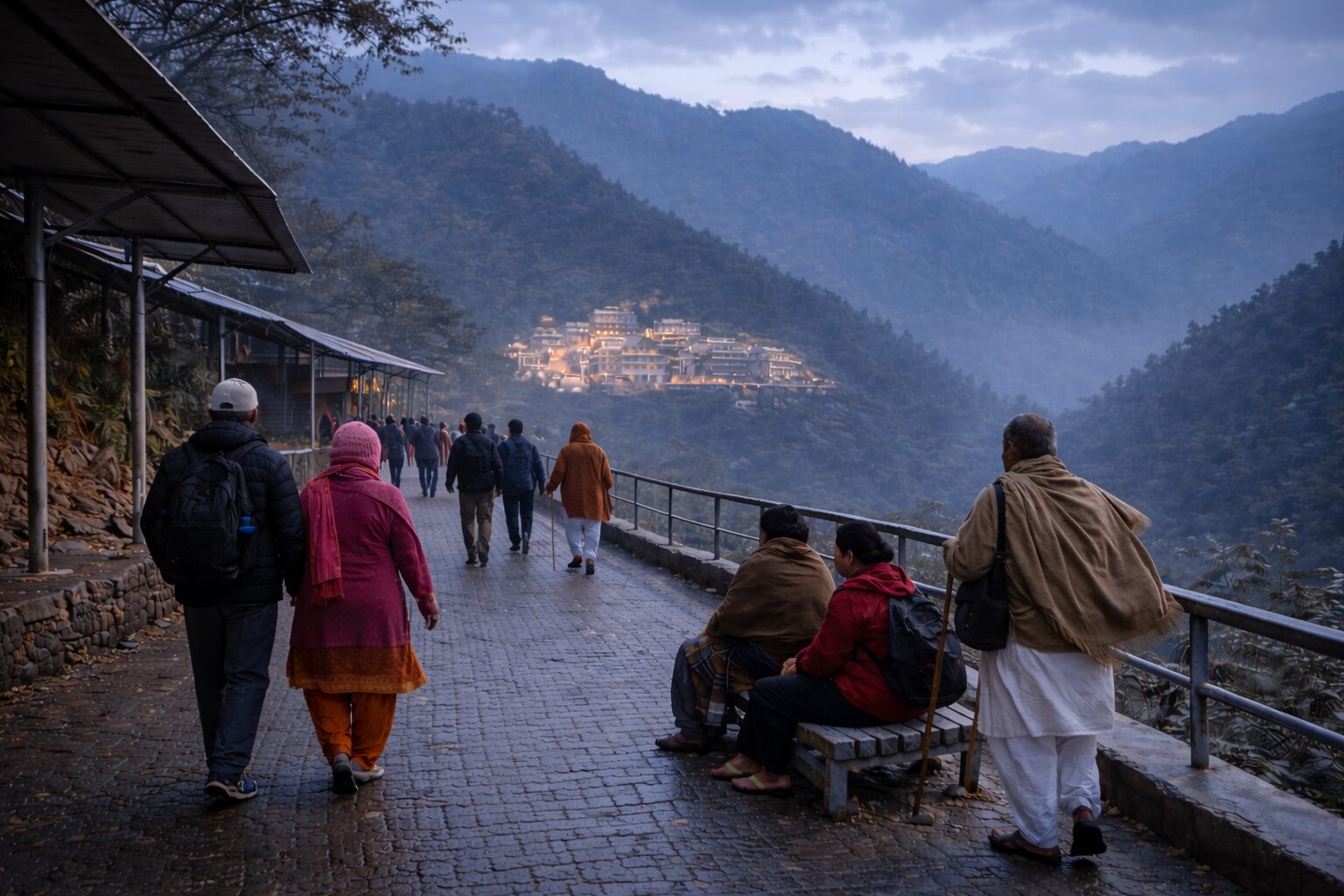
The dominant risk factor today is cold stress, especially for those not used to hill winters or for pilgrims starting late at night. Dry weather generally keeps the track safer than during rains or snow, but do not underestimate wind chill at higher points.
Health and pace
- Pre-existing conditions: Those with heart disease, asthma, COPD, or uncontrolled diabetes should avoid rushing and consider starting in the warmer, brighter part of the day.
- Hydration: Dehydration is easy in cold weather because you feel less thirsty. Sip warm water when available; avoid excessive tea or coffee as your only fluid.
- Rest breaks: Use covered or semi-enclosed shelters for longer breaks to reduce exposure to wind. Short, frequent rests are better than one long halt in the cold.
- Children and infants: Extra layering and head/ear coverage are essential. Avoid exposing them to open, windy stretches for long durations, especially after sunset.
Track discipline
- Stay on the main, official route. Avoid shortcuts or steep side tracks that may be less well-lit or less frequently patrolled.
- Use handrails on steeper sections, especially if you feel stiff due to cold or are descending in the evening or night.
- Avoid running or sudden sprints on the climb; the combination of cold air and exertion can be stressful for the heart and lungs.
- Keep a small torch or headlamp if you’re walking in the early hours or late at night; while the track is lit, extra light helps in hazy conditions.
Practical tips for pilgrims starting today
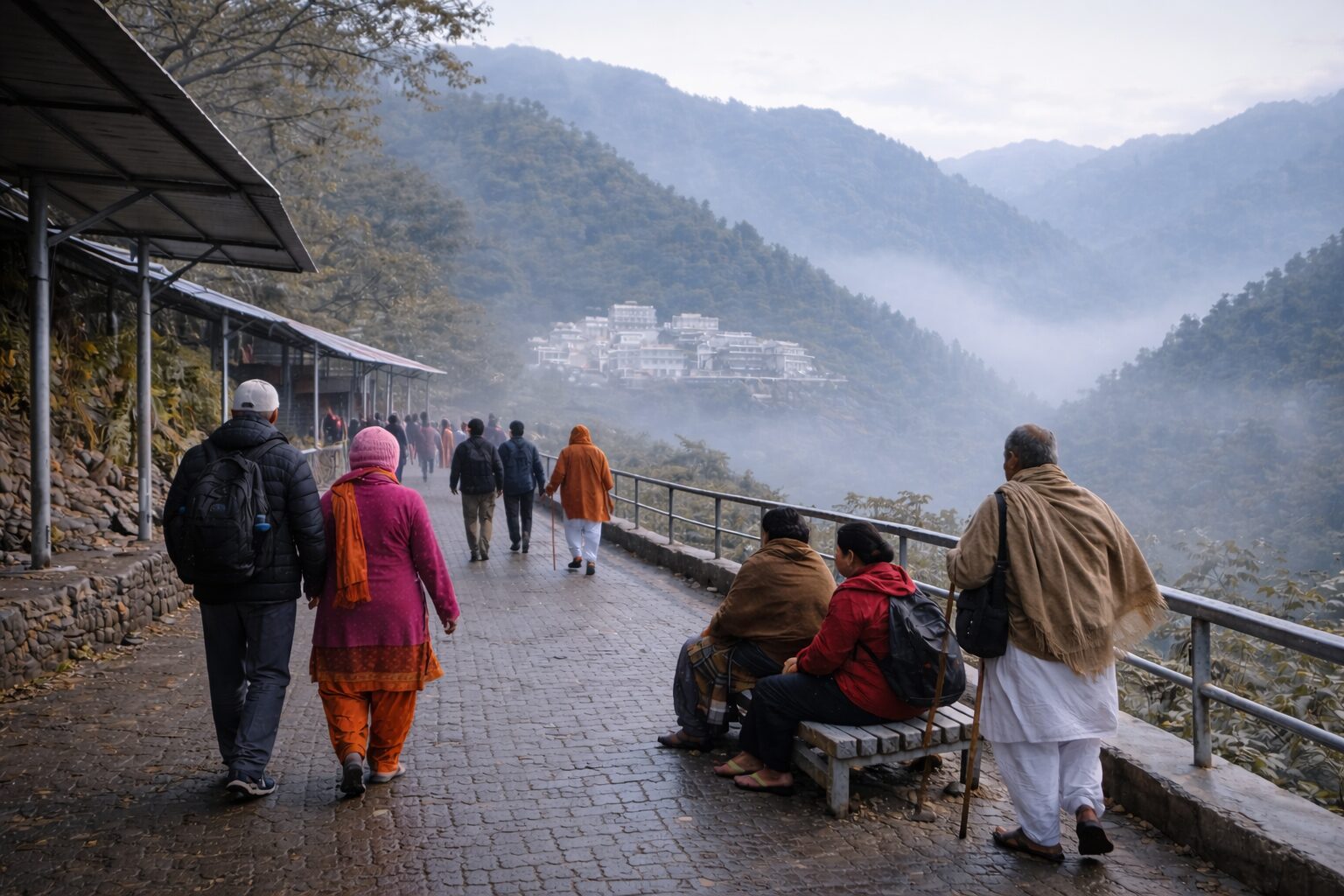
- Layer smartly: Start with all your layers on if beginning before sunrise, then slowly open zippers or remove the outer layer as you warm up. Keep one layer dry and ready for when you reach Bhawan.
- Carry a small scarf or mask: Useful both for cold air and for crowded stretches. It also helps cut the wind chill on exposed bends.
- Warmth at Bhawan: After darshan, many pilgrims feel a sudden chill as sweat cools on the body. Change to a dry inner if possible and re-layer before starting the descent or moving towards Bhairon Baba.
- Food and breaks: Prefer light, warm meals or snacks. Very heavy food before a steep climb can make exertion uncomfortable, particularly in the cold.
- Keep electronics protected: Batteries on phones and cameras drain faster in low temperatures; keep gadgets in inner pockets close to your body warmth.
Uncertainty and how the forecast could shift
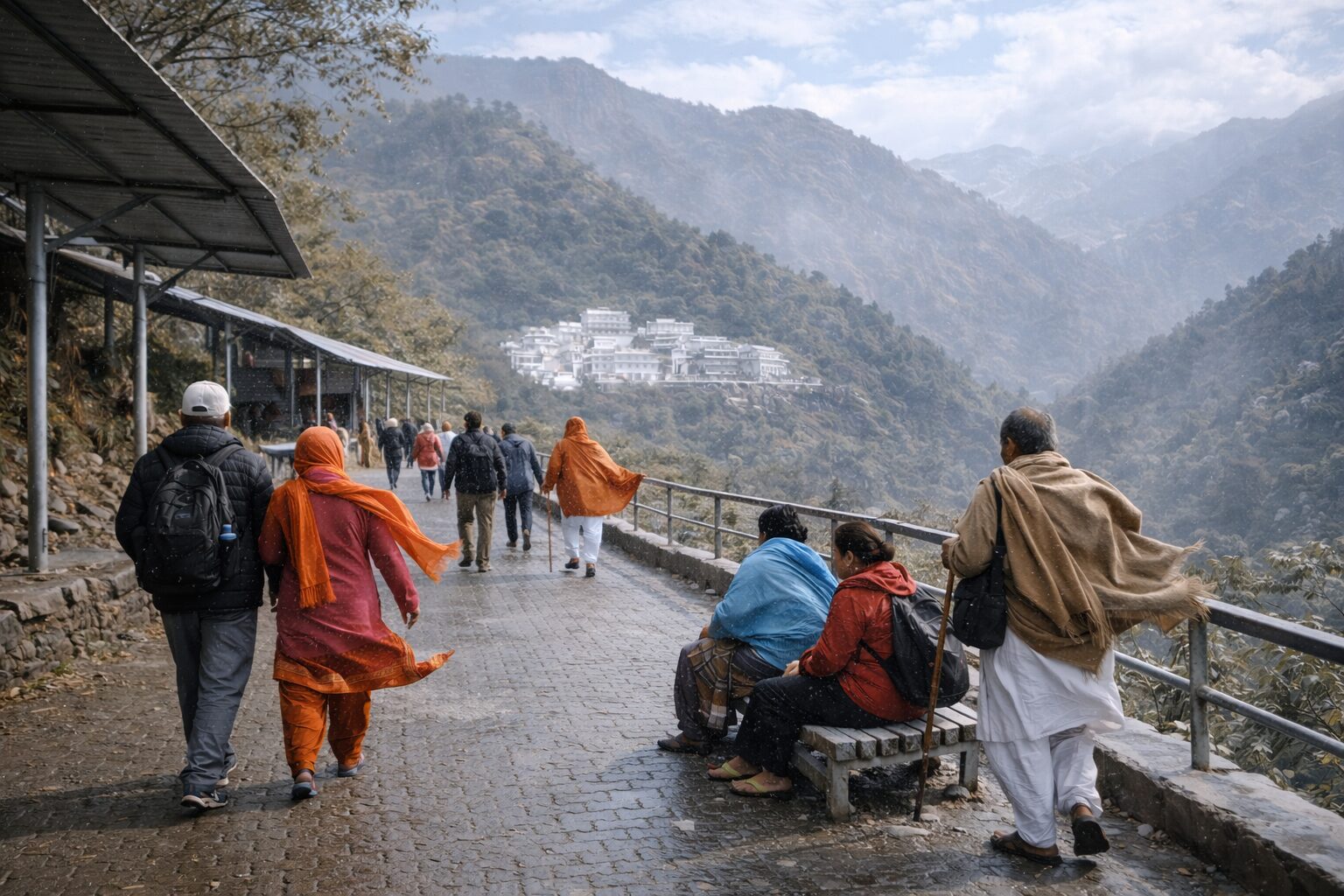
Late-January patterns over this region are generally stable, and a cold, dry day like today is typical. However, conditions in the hills can still change faster than in the plains, especially in terms of wind, cloud cover, and local fog formation in the early hours.
- If a weak western disturbance or local system moves closer than expected, light clouding and a slightly higher chance of drizzle in some pockets cannot be ruled out, more so at higher elevations.
- Fog near Katra in the pre-dawn hours can be patchy – some sections may be clear while others are briefly hazy; this usually improves after sunrise.
- Wind chill at Sanjichhat, Bhawan, and Bhairon Baba can at times make it feel a few degrees colder than the indicated range, especially on exposed ridges.
It is sensible to check a fresh local update closer to your actual start time, especially if you are travelling overnight or plan to be on the track in the coldest hours.
Quick bullet summary for today’s Vaishno Devi Yatra
- Cold winter day in Katra with dry, mostly clear weather and a brief fog/haze risk early morning.
- Warmest, most comfortable walking window: roughly 9 am–3 pm, particularly suitable for families and seniors.
- Evening and night will feel significantly colder at higher points; extra layers, gloves, and head protection are important.
- No strong indication of widespread rain or snow today, so track conditions should remain largely dry and stable.
- Approach travel (train/road/flight) may still face minor winter-related delays on some routes; keep time buffers.
- Health-sensitive pilgrims should avoid rushing the climb and consider daytime darshan to reduce cold exposure.
FAQs for pilgrims travelling today or in the next 24 hours
1. Is it safe to do the Vaishno Devi Yatra at night in this weather?
From a weather point of view, the track is likely to remain dry, which is good for safety. However, temperatures drop sharply at night, especially near Bhawan and Bhairon Baba, making it more challenging. If you are young, fit, and well layered, a night Yatra is manageable; families with seniors or small children are better off choosing a daytime start.
2. Will I need a heavy woollen coat, or are light layers enough?
For January conditions, a proper winter jacket or heavy woollen outer layer is strongly advised, especially if you are out before 9 am or after 6 pm. Light layers alone may be fine in the afternoon at lower levels, but they will feel inadequate at Sanjichhat, Bhawan, and Bhairon Ghati.
3. Is there any chance of rain or snow affecting the Yatra today?
Based on the prevailing pattern, the day leans more towards cold and dry than wet. A brief, light spell cannot ever be ruled out entirely in hill regions, but significant rain or snow looks unlikely. Even so, carrying a compact windproof layer is wise.
4. How early can fog form on the Katra side, and will it make the track unsafe?
Fog or low clouds, if they form, are most probable in the pre-dawn hours around Katra and the lower approach to Banganga. Visibility reduction is usually moderate and tends to improve after sunrise. The track has lighting and railings; walk steadily, avoid shortcuts, and use a small torch for added comfort.
5. What is the best time today to start the climb with elderly parents?
Starting somewhere between 8 am and 11 am balances comfort and safety well. By then the worst of the chill has eased at lower levels, but you still reach Bhawan in daylight, when conditions – including queues and walking surfaces – feel more manageable for seniors.
6. Will battery car or ropeway services be affected by the cold?
Cold temperatures alone typically do not disrupt these services. Ropeway operations are more sensitive to wind and visibility than to temperature. Today’s pattern appears generally favourable, but any temporary suspension would be a safety call by operators. Always check the latest local update once you reach Katra or Bhawan.
7. How should I plan clothing for children on the Yatra today?
Dress children in multiple thin layers: thermal inner, warm mid-layer, and a padded jacket, plus cap, ear cover, gloves, and good socks. Avoid exposing them for long in open, windy stretches during early morning or late evening, and keep a spare dry layer in case they sweat or spill liquids.
8. I arrive in Katra by late evening. Should I start the Yatra immediately or wait till morning?
If you are well-rested, properly layered, and comfortable with colder conditions, you may start the Yatra at night, when crowding can sometimes be lighter. However, if you are tired from travel or are with elders or children, resting for the night and starting after sunrise gives you a warmer, more forgiving window today.
9. Are ponchos or raincoats needed on the track today?
They are not essential under the expected dry conditions. Still, a light, foldable windcheater or shell can be very handy to cut the breeze at higher points, particularly when you halt for longer than a few minutes near Bhawan.
10. How much water should I carry in this cold weather?
Even though you may not feel thirsty, your body still loses fluids through exertion. Carry a small bottle and sip periodically rather than drinking large amounts at once. Whenever warm water or tea stalls are available, take short, warm breaks, but do not rely only on tea or coffee for hydration.
11. Is the descent from Bhawan more risky in the evening cold?
The descent can feel tougher on the knees and muscles, and the cold makes you stiff faster. In the evening and night, take shorter steps, use railings on steeper bits, and avoid hurrying down. Proper shoes with grip are more important on the descent than most people expect.
12. Should I postpone my Yatra if I have a mild cough in this weather?
If your symptoms are mild, stable, and you are otherwise healthy, the cold may simply make you more uncomfortable, especially on steep climbs and in windy stretches. Cover your mouth and nose, walk slower, and avoid the coldest hours. However, if you have any breathing difficulty, chest pain, or a recent serious illness, it is safer to consult a doctor before starting the Yatra in winter conditions.