

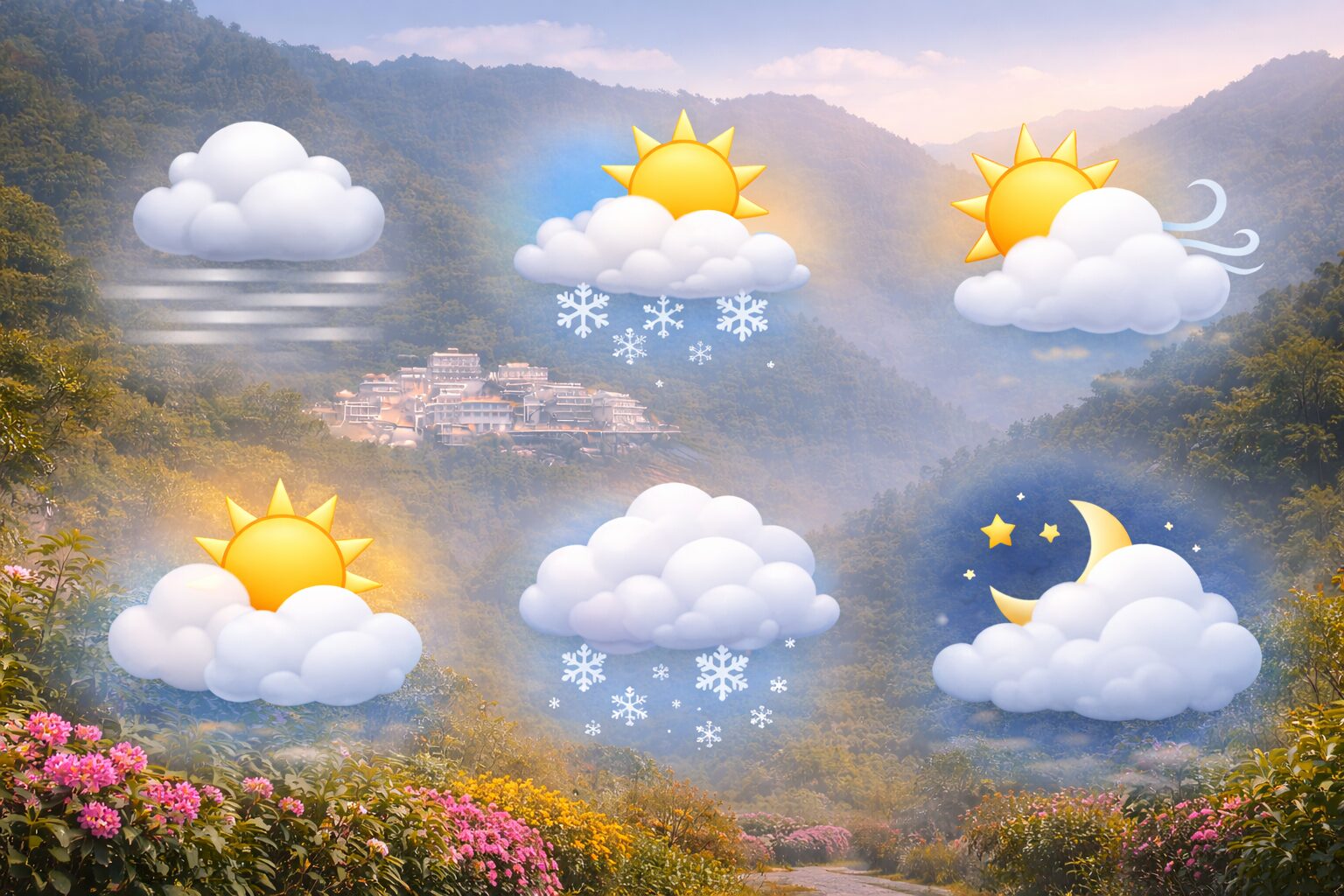
Katra Weather Forecast Today (January 24, 2026) for Vaishno Devi Yatra: Travel Advisory
Sunday, January 24, 2026 – Katra and the Vaishno Devi Yatra route are in the heart of the winter season. Pilgrims can expect cold conditions from early morning through late night, with the sharpest chill felt at Bhawan and the higher stretches above Ardhkuwari. The day is likely to remain mostly dry, but the combination of early-morning chill, possible patchy fog, and a noticeable drop in temperature after sunset will influence how comfortable the walk feels.
This advisory is intended for those on the track today, starting tonight, or planning to arrive in Katra within the next 24 hours. Use it to decide your walking window, layers to carry, and how much extra time to allow for rest and warm-up breaks along the way.
For broader planning around dates, stays and route options, you can refer to the Katra Vaishno Devi Travel Guide: Yatra, Stay & Best Time to Visit.
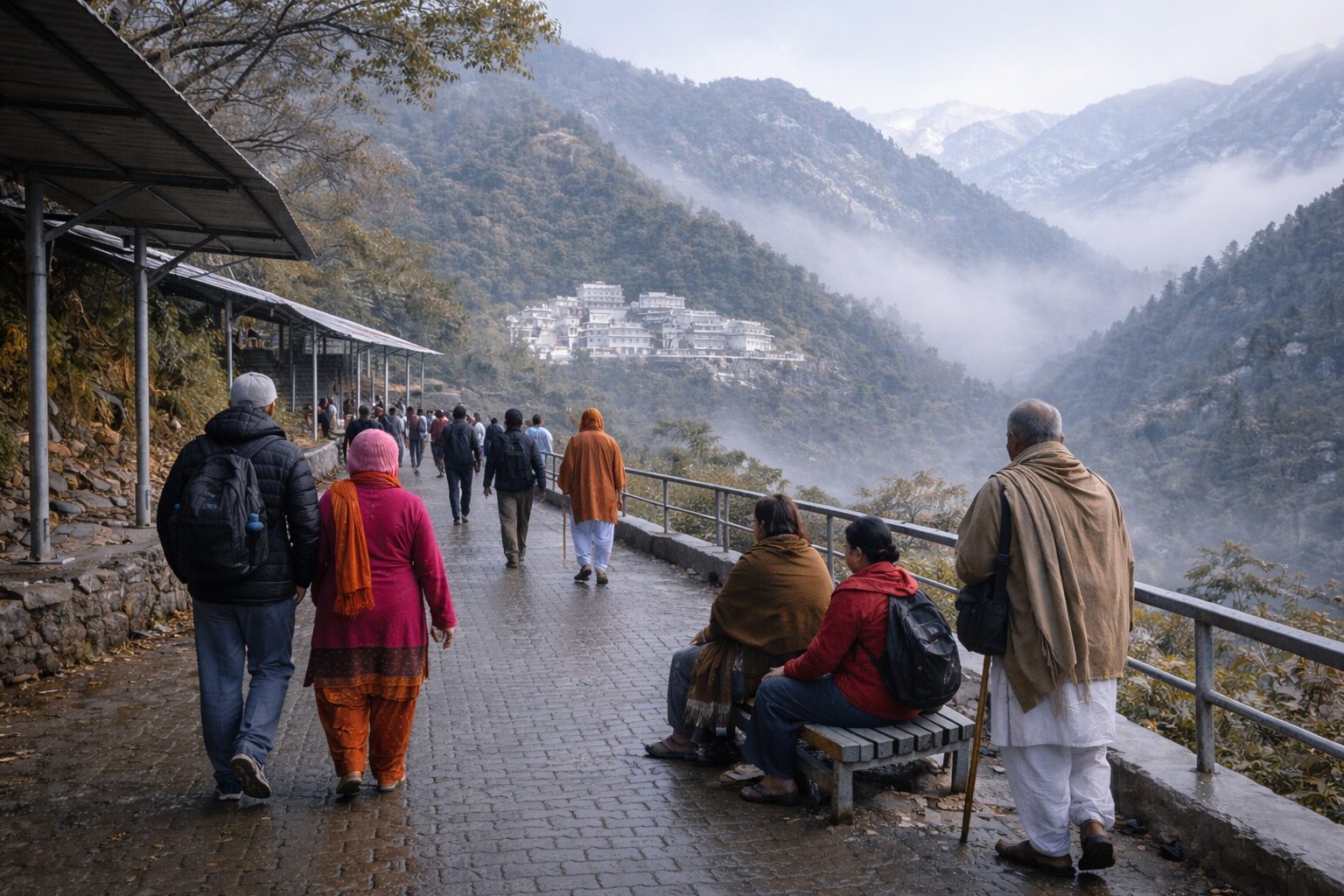


Today’s Weather at a Glance for Katra & Vaishno Devi
| Time of day | Conditions | Temp (approx.) | Walking comfort | Weather |
|---|---|---|---|---|
| Early morning (3–7 am) | Cold, possible fog | 4–8°C | Challenging | 🌫️ |
| Morning (7–11 am) | Cool, turning clearer | 8–12°C | Manageable | 🌤️ |
| Afternoon (11 am–3 pm) | Sunny, cool | 12–16°C | Comfortable | 🌤️ |
| Evening (3–8 pm) | Cool, breezy | 8–12°C | Manageable | 💨 |
| Late night (8 pm–3 am) | Very cold, clear | 3–7°C | Challenging | ❄️ |
What this means for pilgrims today
- The warmest and most comfortable walking window is late morning to mid-afternoon; plan longer stretches between 10 am and 3 pm where possible.
- Early-morning and late-night yatras will feel very cold, especially above Ardhkuwari and near Bhawan; you will need proper winter layers, gloves, and head covering.
- Patchy fog is most likely just before sunrise on the lower stretches near Katra; visibility can drop briefly, so move steadily and avoid rushing.
- A light breeze in the evening can make it feel colder than the actual temperature, particularly if you are sweating from the climb.
- Families with young children or elderly members should avoid starting the trek in the 3–7 am and 8 pm–3 am windows unless fully prepared for the cold.
Weather Impact on Vaishno Devi Yatra Operations
Today’s pattern points to a typical late-January winter day in Katra: cold but largely stable. That generally supports normal Shrine operations, with the main impact being thermal comfort rather than weather-related disruption.
- Yatra status: No broad weather-based suspension is expected under such conditions. However, localized restrictions or crowd management measures can be imposed if fog becomes dense or if there is any unexpected spell of rain or sleet at higher levels.
- Darshan timing: The cold will be sharpest at Bhawan during the late night and pre-dawn hours. Queues are often thinner at these times, but exposure risk is higher; carry a warm cap, muffler, and socks if you plan night darshan.
- On-route facilities: Tea points and shelters along the track become especially important in this weather. Expect more people to pause at heated or enclosed spaces at Adhkuwari, Sanjhichhat, and Bhawan during early morning and late evening.
- Helicopter services: In winter, operations between Katra and Sanjhichhat can be occasionally affected by low visibility or local winds, particularly in the first half of the day. Always check the latest status and reporting time with the operator and the Shri Mata Vaishno Devi Shrine Board before relying on a helicopter to match train or flight connections.
- Security and checks: Winter layers and blankets can slow down frisking and baggage scanning slightly. Keep small items consolidated and accessible to move through checkpoints without long exposure to the wind.
Walking and Trekking Conditions on the Route
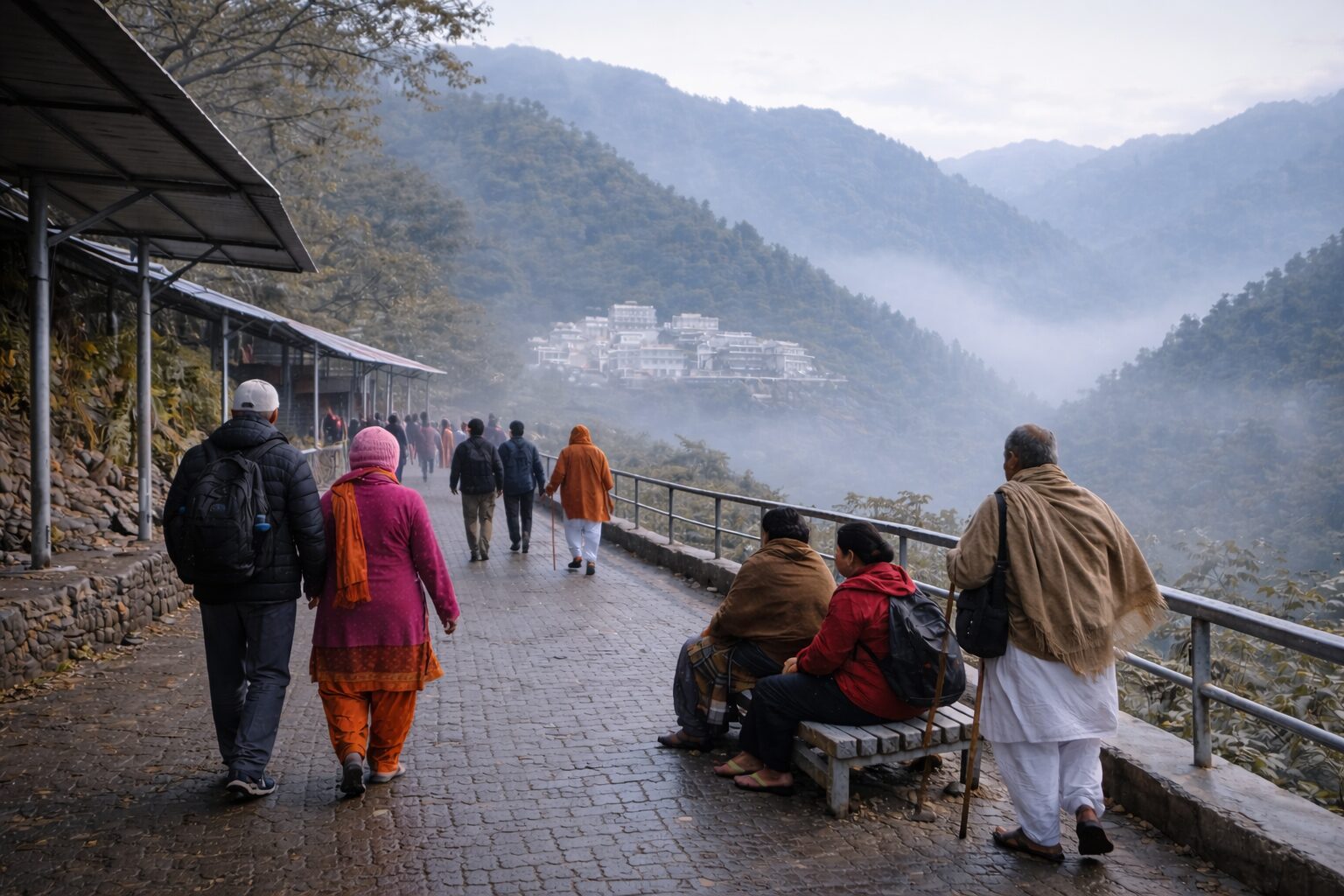
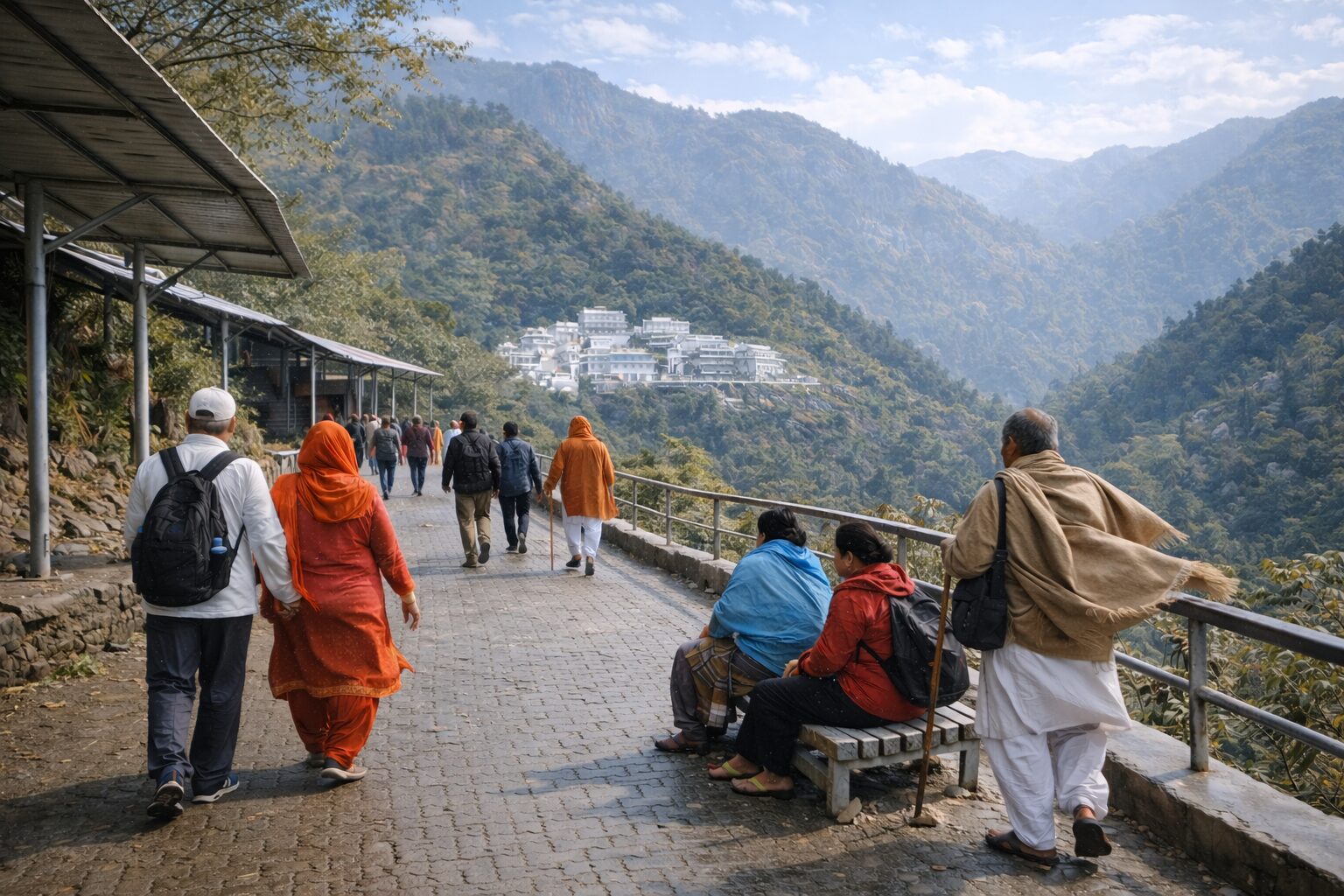
The 12–13 km track from Katra to Bhawan has mixed exposure: shaded stretches, open viewpoints, and steeper sections where sweat and wind work together to increase the chill. With today’s cold but mainly dry pattern, footing should generally be firm, but you should still anticipate the following:
Lower track: Katra to Ardhkuwari
- Early morning: The path may feel damp in places from overnight dew and cooling. Combine this with possible shallow fog and dim light, and it’s wise to walk slowly, especially on ramps and corners.
- Midday: The most comfortable stretch today. The sun typically reaches more of the lower track, making this the best time for elderly pilgrims, cardiac patients (cleared by their doctor), and small children.
- Footwear: Closed shoes with good grip remain important. Open sandals are not advisable in this chill, especially for those with diabetes or circulation issues.
Mid and upper track: Ardhkuwari to Sanjhichhat to Bhawan
- Temperature drop: Expect a noticeable drop of a few degrees as you gain height. Wind exposure increases after Sanjhichhat, and once the sun lowers, the chill can set in quickly even if skies remain clear.
- Wind factor: Even a light breeze across sweat-damp clothes can feel biting. Carry a light windcheater or an extra fleece layer in your small daypack.
- Rest strategy: In very cold air, long stationary rests can make muscles stiff. Aim for shorter, more frequent breaks in sheltered or sunlit spots rather than standing still in the wind for long.
Night trekking considerations
- Visibility: The track is lit, but in sections where fog or low cloud seeps in, halos around lights and reduced contrast can make stairs and edges harder to judge.
- Body temperature: Many pilgrims underestimate how fast they cool down if they stop after a strong climb. Keep a dry inner layer or small towel to remove sweat if you have to wait in a queue.
- Children and elderly: If unavoidable to walk at night, ensure they are double-layered on the legs and protected around head, ears, neck, and hands. Keep ORS, basic medicines prescribed by their doctor, and a small blanket or shawl.
Crowd Movement and Waiting Due to Weather
Stable winter weather tends to spread pilgrim movement more evenly across the day, but the cold still has clear effects on crowd patterns:
- Midday swelling: As the 11 am–3 pm band is most comfortable, more families target this window. Expect relatively denser movement on the track and at rest points then, but with shorter exposure to cold.
- Night queues: Those seeking thinner queues or who arrive late into Katra may climb through late evening or post-midnight. These queues are smaller but feel harder because of the cold; standing still can be more testing than walking.
- Shelter clustering: Where temporary sheds, closed seating, or warm beverage stalls are available, brief crowding is common. Step aside if you need to adjust clothing or footwear, to keep passages clear.
- Battery car and pony usage: In cold weather, demand for battery cars (where available) and ponies can increase, particularly for older pilgrims. Be prepared for some waiting time and carry enough layers to remain warm during any wait.
Transport and Possible Delays
Cold and mostly clear weather is generally supportive for travel to and from Katra, but a few winter-specific factors can still cause minor disruption:
Road travel
- Jammu–Katra route: The road largely remains motorable under such conditions, but early-morning fog patches in lower plains and near rivers can slow down traffic.
- Mountain highways: If you are connecting from Srinagar or other hilly regions, keep in mind that snow or black ice elsewhere can affect bus or taxi timings, even if Katra itself is dry.
- Buffer time: Add at least 1–2 hours buffer around any fixed darshan or helicopter booking if you are traveling early in the morning by road.
Rail and air connectivity
- Trains: Winter fog in North India can cause knock-on delays on trains reaching Jammu Tawi. Always check live status and keep some flexibility around the planned start of your trek.
- Flights to Jammu: Morning flights in particular can be affected by low visibility at origin or destination. Avoid booking tight same-day connections with fixed yatra times in winter.
- Helicopters: As noted, low cloud or visibility issues may temporarily delay flying; never plan an onward train or flight within a very tight window of a winter helicopter booking.
Safety Advisory for Today’s Conditions
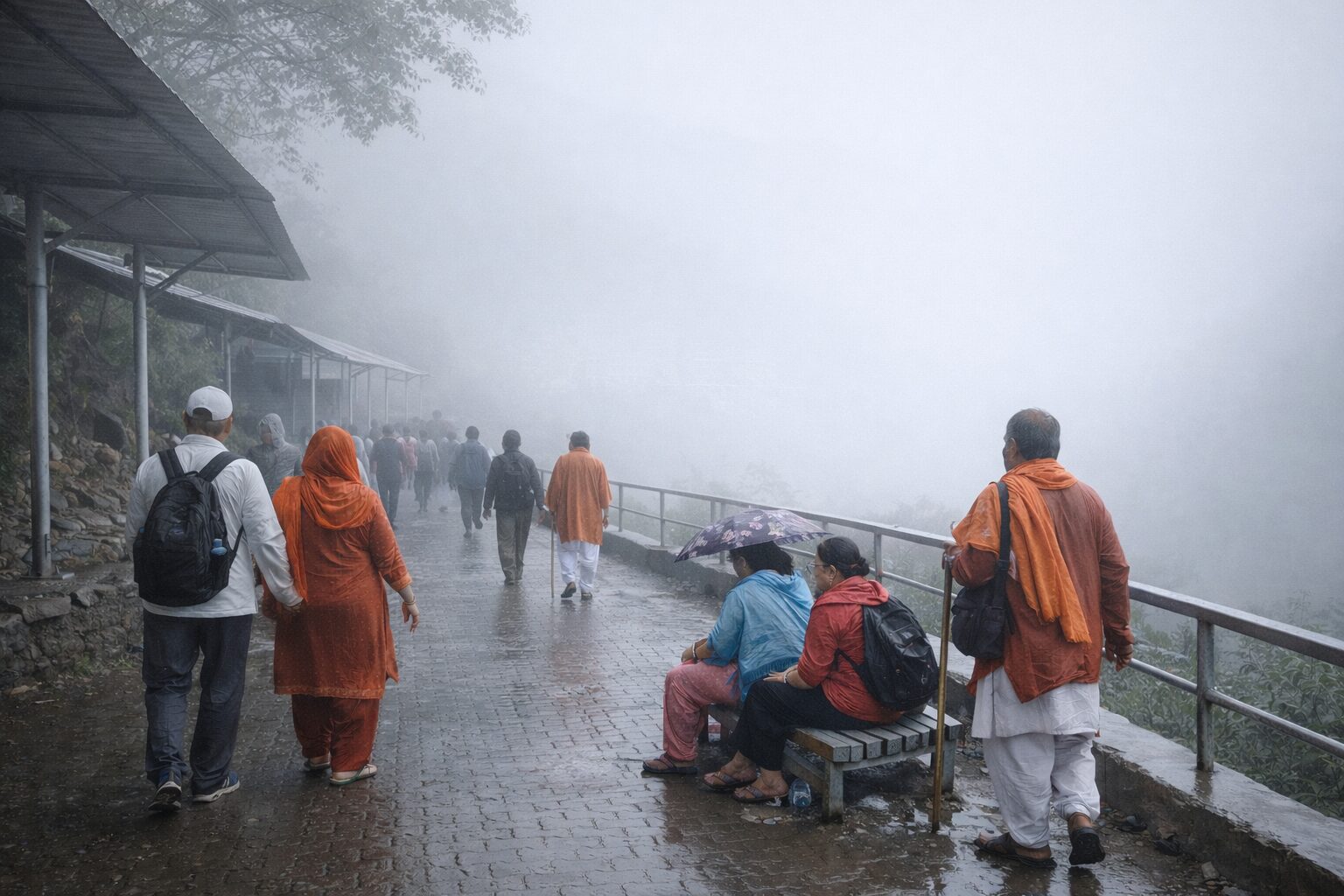
The main risk today is prolonged exposure to cold, especially when combined with fatigue and sweat. Even in the absence of heavy rain or snow on the Katra–Bhawan track, the cold can quietly wear people down if not planned for.
- Layering: Use multiple thin layers instead of one heavy jacket. This allows you to open or close zips as your body warms up on inclines and cools down during rests.
- Head and hands: A significant amount of body heat is lost through the head and extremities. A woollen cap, ear cover, muffler, and gloves make a big difference for relatively little weight.
- Hydration and warm fluids: Cold weather dulls thirst, but you still lose fluids through breath and sweat. Sip water regularly; favour warm tea or soups where available but moderate caffeine for cardiac patients.
- Foot care: Cold and damp can aggravate blisters or cracks. Wear moisture-absorbing socks, carry a spare pair, and change if your socks get wet with sweat or light drizzle.
- Medical conditions: Asthma, COPD, heart disease, and severe arthritis can all worsen in cold air and at exertion. Consult your doctor before travel and keep prescribed inhalers or medicines on your person, not buried in main luggage.
- Children and elders: Watch for signs of over-chill – shivering that does not ease, unusual quietness, confusion, or persistent complaint of cold extremities. Move them into a sheltered or heated area promptly.
Practical Tips to Plan Your Yatra Around Today’s Weather
- Choose your start time wisely: If you are already in Katra, starting between 8–10 am gives you most of the climb in the comparatively warmer part of the day, with arrival and darshan before the coldest late-night window.
- Pack a small day bag: Carry only essentials on the track – water, light snacks, one extra warm layer, cap, gloves, any medication, and a small towel. Heavy bags increase fatigue and sweat.
- Eat light but often: Large, heavy meals before or during a steep climb can cause discomfort. Opt for lighter, more frequent snacks that provide steady energy.
- Keep electronics warm: Phone batteries and power banks drain faster in cold weather. Keep them in an inner pocket close to your body.
- Rain flexibility: While the day looks mostly dry, winter systems can sometimes bring a stray shower. A compact, foldable poncho is enough defence without weighing you down.
- Plan for the return: If you plan to descend the same day, remember that fatigue plus evening chill can be harder than the upward climb. Reserve some energy – and warm layers – for the way back.
Quick Weather and Yatra Summary for Today
- Overall pattern: Cold winter day, likely dry, with the sharpest chill late night and early morning.
- Best walking window: Around 10 am to 3 pm for maximum comfort and fewer cold-related challenges.
- Main weather risks: Cold stress, wind-chill in upper stretches, and possible early-morning fog patches.
- Who should be extra cautious: Elderly pilgrims, young children, and anyone with respiratory or heart conditions.
- Essential kit today: Layered winter clothing, warm cap and gloves, good walking shoes, water, and prescribed medicines.
Frequently Asked Questions for Today’s Conditions
1. Is it safe to do the Vaishno Devi Yatra at night in this weather?
Night yatra is generally allowed under such cold but stable conditions, but it feels significantly harsher than a daytime climb. If you have elderly family members, small children, or health concerns, prefer a daytime start. If you must go at night, carry adequate layers and avoid long stationary waits in open, windy spots.
2. Will there be snow on the Katra to Bhawan track today?
On most winter days, the main Katra–Bhawan track itself remains largely walkable without deep snow, even if surrounding hills may have snow patches. Still, temperatures at higher points can be close to freezing, so you should pack as if you will face very cold conditions, even if you do not see much snow on the path.
3. What is the most comfortable time to start the Yatra today?
For comfort, a start between 8–10 am from Katra works well. This way, you use the late-morning and early-afternoon warmth for the steepest sections and minimize exposure to the harshest cold near dawn or late night. Those used to winter trekking can stretch into early morning or late evening with proper gear.
4. Do I need heavy woollens, or are light jackets enough?
For January conditions, you should carry at least one decent warm layer (such as a fleece or woollen sweater) plus a windcheater or jacket, along with a cap and gloves. Light jackets alone are likely to feel inadequate at Bhawan or on the upper track at night or early morning.
5. How will the cold affect older pilgrims with knee or joint issues?
Cold tends to stiffen joints and can make existing pain more noticeable, especially on steps and ramps. Encourage a slower pace, more frequent but shorter breaks, and keep knees and legs warm with thermal wear or knee supports if prescribed. Battery cars or ponies, where available and medically suitable, may be preferable for some elders.
6. Can fog or low visibility stop the Yatra today?
Short-lived fog patches near Katra or lower stretches usually do not stop the Yatra but may slow movement. Authorities may implement brief, localized control measures if visibility drops sharply. Keep a little flexibility around your expected arrival and darshan times.
7. Should I book a helicopter in this kind of winter weather?
Helicopters are often able to operate in dry winter conditions, but they remain sensitive to visibility and wind. Booking can save time and reduce physical strain for those who need it, but always treat it as weather-dependent and keep a backup plan if a particular flight is delayed or cancelled.
8. What should families with small children keep in mind today?
Dress children in multiple layers, cover their ears and head, and avoid exposing them for long in the cold wind while stationary in queues. Keep them hydrated with warm fluids, and consider splitting the climb with breaks at Ardhkuwari or other shelters. If a child appears unusually sleepy, pale, or complains of intense cold, move into a warmer, sheltered space quickly.
9. Will the cold be worse at Bhawan compared to Katra?
Yes. Bhawan sits higher than Katra, and temperatures there are typically lower, with a stronger wind-chill effect. You may feel reasonably comfortable while climbing but suddenly much colder when you slow down or stand in queues at Bhawan. Keep your warmest layers for the top.
10. How flexible should I keep my schedule in this season?
In winter, it is wise to build slack into your plan – avoid tight back-to-back commitments. Allow room for slower climbs, longer rest breaks, possible weather-related delays to trains, flights, or helicopters, and some adjustment if an early-morning or late-night trek becomes too uncomfortable for your group.
Weather conditions in the mountains can change faster than in the plains. While today is expected to remain mainly cold and dry, pilgrims should stay attentive to local updates from authorities and Shrine staff along the route and be willing to adjust timings or pace as needed.