

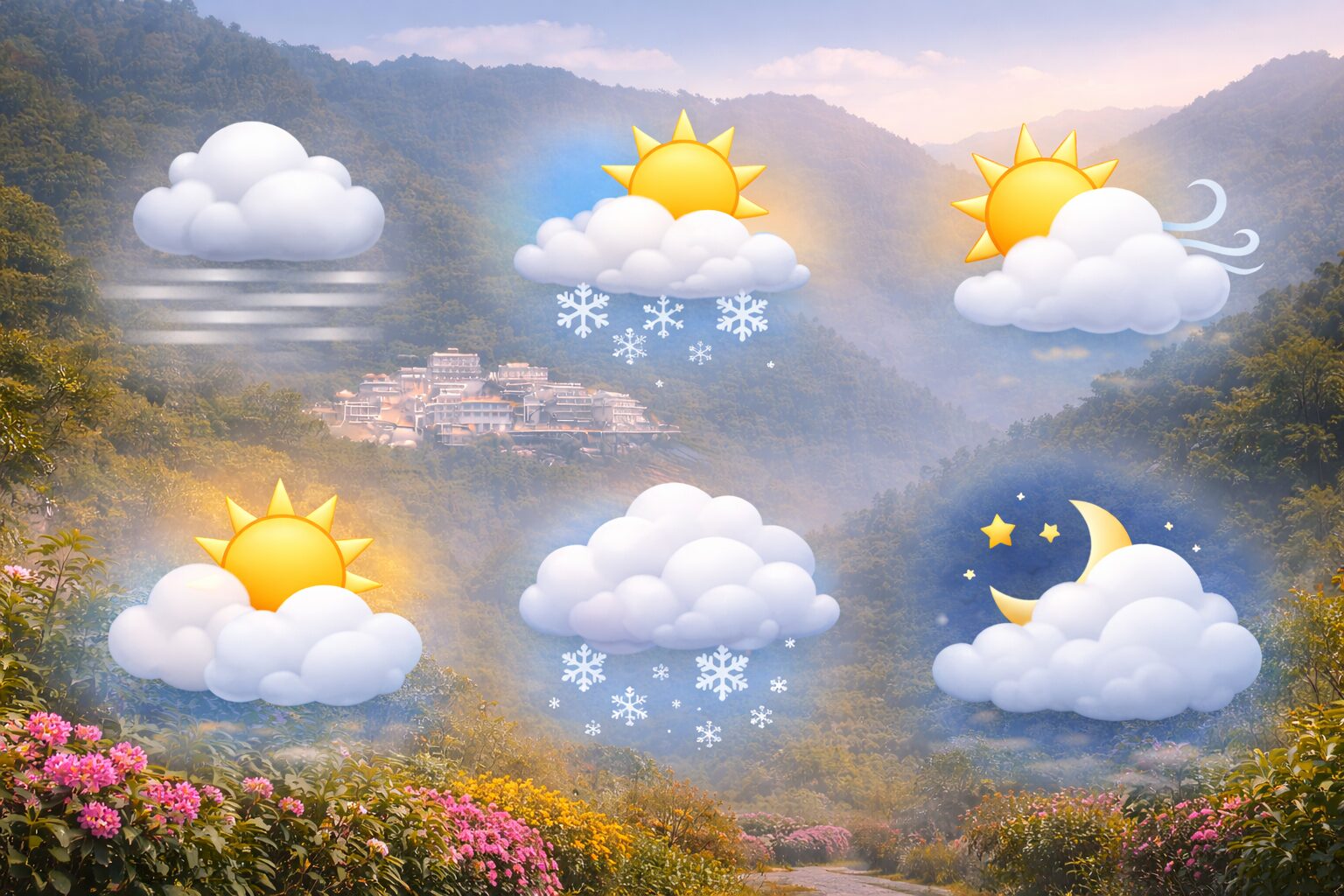
Katra Weather Forecast Today (January 26, 2026) for Vaishno Devi Yatra
Monday, January 26, 2026 – Katra and the Vaishno Devi Yatra route are in the heart of the winter season. Pilgrims can expect cold conditions from early morning through night, with the sharpest chill felt on the upper stretch from Ardhkuwari to Bhawan and around Bhairon Baba. While the weather is generally manageable for walking, it demands layered clothing, proper footwear, and realistic planning of walking hours.
For broader planning around seasons, you can refer to the Katra Vaishno Devi Travel Guide: Yatra, Stay & Best Time to Visit, but the guidance below is specific to today’s conditions on the ground.
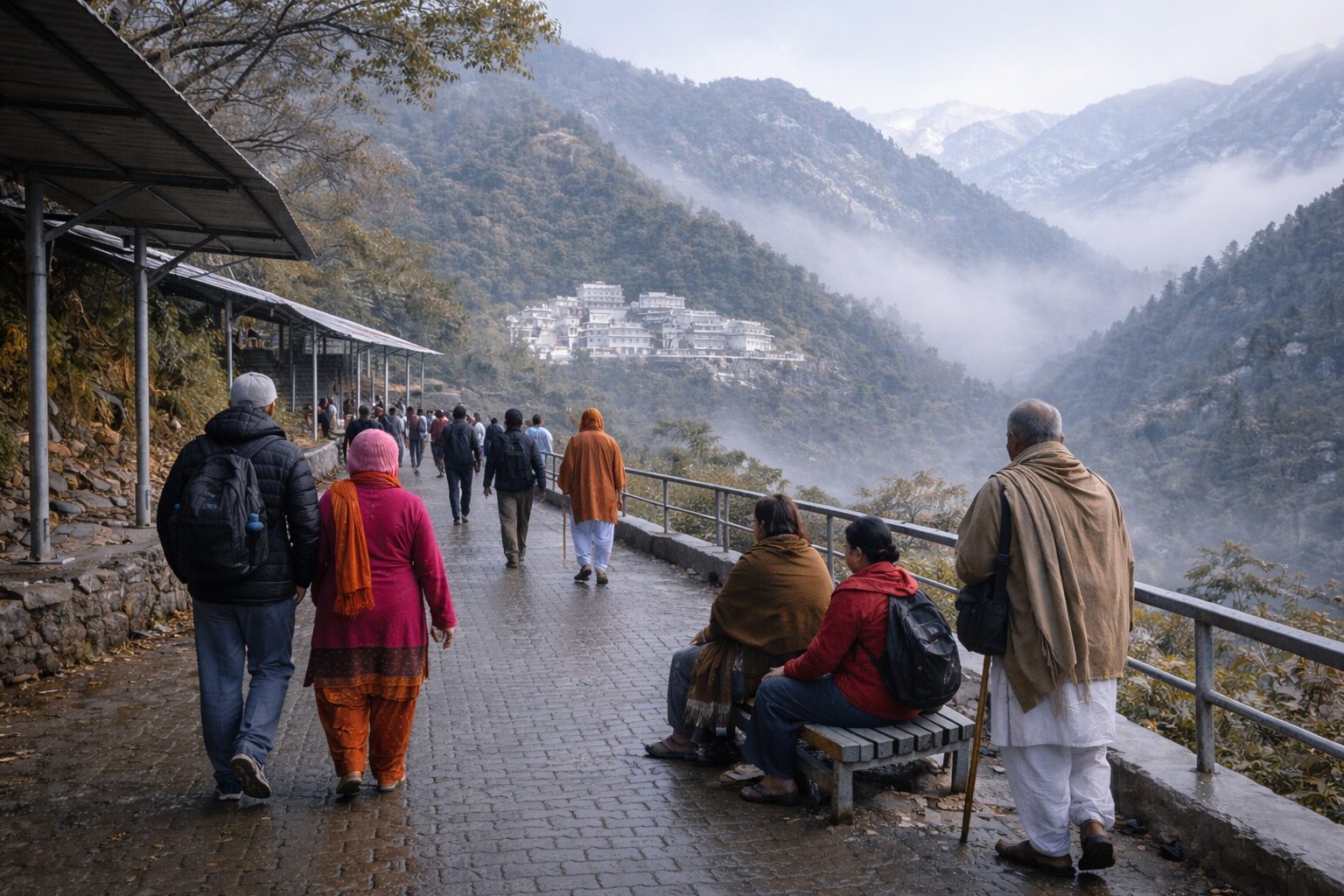


Today’s Weather at a Glance – Katra & Vaishno Devi Route
The table below gives a simple overview of what to expect at different times of day today, focusing on average conditions from Katra (base) to Bhawan (top). Temperatures become noticeably colder as you gain height, but the pattern of the day remains similar along the entire route.
| Time of day | Conditions | Temp (approx.) | Walking comfort | Weather |
|---|---|---|---|---|
| Early morning (3–7 am) | Cold, possible fog | 4–8°C | Challenging | 🌫️ |
| Morning (7–11 am) | Cool, slowly clearing | 8–12°C | Manageable | 🌤️ |
| Afternoon (11 am–3 pm) | Pleasant, mostly clear | 12–16°C | Comfortable | 🌤️ |
| Evening (3–8 pm) | Cool, turning cold | 8–12°C | Manageable | 💨 |
| Night (8 pm–3 am) | Cold, breezy at height | 4–8°C | Challenging | ❄️ |
What this means for pilgrims today
- Best walking window: Late morning to mid-afternoon remains the most comfortable time to cover the steeper stretches, especially from Ardhkuwari to Bhawan.
- Early-morning yatras: Expect biting cold at higher points with patches of fog or low cloud; start only with adequate woolens, gloves, and head covering.
- Evening and night darshans: The route will feel significantly colder and breezier above Sanjichhat; a windproof outer layer and warm socks are important.
- Temperature drop with height: Conditions at Bhawan and Bhairon can feel 3–6°C colder than Katra, so dress for the upper-altitude chill, not just town-level conditions.
- No major rain signal today: The day leans dry and stable, but winter systems can change quickly, so keep a light rain-resistant layer if you are staying overnight.
Weather Impact on Vaishno Devi Yatra Today
Today’s pattern is typical of late January: cold but largely settled. Most healthy adults will find the route manageable if they time their ascent and descent sensibly. The cold is more of a comfort and exposure issue than a disruption, but it can become serious for the elderly, young children, and those with cardiac or respiratory conditions if not handled with care.
- Yatra operations: Under stable, dry winter conditions, helicopter services and pony/palki operations generally run normally, but early-morning fog or low cloud at the helipad can occasionally cause delays or rescheduling.
- Queue experience: Waiting in shaded or breezy stretches near Bhawan will feel noticeably colder than walking; plan your clothing assuming some standing time in queues and verification points.
- Bhawan surrounds: Marble and tiled surfaces near Bhawan stay very cold underfoot. Extra socks, or two thin pairs, are helpful once you remove footwear before darshan.
- Children & seniors: The cold, especially late evening and post-midnight, can be harsh. Prefer the late-morning to afternoon slot for such yatris wherever you have flexibility.
Walking and Trekking Conditions on the Route
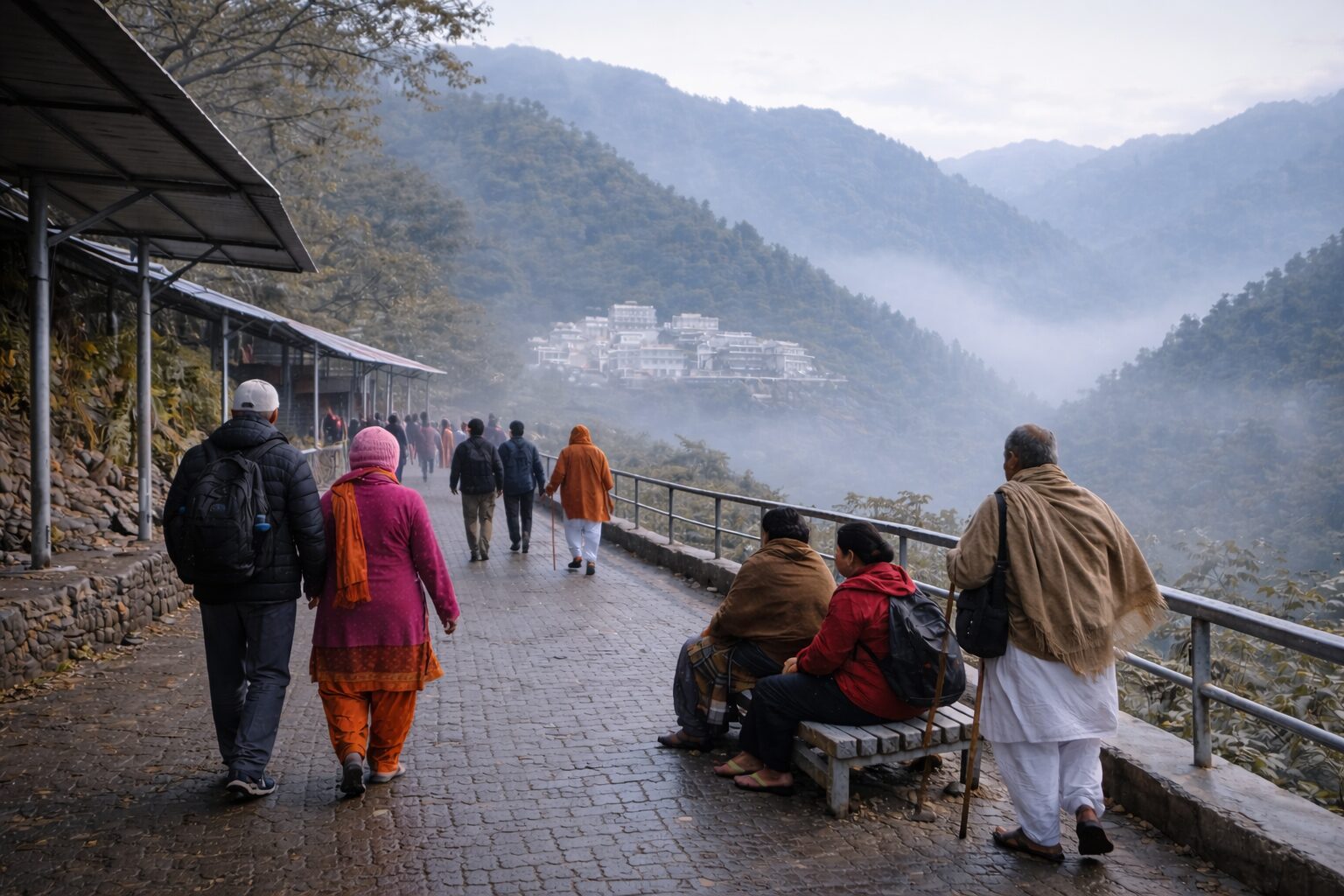
The main track from Katra to Bhawan is paved and well-maintained, but winter introduces particular challenges. Today’s weather supports a safe yatra for most, provided you respect the cold and pace yourself.
Surface and visibility
- Lower stretch (Katra to Ardhkuwari): Roads are typically dry during stable winter spells. Early in the morning, some dampness and light condensation can make certain patches a bit slippery, especially on slopes and near water outlets.
- Upper stretch (Ardhkuwari to Bhawan and Bhairon): This section is colder and more exposed to wind. If there’s any residual moisture from earlier days, it can feel colder underfoot, but with no active precipitation expected, widespread ice is unlikely.
- Fog & low cloud: Early morning can bring pockets of fog on bends and open sections. Visibility usually improves by mid-morning, but walk carefully on descents and do not rush.
Footwear and clothing guidance for today
- Footwear: Closed, ankle-supporting sports shoes or trekking shoes with good grip are appropriate. Avoid smooth-soled sandals or new, untested shoes.
- Socks: One warm, thick pair or two medium pairs will help, particularly for the upper sections and at Bhawan. Carry a spare dry pair if you tend to sweat.
- Layering: Aim for 3 layers on top – a thermal or inner, a warm mid-layer (sweater/fleece), and a wind-resistant outer jacket. Layers help you adjust as you move from cold shade to sunnier stretches.
- Head & hands: A woollen cap or muffler and gloves make a big difference in the early morning and at night. Wind chill is felt first on exposed skin.
Recommended start times by profile
- Families with children: Target a start between 8–10 am so you avoid the harshest cold, yet still have enough daylight to complete your climb and much of the return.
- Seniors or those with lifestyle diseases: Prefer a late-morning start (9–11 am). Take longer breaks at covered resting points rather than exposed terraces.
- Fit walkers: Early-morning starts (4–6 am) are possible but be prepared for stronger cold. A balanced option is 6–8 am, catching the warming trend but avoiding midday fatigue.
Crowd Movement and Weather Interplay
Late January generally brings moderate to sometimes lighter crowds compared to peak festive periods, but weekends, special puja days, and national holidays can still feel busy. Today, with winter conditions steady but not extreme, the weather itself is not likely to be a strong crowd deterrent.
- Early morning: Many yatris aim to reach Bhawan before or around sunrise. In the cold and semi-dark, crowd streams move slower, especially on steeper ramps and where fog mildly affects visibility.
- Midday: This is usually the most comfortable walking window, which can concentrate crowds on the main track. Expect a steady, manageable flow rather than a rush.
- Evening–night: Some pilgrims plan for night darshan, but cold conditions can naturally thin the numbers slightly on the highest, most exposed sections. Where crowds remain, the combination of cold and waiting can be taxing.
- Shelter use: Resting sheds, covered galleries, and indoor waiting areas are more popular in winter. Factor in a little extra time at these points if you are on a tight return schedule.
Transport and Possible Weather-Linked Delays
While the weather today looks broadly supportive of travel, winter always introduces a modest risk of minor disruptions, especially early in the morning or late at night.
Reaching Katra
- By train: Train operations into Shri Mata Vaishno Devi Katra station are generally robust in winter. Dense fog elsewhere in North India can sometimes delay arrivals from originating cities; if you are connecting same-day to the yatra, build in a buffer.
- By road (Jammu to Katra): The highway segment between Jammu and Katra is usually open and functional in this pattern of weather. Early-morning road visibility can be slightly reduced by fog or haze; choosing daylight travel is safer if possible.
- Further connections (Jammu–Srinagar highway): If your trip extends beyond Katra into the Kashmir Valley, be aware that snow and landslides on the Jammu–Srinagar highway are common in peak winter. Check Shri Mata Vaishno Devi Shrine Board updates or local advisories before planning onward movement.
Helicopter, pony, and palki services
- Helicopter: Winter operations depend on local wind and visibility. Today’s pattern suggests that operations are generally feasible, but any pockets of fog or low cloud in the early hours can cause temporary holds or rescheduling. Always keep a walking plan as backup.
- Pony / palki: Under dry and stable conditions, these services usually run normally. Road dampness or mild fog can slow them slightly, especially on bends.
- Timing your bookings: Avoid keeping fixed return connections (train/flight) very close to your planned helicopter slot. A 3–4 hour buffer is safer in winter.
Safety Advisories for Today’s Conditions
Cold, rather than rain or storm, is the primary risk today. The track is well-used and secure, but prolonged exposure and overexertion in winter can turn minor discomfort into health concerns.
Health and exposure
- Watch for overexertion: Climbs feel tougher in cold air, particularly for those with asthma, COPD, or cardiac history. Keep a moderate, regular pace; avoid sudden running or racing on steep stretches.
- Hydration: People often drink less water in winter. Sip small amounts regularly, even if you don’t feel thirsty; warm fluids at halts are helpful.
- Breathing comfort: Cold, dry air can trigger coughing and breathlessness. A muffler or mask over the mouth and nose helps warm the air slightly.
- Hypothermia risk: It is low for healthy adults who keep walking, but waiting in cold winds (especially at night near Bhawan or Bhairon) in light clothing can be risky. Keep an extra warm layer easily accessible in your daypack.
Route discipline
- Stick to official paths: In winter, short-cuts or unlit paths are particularly unsafe. Use only designated tracks and follow Shrine Board signage.
- Use railings on descents: On colder, slightly damp surfaces, take support from railings where available. Do not rush downhill, especially if tired.
- Footfall awareness: In shaded, crowded stretches, keep an eye out for sudden halts ahead. Maintain a small gap to avoid bumping into others on slopes.
Practical Packing Tips for Pilgrims Today
With a cold, dry-leaning winter day expected, focus on warmth, comfort, and flexibility. Many difficulties on the route stem from either wearing too little at the start, or carrying gear that is too heavy or impractical once you begin walking.
Clothing and gear checklist
- Upper body: Thermal inner, sweater/fleece, and a windproof jacket. You can remove the mid-layer during the warmest hours if you feel hot.
- Lower body: Warm track pants or jeans plus thermal leggings if you are prone to feeling cold. Avoid very tight clothing that restricts movement.
- Head, ears, hands: Woollen cap or beanie, muffler, and gloves; the relief from wind chill is considerable on exposed stretches.
- Rain shell: A light, foldable rain jacket or poncho is optional but sensible in winter, as western disturbances can bring sudden showers or sleet. It also doubles as a windbreaker.
- Small backpack only: Carry just what you truly need – water, light snacks, medicines, an extra pair of socks, and one additional warm layer. Overpacking makes the climb harder.
Food, water, and breaks
- Water: Carry one medium bottle and refill at authorised points. Avoid overloading with multiple full bottles at the start.
- Snacks: Simple, dry items like nuts, chikki, or biscuits are better than heavy, oily food that can make you sluggish during the climb.
- Hot drinks: Tea or light soups at official stalls can help keep you warm, but don’t rely only on these for hydration.
- Rest rhythm: Take short, regular breaks instead of long halts that let your body cool down too much in the cold air.
Quick Bullet Summary for Pilgrims
- Cold winter conditions today, with early-morning and night hours feeling harshest, especially above Ardhkuwari.
- Best walking comfort is expected between late morning and mid-afternoon; plan major climbs in this window if possible.
- No strong signal of heavy rain or snow on the main track today, but carry a light windproof or rain-resistant layer.
- Temperatures at Bhawan and Bhairon can feel several degrees colder than Katra; dress for the upper-altitude chill.
- Families with children, elderly yatris, and those with cardiac or respiratory issues should avoid starting in the coldest pre-dawn hours.
- Trains and road access to Katra are expected to function normally, though winter fog elsewhere may delay inbound trains.
- Helicopter services are generally feasible under such stable conditions but remain subject to local visibility and wind at short notice.
- Keep checking official Shrine Board advisories for any last-minute operational changes, restrictions, or crowd updates.
Uncertainty and How to Plan Around It
Winter weather in the Jammu region is usually more predictable than the monsoon, but western disturbances can sometimes bring sudden spells of rain or snow to higher reaches. While today’s outlook leans stable and cold, any approaching system can change conditions within 12–24 hours, particularly at Bhawan and Bhairon.
- If you are traveling today: Follow the guidance above and carry one extra warm layer more than you think you need. Keep some flexibility in your return schedule.
- If you are planning for the next 1–3 days: Expect a broadly similar cold pattern, but monitor fresh updates from the Shrine Board and local bulletins before finalising night-time yatra plans.
- If you have health concerns: Consider consulting your doctor before a strenuous winter climb and carry essential medication in your daypack, not in checked luggage or hotel rooms.
FAQ: Vaishno Devi Yatra Weather and Planning – Late January Conditions
1. Is it safe to do the Vaishno Devi Yatra today in this cold?
For most healthy adults, the yatra is safe today if you are prepared for winter conditions. The main track is paved and busy, which adds a sense of security. The key is to walk at a steady pace, stay adequately layered, and avoid exposing yourself for long periods in strong cold and wind at higher points.
2. Will the cold be extreme at Bhawan and Bhairon Baba?
It will feel significantly colder at Bhawan and Bhairon than in Katra, especially in the early-morning and night hours. While not necessarily extreme for well-prepared pilgrims, the combination of wind, elevation, and waiting time can be tough if you are underdressed. Extra socks, a warm cap, and a windproof jacket are strongly advised.
3. What time of day is best to start the climb today?
The most comfortable window is typically from around 8–11 am, when the sun has taken the edge off the night chill but the afternoon fatigue has not yet set in. If you start earlier or later, ensure you compensate with warmer clothing and slightly more time in your schedule.
4. Is there any risk of rain or snow on the track today?
Today’s pattern suggests largely dry conditions on the main Katra–Bhawan route, with only a low chance of brief, light showers if a weak system passes. Snow is more likely on higher ridges than directly on the main walking path. Still, winter weather can shift, so carrying a compact rain or wind shell is prudent.
5. Will fog affect the yatra or travel to Katra?
Light to moderate fog is most likely in the early morning, especially in the plains and approach roads. On the yatra path, pockets of fog or low cloud can reduce visibility, but usually not to a dangerous level if you walk cautiously. Train and road travel from other North Indian cities may face minor delays due to fog along the route.
6. What should elderly pilgrims be especially careful about today?
Elderly yatris should guard against overexertion in cold air and sudden temperature shifts between walking and resting. A slightly later start, frequent short breaks, proper layering, and sticking to the main, less steep routes can make the journey more manageable. If needed, consider ponies or palkis for the steeper sections.
7. Are helicopter services likely to get canceled because of winter weather?
Today’s stable, cold conditions generally support helicopter operations, but any fog, low cloud, or sudden wind near the helipad can cause temporary suspensions. Cancellations are not guaranteed but remain possible at short notice. Always keep a plan to walk, and avoid timing your onward train or flight too tightly after your helicopter booking.
8. How should I pack if I am arriving in Katra this evening and walking at night?
Night-time in late January will feel very cold, particularly higher up. Pack a thermal inner layer, a warm sweater or fleece, a thick jacket, woollen cap, gloves, warm socks, and comfortable closed shoes with grip. A small torch or headlamp can be useful in darker sections, though much of the path is lit.
9. Can children do the yatra comfortably in this weather?
Many children complete the yatra safely in winter, but they are more sensitive to cold and fatigue. Dress them in multiple layers, ensure they have warm head and hand coverings, and avoid the coldest pre-dawn and late-night hours. Plan more frequent rest, and avoid forcing a pace faster than they can sustain.
10. Where can I check if there is any official change in yatra arrangements today?
For the latest updates on yatra arrangements, crowd management, and any weather-related advisories, rely on announcements and notices from the Shri Mata Vaishno Devi Shrine Board. Local authorities and Shrine Board offices in Katra also provide updated information on current conditions and any temporary restrictions.
Conditions described above are based on typical late-January patterns around Katra and the Vaishno Devi route and are intended to help you plan a safer, more comfortable yatra. Always adjust your decisions to your own health, fitness, and on-the-spot instructions from authorities and Shrine Board staff.