

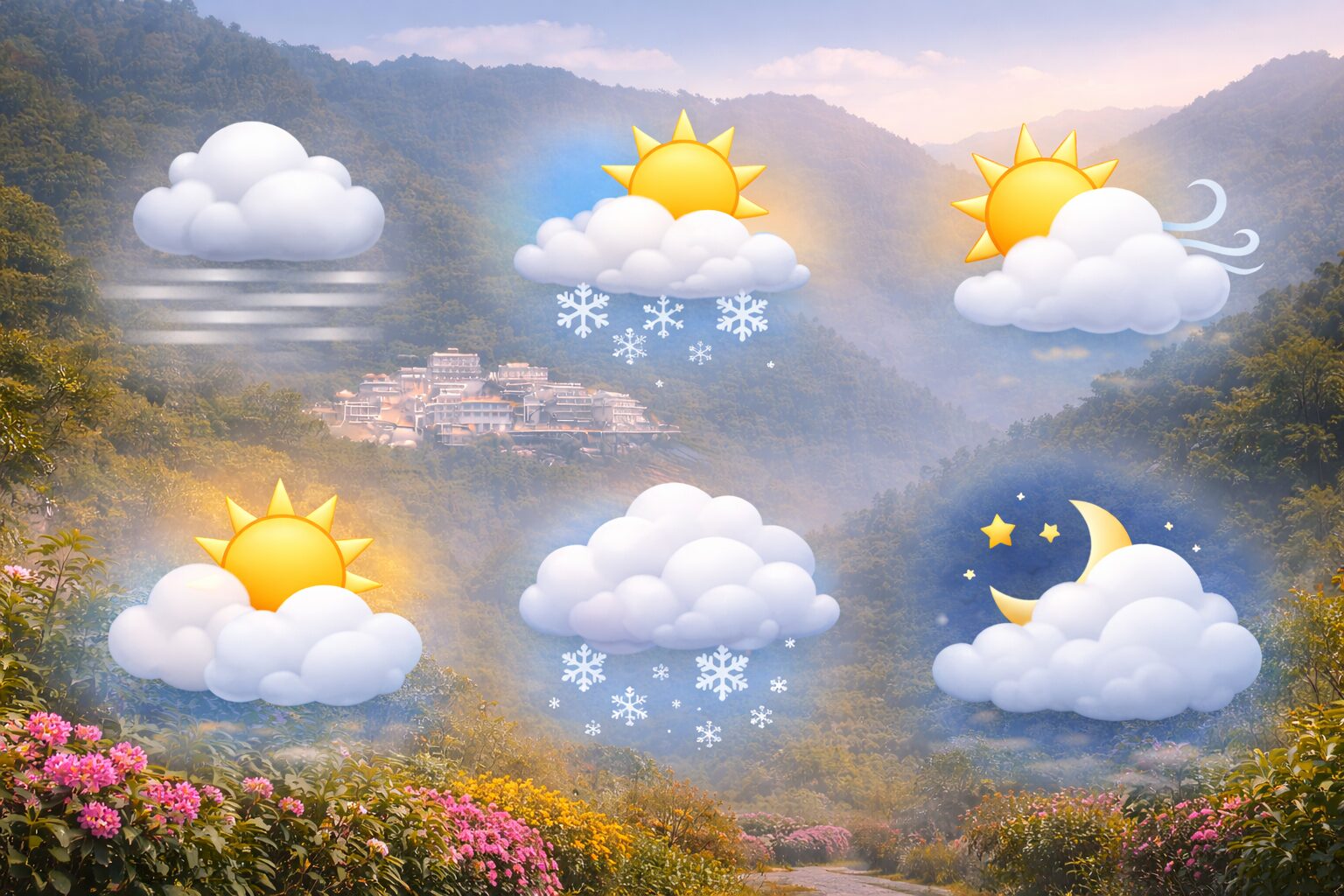
Katra Weather Forecast Tomorrow (January 24, 2026) for Vaishno Devi Yatra: Travel Advisory
For pilgrims headed to Katra and the Vaishno Devi Yatra route tomorrow, January 24, 2026, conditions are expected to stay in typical mid-winter mode: cold, occasionally damp, and notably colder as you gain height towards Bhawan and Bhairon Ghati. This advisory focuses on practical walking comfort, likely temperature ranges, and how the weather may affect your Yatra plans over the next 24 hours.
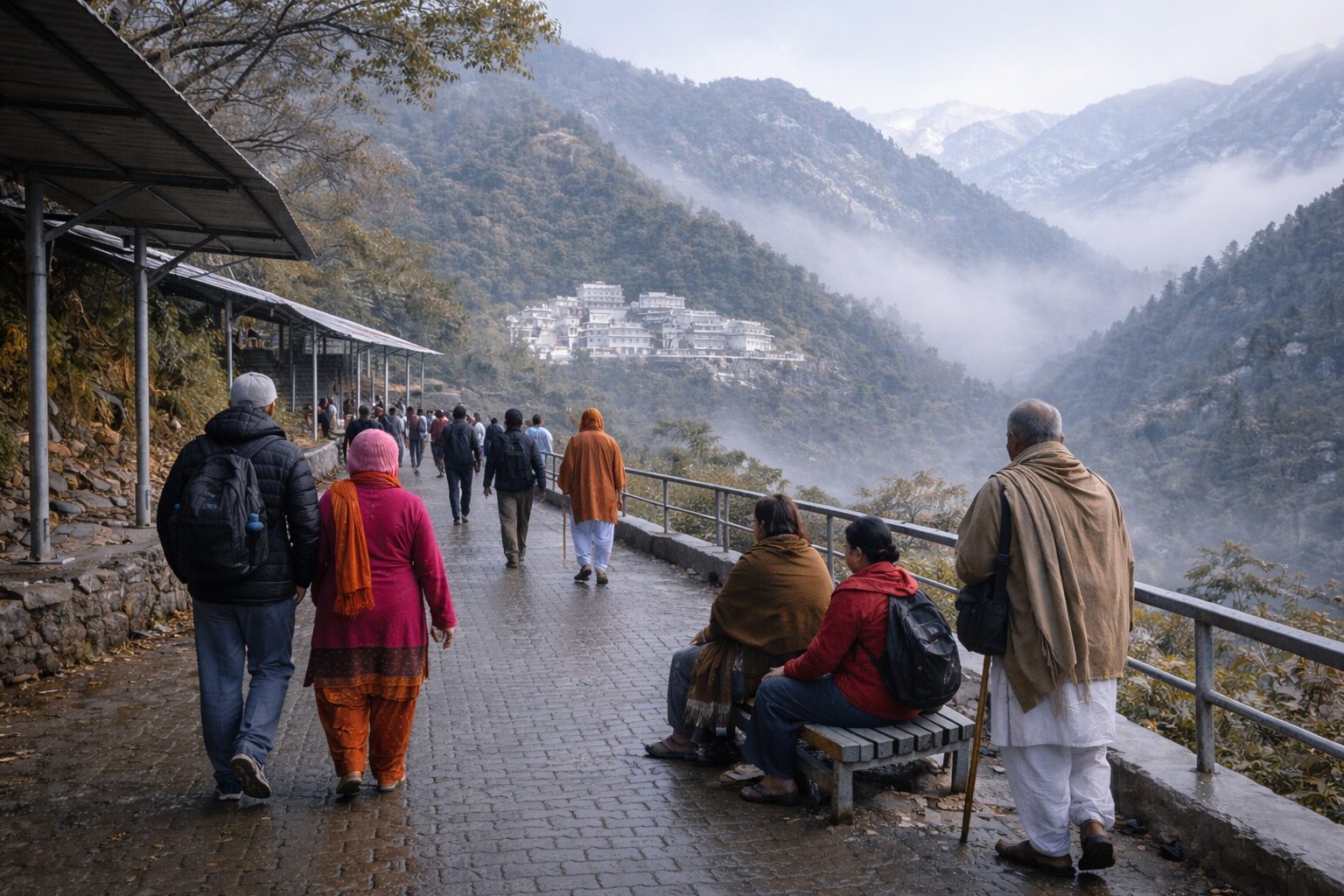


For broader planning, accommodation ideas, and seasonal patterns beyond tomorrow’s forecast, you can refer to the Katra Vaishno Devi Travel Guide: Yatra, Stay & Best Time to Visit. The guidance below, however, is centered on short-term, date-specific weather and route comfort.
Tomorrow’s Weather at a Glance (Katra & Vaishno Devi Route)
The table below summarises expected conditions for tomorrow (January 24, 2026) from early morning to late night, mainly for Katra, with the understanding that temperatures drop further and winds feel stronger as you climb towards Sanjichhat and Bhawan.
| Time of day | Conditions | Temp (approx.) | Walking comfort | Weather |
|---|---|---|---|---|
| Early morning (3–7 AM) | Cold, possible fog | 6–9°C at Katra | Challenging | 🌫️ |
| Morning (7–11 AM) | Cool, clearing skies | 10–14°C at Katra | Manageable | 🌤️ |
| Afternoon (11 AM–3 PM) | Pleasant, hazy sun | 15–19°C at Katra | Comfortable | 🌤️ |
| Evening (3–8 PM) | Cool, breezy slopes | 10–14°C at Katra | Manageable | 💨 |
| Night (8 PM–3 AM) | Cold, windchill higher up | 7–10°C at Katra | Challenging | 🌫️ |
What this means for pilgrims tomorrow
- Expect a distinctly colder feel before sunrise and late at night, with the wind making it feel several degrees lower on the upper stretches.
- The most comfortable walking window for most pilgrims will be from roughly 8 AM to 3 PM, when sunlight and lighter winds improve comfort.
- Fog or low cloud early morning can slightly reduce visibility near Katra and some mid-way stretches; take extra care on steps and bends.
- Even if Katra feels mildly pleasant in the afternoon, Bhawan and Bhairon Ghati can be close to winter-chill; pack layers, gloves, and a cap.
- Those planning a full-night Yatra should be prepared for prolonged exposure to cold, especially during rest breaks and queueing near the Bhawan.
Weather Impact on Vaishno Devi Yatra Operations
Tomorrow’s pattern around Katra and the Vaishno Devi route suggests normal Yatra operations are likely to continue, with the usual winter caveat: colder, windier, and potentially foggy periods at higher altitude, especially in the late night/early morning band.
- Helicopter services: In typical late-January conditions, early-morning flights can sometimes be delayed if visibility dips due to fog or low cloud near the helipad, but a total shutdown is less common on otherwise calm days. Pilgrims with bookings should track updates from the Shri Mata Vaishno Devi Shrine Board and their operator closer to departure.
- Palki and pony operations: On the steeper sections, early-morning chill can be uncomfortable for elderly or sensitive pilgrims. Operations normally run, but warm clothing and a windproof layer are essential.
- Battery car services (from Ardhkuwari/Sanjichhat where applicable): These usually function in such conditions; short, localized fog or mist can slow operations, causing minor waiting time increases.
- Darshan queues at Bhawan: Overnight and early-morning queues will feel significantly colder than Katra’s base temperatures. Wind funneling through narrow stretches near Bhawan can make the perceived temperature feel several degrees lower; ensure head, ears, and hands are covered.
Walking and Trekking Conditions on the Yatra Route
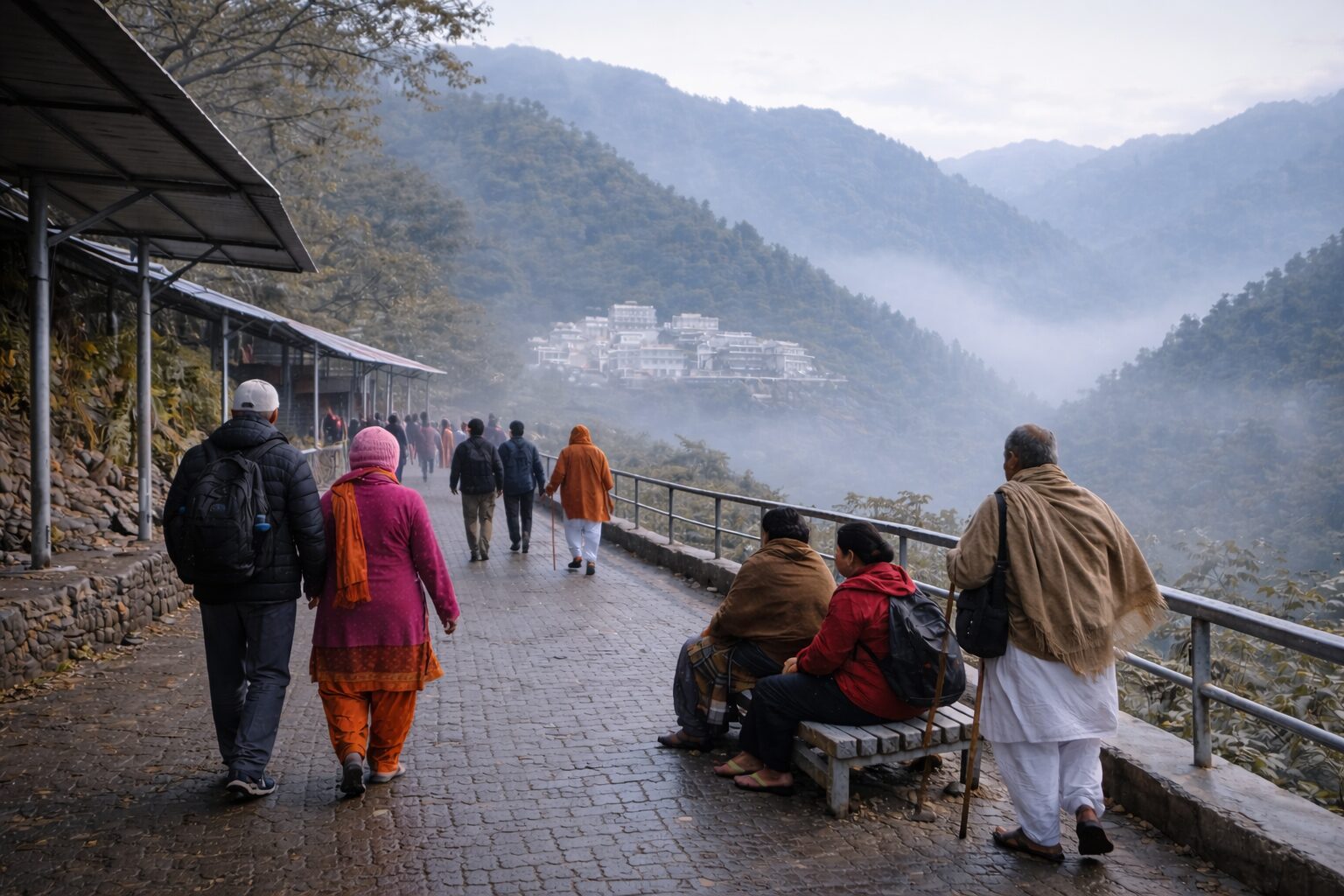
From Katra (around 520 m) to Bhawan (around 1,580 m) and further up to Bhairon Ghati, winter temperature and wind differences become quite noticeable. Tomorrow’s conditions are expected to be dry overall, with a cold-to-pleasant temperature band and some risk of fog or haze, especially lower down early morning.
Base to Ardhkuwari (Katra to ~6 km)
- Surface: Paved pathway with steps in places; generally good traction unless there is dew or very light drizzle, which is not strongly indicated but cannot be fully ruled out.
- Temperature difference: Early morning forecast of 6–9°C at Katra can feel a few degrees colder in shaded, enclosed stretches; dress with inner warmers under a light fleece or jacket if starting before 7 AM.
- Fog/haze: Some patches of fog are possible around dawn; keep torches handy and walk steadily, especially on turns and stair sections.
- Best timing: A start around 7–9 AM offers daylight, warming temperatures, and lower risk of very dense fog.
Ardhkuwari to Sanjichhat
- Climb and exposure: This is where you begin to feel more exposed to wind, especially in turns and open ridge sections.
- Midday advantage: Walking this section between late morning and mid-afternoon is likely to feel significantly more comfortable than early morning or post-sunset, with more stable visibility.
- Clothing advice: Even if you feel a bit warm on the climb, avoid removing too many layers; once you stop for a rest or in a shaded stretch, the chill returns quickly.
Sanjichhat to Bhawan and Bhairon Ghati
- Colder zone: Expect several degrees lower than Katra’s listed range. If Katra is at 10–14°C in the evening, this section may feel closer to low single digits at night with wind.
- Windchill risk: Open stretches and exposed bends can feel harsh in the late evening and night; a wind-cheater or padded jacket, woollen cap, and gloves are very important here.
- Post-darshan walk: Pilgrims heading further up to Bhairon Ghati after darshan, especially at night, will face the coldest part of the route. Plan for shorter breaks, keep moving, and avoid sitting for long without proper insulation.
Crowd Movement and Weather-Linked Delays
With a mostly stable, dry winter pattern tomorrow, weather by itself is not likely to cause significant crowd surges or slowdowns, but the timing of temperature comfort can shift when people prefer to walk.
- Morning crowds: Many families and older pilgrims will target the 8–11 AM departure window from Katra to avoid early-morning chill and night-time walking, making this a potentially busier period at the starting point.
- Afternoon congestion mid-route: As conditions are most comfortable from late morning to mid-afternoon, you may notice more clustering around Ardhkuwari, rest points, and food stalls during these hours.
- Night-time thinning: After 10 PM, footfall typically thins out, but those on the route spend longer breaks to cope with the cold; progress can feel slower even with fewer people.
- Queue experience at Bhawan: In colder nights, pilgrims tend to remain bundled and move slightly more slowly through security and shoe/cloak counters. Allow extra time in your mental schedule; avoid tight onward travel plans immediately after darshan.
Transport, Road, and Access Considerations
Nothing in the expected weather pattern tomorrow suggests major disruption to access roads, but winter always demands some extra margin in planning.
Road travel to and from Katra
- Visibility: Early-morning and late-night road journeys in and out of Katra can see patches of fog, especially along low-lying stretches and near water bodies. Drivers should maintain moderate speeds and use fog lamps where available.
- Plain-to-hill transition: If you are driving in from the plains (Jammu, Pathankot side), be prepared for a quick change in temperature as you approach the hills; keep an extra layer accessible in the vehicle.
- Buffer time: Even in stable weather, winter traffic plus short visibility-related slowdowns can add 30–45 minutes to your drive. Build that into any train or bus connections.
Rail and other connections
- Trains to Katra: Seasonal fog in North India can still cause cascading delays in trains reaching Jammu and Katra, even if local weather is not extreme. Check the latest train running status on official railway channels on your day of travel.
- Jammu airport link: Flights may be on schedule at Jammu under such conditions, but morning fog elsewhere on the route can sometimes affect timings; keep at least a few hours’ buffer between your flight and planned Yatra start.
Safety Advisories for Tomorrow’s Yatra
While no severe weather is indicated, winter conditions can still be demanding on the body, especially for children, elderly pilgrims, and those with existing health concerns.
Cold management and layering
- Layer approach: Use three layers: a thermal or inner layer, a warm mid-layer (sweater/fleece), and an outer windproof jacket. This allows adjustments as temperatures change without overexposure.
- Extremities: A woollen cap, scarf or muffler, and gloves are essential, particularly for night walking and while waiting in queues.
- Children and elders: They lose heat quickly; ensure additional layers and keep spare dry socks if feet become damp from sweat or moisture.
Footwear and walking safety
- Footwear choice: Closed, well-gripped sports shoes or trekking shoes are better than open sandals in cold conditions. Avoid smooth soles that may slip on dew-damp patches.
- Pace and hydration: Cold weather can mask thirst; sip warm water regularly. Walk at a steady, moderate pace, especially on steeper sections.
- Rest breaks: Prefer short, frequent breaks over long stationary halts in the wind. Long stops make you feel much colder once you resume walking.
Health and high-altitude considerations
- Breathing and heart conditions: Those with cardiac or respiratory issues should consult a doctor before attempting the full trek, particularly if they plan to walk through the night when cold air can be more uncomfortable.
- Medication and documents: Keep essential medicines in a small, easily accessible pouch. The cold can stiffen zippers and fingers; do not bury important medicines too deep inside luggage.
- Acclimatisation: While the altitude is moderate compared to high Himalayan shrines, the combination of climb plus cold can still be tiring. If arriving from a long road or rail journey, consider resting in Katra before starting the Yatra.
Practical Tips for Pilgrims Based on Tomorrow’s Weather
- Ideal start time: For most pilgrims, beginning from Katra between 7 AM and 10 AM balances cooler but manageable temperatures at the base and more comfortable conditions higher up.
- Night Yatra planning: If you must start late evening or night, dress more warmly than you think you need at Katra; remember that Bhawan and Bhairon Ghati will be significantly colder.
- Rain protection: While no strong signal of widespread rain emerges for tomorrow, carrying a light, packable rain jacket or poncho is still wise in winter, in case of a passing shower or enhanced moisture.
- Food and warm drinks: Take advantage of tea stalls and food points along the way but avoid walking immediately after heavy meals; cold plus exertion plus a full stomach can feel uncomfortable.
- Electronics and batteries: Cold drains batteries faster; keep phones and power banks inside inner pockets close to your body, especially at night.
Uncertainty and How to Adjust Your Plans
While the broad pattern for tomorrow points to typical late-January cold with mild daytime comfort, local variations are always possible, especially in fog formation, wind strength at higher points, and brief cloudy spells.
- Fog and visibility: There is a small but real chance that fog could be thicker than expected at daybreak, slowing both road approaches and portions of the initial climb.
- Wind at higher altitudes: Wind gusts are harder to predict precisely; even on otherwise calm days, certain ridges can feel suddenly much colder. Always carry one spare warm layer and don’t rely solely on how Katra feels when you start.
- Operational changes: Shrine Board, helicopter operators, and local authorities may adjust timings or crowd management practices at short notice based on conditions. Check for updates locally before committing to tight connections.
Quick Bullet Summary for Tomorrow (January 24, 2026)
- Cold early morning and late night; pleasant to cool midday, especially at Katra base.
- Upper stretches (near Bhawan and Bhairon Ghati) will feel several degrees colder than Katra throughout the day and night.
- Best walking comfort likely between 8 AM and 3 PM, with clearer visibility and milder temperatures.
- Fog patches possible at dawn; road and initial trek sections may require slower, careful movement.
- Normal Yatra operations expected, with only minor weather-linked delays possible for early helicopter services or road traffic.
- Layered clothing, proper footwear, and attention to windchill are essential, especially for night treks and elderly or sensitive pilgrims.
FAQs: Katra & Vaishno Devi Yatra Weather for Tomorrow
1. Is it safe to do the Vaishno Devi Yatra tomorrow given the weather?
Based on the expected conditions, the Yatra should be manageable for most reasonably fit pilgrims, provided you are prepared for cold and possible fog. Using proper winter clothing, pacing yourself, and avoiding unnecessary night exposure will make the journey safer and more comfortable.
2. Will there be heavy rain or snowfall on the Vaishno Devi route tomorrow?
No strong indication of widespread heavy rain or snowfall emerges for tomorrow around Katra and the main Yatra path. However, localized cloud or moisture can still occur in hills. It is sensible to carry a light rain jacket or poncho as a precaution, but extended wet conditions are not the main concern.
3. What time should elderly pilgrims and children start the Yatra?
For elderly pilgrims and children, a start between 8 AM and 11 AM usually offers the best balance: less cold than early morning, yet not as tiring as starting too late and pushing into the cold night. They should move at a gentle pace, take short breaks, and be well layered against wind and cold.
4. How much colder is Bhawan compared to Katra tomorrow?
While precise numbers vary, Bhawan and nearby stretches can feel several degrees colder than Katra throughout the day, and the difference is more pronounced at night. If Katra is at 10–14°C in the evening, conditions near Bhawan can feel closer to low single digits with windchill, especially in exposed areas.
5. Will fog affect visibility on the route?
There is a realistic chance of fog or low clouds in the early morning hours, especially near Katra and some lower stretches. This may slightly reduce visibility and slow walking and driving. Using torches, walking carefully on steps, and avoiding unnecessary speed will help manage this safely.
6. What clothing should I carry for a same-day up-and-down Yatra?
Carry thermal inners, a warm sweater or fleece, and a windproof jacket, plus a woollen cap, gloves, and warm socks. Even if you plan to return the same day, temperatures can shift quickly, and the upper stretches will be much colder than Katra. Layering lets you adjust as you move through different zones.
7. Can I rely on helicopter services tomorrow instead of walking?
Helicopter services generally operate in such winter conditions, but early-morning fog or visibility changes can lead to delays or occasional cancellations. Treat the helicopter as a convenience rather than a guarantee. Always have a fallback plan for at least partial walking or waiting if services are disrupted.
8. How should I plan my return journey from Katra considering the weather?
When scheduling trains or flights after your Yatra, allow for extra buffer time. Cold conditions, fog, and moderate crowding can prolong the trek and darshan process. Aim to keep at least half a day’s margin between your expected Yatra completion and any long-distance connection, especially during winter.
9. Are there specific health precautions for winter Yatra days like tomorrow?
Pilgrims with heart, lung, or severe joint issues should consult a doctor beforehand. Avoid sudden sprints or overexertion in the cold, do gentle stretching before and after longer climbs, and keep medicines within quick reach. Staying hydrated with warm fluids is particularly important despite the cool temperatures.
10. Will the path be slippery or difficult to walk on?
The main track is paved and generally secure, but early-morning dew or any light drizzle can make some patches damp and mildly slippery. Good-grip footwear and careful stepping on stairs and curves greatly reduce risk. Currently, widespread ice or continuous wet surfaces are not the primary concern for tomorrow.