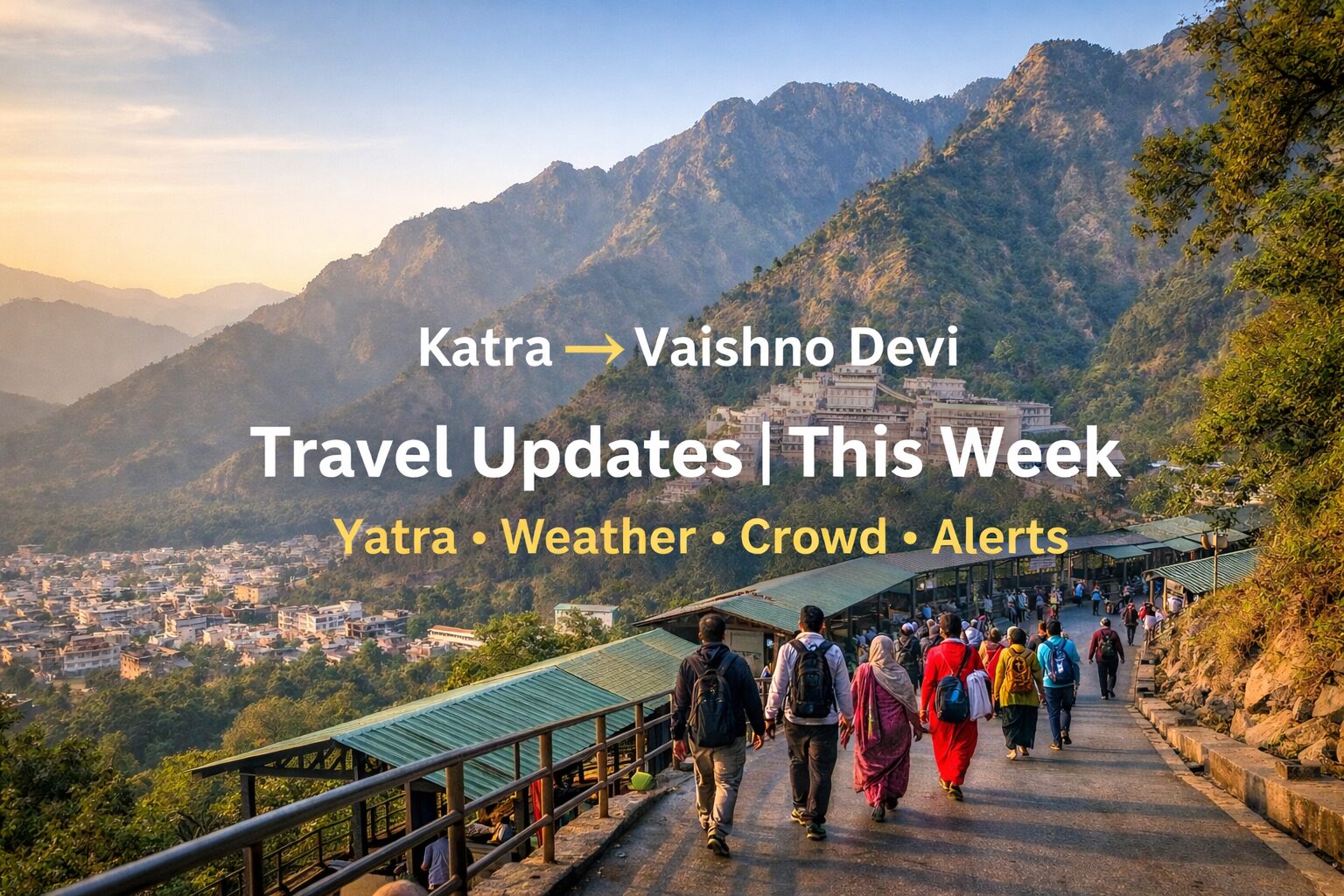
Katra–Vaishno Devi Weekly Yatra Update: 19–25 January 2026
This weekly update covers conditions for pilgrims travelling to Vaishno Devi via Katra between 19 January 2026 and 25 January 2026. The focus is on current yatra status, winter weather, crowd levels, and practical considerations so you can plan or adjust your trip safely and realistically. Conditions in the Jammu region can change quickly in January, especially due to fog and occasional snowfall, so always treat this as a guidance snapshot, not a guarantee.
Current Yatra Status & Operational Updates
The Vaishno Devi yatra from Katra is generally operational through this week, with standard winter precautions in place. The track from Katra to Bhawan (via Banganga, Charan Paduka, Adhkuwari and Sanjhi Chhat) is expected to remain open for pilgrims on foot and through registered services (ponies, palkis, battery cars on the designated stretch, and helicopters when weather permits).
Key points for this week:
- Yatra registration: Mandatory registration at Katra continues. You can obtain the yatra slip at the registration counter or via official online channels before arrival. Carry a printed or clearly visible digital copy along with a valid photo ID.
- Daily yatra cap: Authorities may regulate flow during periods of dense fog, maintenance work, or safety concerns. While a complete closure is unlikely this week, temporary restrictions or slowed movement are possible, especially at night.
- Adhkuwari & Bhawan darshan: Expect controlled queues with barricades and batch-wise movement. Waiting times may increase during weekends or public holidays and decrease during mid-week and off-peak hours (late night or very early morning).
- Sanitation & services: Most langars, shops, cloakrooms, and public facilities along the track are functioning, though some smaller outlets may open for limited hours in colder nights.
If you are still in the planning stage and want a broader overview beyond this week’s conditions, you may find this reference useful: Katra Vaishno Devi Travel Guide: Yatra, Stay & Best Time to Visit. Use it for background planning, but always cross-check time-sensitive details with current official advisories.
Weather Conditions & Forecast Impact (19–25 January 2026)
January is deep winter in the Jammu region. For the week of 19–25 January 2026, you should be prepared for:
- Temperature in Katra: Roughly 6–15°C, with colder nights and early mornings. Wind chill after sunset can make it feel a few degrees lower.
- Temperature near Bhawan: Commonly 0–8°C, with sub-zero wind chill possible during late night and pre-dawn hours, especially on open stretches near Sanjhi Chhat.
- Fog: Morning and evening fog is common in January in the plains and approach roads (especially Jammu–Katra route). This can affect train punctuality, road visibility, and helicopter operations.
- Rain or light snowfall: A western disturbance in this period can bring intermittent rain at Katra and light snowfall or sleet at higher altitudes. Even if snowfall is mild, it can make certain sections of the track wet, slushy, or slippery.
How this may impact your yatra:
- Track conditions: Wet or icy patches may appear on steep sections; walking speed will reduce naturally. Give yourself extra time and avoid rushing, especially while descending.
- Helicopter services: Fog, poor visibility, or strong winds often lead to delays or cancellations, especially early morning. Even confirmed tickets may face last-minute disruption.
- Health & comfort: Sudden changes from warm hotel rooms to cold outdoor conditions can strain those with respiratory or cardiac issues. Multiple light layers are better than one heavy jacket, so you can adjust as you climb.
For the most accurate, short-range weather guidance (especially if you are travelling in the next 24–72 hours), check the official forecasts from the India Meteorological Department (IMD) for Jammu and surrounding areas and then align your start time and clothing accordingly.
Crowd Levels & Rush Expectations
This week sits in the post-new-year, pre-peak spring period, which usually means moderate crowds but not the kind of overwhelming rush seen on long weekends, Navratri, or major holidays.
Typical patterns for 19–25 January 2026:
- Weekdays (Mon–Thu): Generally smoother flow with comparatively shorter queues at both Bhawan and Adhkuwari. Night-time or early morning starts often see the least congestion.
- Weekends (Fri–Sun): Noticeable increase in footfall, particularly from nearby states as pilgrims club the yatra with short breaks. Expect longer waiting times and more crowding at popular rest points.
- Republic Day lead-up: As 26 January approaches, some additional visitors may arrive early and extend their stay into the holiday, slightly increasing numbers towards the end of this week.
Where you may feel the crowd most:
- Adhkuwari: Often a bottleneck due to limited space and traditional importance of this point. Time slots and regulated entry are usual; factor in extra waiting here.
- Bhawan entry & darshan: Peak discomfort can be around late evening and early night when many groups arrive together.
- Return from Bhawan: Many pilgrims descend soon after darshan, creating crowding on common departure windows. If your health permits, staggering your return by a few hours can ease your experience.
Transport & Connectivity Updates
By Train (to and from Shri Mata Vaishno Devi Katra)
- Fog-related delays: Dense fog in North India in January routinely disrupts train schedules. Even if services are running, expect possible delays of 1–6 hours on some routes. Avoid tight onward connections.
- Reservation status: For this week, reserved classes may be moderately booked, especially approaching the weekend. Last-minute bookings might push you into waitlist or lower-priority berths.
- Night arrivals: If you arrive very late due to delays, be mentally prepared for cooler temperatures and lower availability of local transport, though prepaid cabs and autos are usually present outside the station.
By Road (Jammu–Katra & onward)
- Jammu–Katra stretch: Generally open, but drive times can lengthen due to fog, slow-moving vehicles, or occasional maintenance blocks. Daylight travel is safer and easier.
- Hilly segments: Once fog lifts, roads are usually manageable, but occasional landslips or minor obstructions can cause local slowdowns. Follow traffic police instructions and avoid night-time hill driving if inexperienced.
- Buses & shared cabs: Frequent from Jammu to Katra, but timings may be less predictable early morning in heavy fog. Build in extra buffer if you have connecting trains or strict hotel check-ins.
By Air (Jammu Airport)
- Fog disruptions: Morning flights are most vulnerable to delay or rescheduling. If flying this week, keep your phone reachable for airline alerts and avoid same-day yatra attempts immediately after a tight flight schedule.
- Transfer to Katra: Taxis are widely available at Jammu airport. Plan 2–3 hours (including potential fog or traffic) from airport to Katra in winter.
Helicopter Services (Katra–Sanjhi Chhat)
- Weather dependency: Operations this week remain highly dependent on visibility and wind conditions. Even if the day starts clear, sudden fog or low clouds can trigger suspension.
- Ticket handling: Carry a printed or digital copy of your ticket and a valid ID. In case of cancellation due to weather, follow the instructions at the counter or on the official platform for refunds or rescheduling.
- Timing choice: Mid-day slots (when available) often have more stable weather than early morning in winter, though availability can be limited.
Accommodation & Facilities Availability
January is considered a cooler, relatively steadier season for accommodation. For 19–25 January 2026, the situation is broadly favourable for finding rooms, especially on non-weekend nights.
- Katra town: A wide range of hotels, dharamshalas, and guesthouses are expected to be operational. Walk-in bookings are often possible mid-week, but families or elderly pilgrims may prefer to pre-book to avoid searching at night.
- Near Bhawan and along the track: Shrine Board accommodation and other rest houses operate with winter adjustments. On very cold nights, more pilgrims may choose to stay indoors near Bhawan instead of returning immediately, raising occupancy slightly.
- Heating and hot water: Not all budget accommodations have strong room heating. Confirm availability of adequate blankets and hot water before settling in, especially if travelling with children or older relatives.
- Food & water: Multiple vegetarian eateries remain open along the track and in Katra. In late-night slots, the density of open outlets may reduce; plan meals and hydration accordingly.
Safety Advisories & Official Guidelines
While the yatra is considered safe and well-managed, winter adds specific risks. For this week:
- Footwear & walking safety: Wear shoes with a good grip and avoid smooth-soled sandals. Use handrails where available and avoid running, especially on downhill stretches and near wet areas.
- Medical fitness: Pilgrims with heart conditions, severe asthma, or other chronic issues should consult a doctor before attempting the climb. Carry prescribed medicines, inhalers, and basic first-aid; do not rely solely on on-route facilities.
- Warm clothing: Layering is essential. Include a windproof outer jacket, woollen cap, gloves, and thermal inners if you are planning night trekking or extended waits at Bhawan.
- Hydration & food: In the cold, people often underestimate dehydration. Sip water regularly and avoid heavy, oily food immediately before steep climbs.
- Official instructions: Follow Shrine Board and security personnel directions regarding entry points, baggage checks, and restricted items. Avoid carrying large suitcases onto the track; use cloakroom facilities.
- Children & elderly: Keep them close in crowded sections, dress them more warmly than adults, and allow more frequent rest stops.
Conditions may change based on weather or official advisories. Always treat on-ground instructions from Shrine Board staff, police, and security as final for your safety.
What Pilgrims Should Expect This Week
If you are travelling between 19 and 25 January 2026, you can expect a cold but mostly manageable yatra with moderate crowds and intermittent weather-related disruptions rather than a complete shutdown.
In practical terms, you should be prepared for:
- Cold starts and finishes: Early morning and late night treks will feel significantly colder than afternoons. Plan your main ascent or descent for a time of day that matches your comfort with the cold.
- Variable walking pace: Sections of the track may be slower due to precautionary walking on wet or slippery paths, especially if there has been recent rain or light snowfall at higher altitudes.
- Queue management: Organized but occasionally slow-moving queues around Adhkuwari and Bhawan. Patience will be as important as physical stamina.
- Possible schedule changes: Minor last-minute adjustments to train and flight timings, particularly due to fog in the wider North Indian network.
- Reasonable access to services: Medical posts, food stalls, resting points, and cloakrooms will generally be available, though smaller vendors may operate on shorter winter hours.
Practical Tips Based on Current Conditions
Planning Your Trek Time
- Best comfort window: Late morning to late afternoon is generally the most comfortable for temperature, but can be mildly more crowded.
- For fewer crowds: Consider starting after 9–10 pm if you are comfortable with night trekking and fully prepared for cold; otherwise, very early morning (around 3–5 am) can also offer a quieter path, with the caveat of lower temperatures.
- Allow extra time: In winter, plan at least 1–2 extra hours beyond your usual estimate to accommodate slow movement and rest stops.
Clothing & Gear Checklist for This Week
- Layers: Thermal inner wear, a light sweater or fleece, and a wind- and water-resistant outer jacket.
- Head & hands: Woollen cap or muffler and gloves are strongly recommended, especially if you plan to be outdoors before sunrise or after sunset.
- Footwear: Closed shoes with good traction; avoid new, untested footwear to prevent blisters.
- Rain protection: A compact poncho or rain jacket can be useful if a western disturbance brings rain or sleet.
- Small daypack: Carry only essentials: water, light snacks, prescribed medicines, and a small towel or extra socks.
Health & Comfort Tips
- Pace yourself: Take frequent but short breaks rather than long, infrequent stops to prevent the body from cooling down too much between exertion.
- Hot beverages: Opt for tea, soup, or other warm drinks from hygienic vendors. Avoid overuse of very sweet or heavily caffeinated drinks if you have heart or sugar-related conditions.
- Heightened caution for vulnerable groups: Elderly pilgrims and those with chronic illnesses should consider using ponies or battery cars for at least part of the route if advised by their doctor.
Quick Weekly Summary (19–25 January 2026)
- Yatra status: Open and operational with standard winter precautions; crowd management in place at key points like Adhkuwari and Bhawan.
- Weather: Cold conditions throughout the week; possible fog, light rain, or light snowfall at higher altitudes may slow movement and affect helicopter services.
- Crowds: Moderate overall; slightly higher over the weekend and towards the Republic Day lead-up; comparatively lighter mid-week.
- Transport: Train and flight delays due to North India fog remain a realistic possibility; allow buffer time for connections. Road access to Katra generally open, but slower in low-visibility periods.
- Accommodation: Adequate availability in Katra and near Bhawan, with better chances mid-week; confirm heating and hot water, especially for elderly or young children.
- Safety focus: Footwear grip, warm layering, hydration, and adherence to on-ground instructions are key; conditions on the track can change quickly after rain or snowfall.
- Best suited for: Pilgrims comfortable with cold-weather travel and flexible timing, who can allow buffer days for weather- or fog-related disruptions.
FAQ: Vaishno Devi via Katra – Week of 19–25 January 2026
1. Is it safe to undertake the Vaishno Devi yatra this week?
Yes, the yatra is generally considered safe and is expected to remain operational this week, provided you are reasonably fit and follow winter-specific precautions. The main risks are cold temperatures, slippery patches after rain or snowfall, and potential transport delays due to fog.
2. Will there be snowfall on the way to Bhawan?
Light snowfall is possible at higher altitudes in January, especially near Bhawan and Sanjhi Chhat, but heavy, disruptive snowfall is not guaranteed. Even if snowfall is light, it can make surfaces wet or icy, so walk carefully and wear good-grip footwear.
3. Are helicopter services reliable this week?
Helicopter services are available but not fully predictable in winter. Fog, low clouds, and wind can cause last-minute delays or cancellations. If your travel is time-sensitive, do not rely solely on helicopters; be prepared for the trek or alternate arrangements.
4. How crowded should I expect it to be?
Crowds are likely to be moderate overall, with higher footfall during the weekend and approaching the Republic Day holiday. Mid-week and late-night or early-morning slots generally see fewer crowds, though this can vary with weather and local factors.
5. What is the best time of day to start the trek in this period?
For comfort, late morning to mid-afternoon is typically best due to milder temperatures. For fewer crowds, many pilgrims choose night or very early morning, but these hours are also the coldest, so only opt for them if you are prepared with proper winter clothing.
6. Do I need to book accommodation in advance?
While last-minute options are often available in January, pre-booking is sensible if you are travelling with family, elderly pilgrims, or arriving late at night. Advance booking reduces stress and helps ensure access to heating, hot water, and suitable bedding.
7. Can elderly people or those with health issues travel this week?
Many elderly pilgrims successfully complete the yatra, but winter adds strain. A prior medical consultation is strongly advised, and they should consider partial use of ponies, palkis, or battery cars. Walk slowly, avoid sudden exertion, and stay well protected against the cold.
8. Will fog affect my train or flight to Jammu?
Fog often disrupts North Indian rail and air networks in January. You should anticipate the possibility of delays and not plan very tight connections between your arrival in Jammu and the start of your yatra. Keep your itinerary flexible by a few hours, or even a day if possible.
9. Are food and drinking water easily available on the route?
Yes, there are multiple vegetarian food outlets and water points on the Katra–Bhawan route, though some smaller stalls may close earlier on very cold nights. Carry a refillable bottle and some light snacks to avoid relying entirely on specific shops.
10. What should I avoid carrying on the yatra?
Avoid heavy luggage, large suitcases, and items that are restricted by security (such as sharp objects, inflammables, or large volumes of cash or valuables). Use cloakroom facilities at Katra or designated points and carry only what you need for the trek and basic comfort.