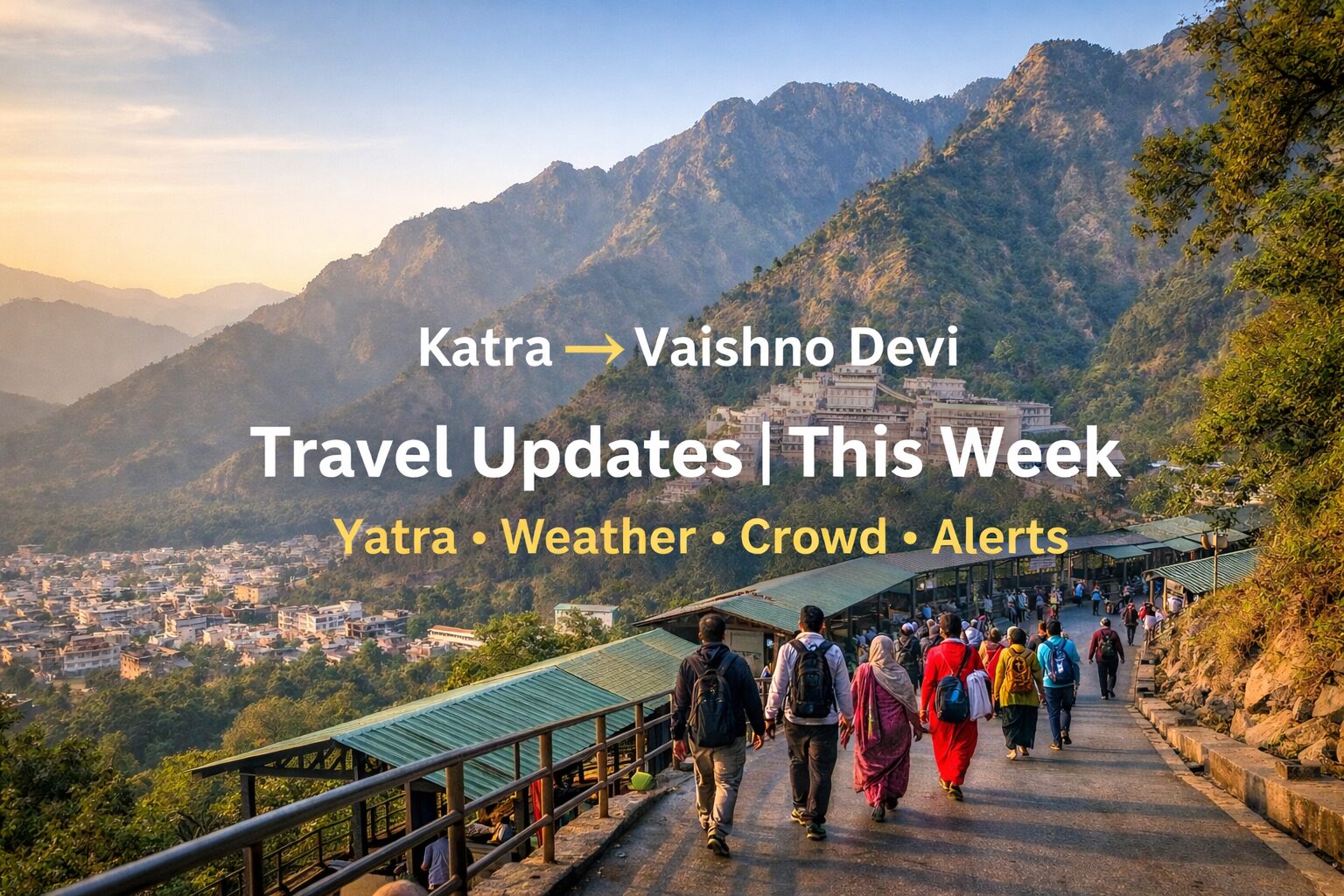
This Week’s Katra Vaishno Devi Yatra Update (January 12–18, 2026)
This weekly update covers conditions for the Vaishno Devi yatra via Katra for the period Monday, 12 January 2026 to Sunday, 18 January 2026. It is written for pilgrims either already on the way or planning to travel within this week, with a focus on weather, crowd levels, operational status, and practical safety guidance. Conditions may change based on weather or official advisories, so use this as a planning snapshot, not a substitute for last-minute checks.
Current Yatra Status & Operational Updates
As of the start of this week (12 January 2026), the Vaishno Devi yatra via Katra is operational with routine winter-season adjustments. The yatra track from Katra to Bhawan (both the old track and the new track where open) remains functional, but pilgrims should be prepared for cold temperatures, occasional fog, and possible wet or slippery stretches, especially in the early morning and late evening.
Key operational points for this week:
- Yatra registration: Mandatory registration continues to be enforced. You can register online through the official Shri Mata Vaishno Devi Shrine Board (SMVDSB) website or at the Yatra Registration Counter in Katra. Carry a printed or digital copy of your yatra slip and a valid photo ID.
- Daily yatra flow: No general suspension of yatra has been announced for this week at the time of writing. However, in case of dense fog, landslides on approach roads, or brief track maintenance, authorities may regulate the flow of pilgrims.
- Bhawan darshan: Standard queue-based darshan is running. Priority darshan or special passes (where applicable) are subject to availability and Shrine Board rules.
- Helicopter services: Helicopter operations between Katra and Sanjhichhat typically continue in winter, but flights are highly weather-dependent. Expect possible delays, especially in the mornings due to fog or reduced visibility.
For broader planning beyond this specific week — including recommended seasons, route breakdowns, and stay options — you may find this detailed resource helpful: Katra Vaishno Devi Travel Guide: Yatra, Stay & Best Time to Visit.
Weather Conditions & Forecast Impact (12–18 January 2026)
This week falls in the peak winter period for Katra and the Vaishno Devi track. While Katra town itself is relatively milder, the temperature drops significantly as you gain altitude toward Bhawan and Bhairon Baba.
Expected Temperature Range
- Katra: Approx. 7–16°C during the week. Evenings and early mornings can feel colder due to moisture and wind.
- Mid-track (Adhkuwari area): Typically a few degrees lower than Katra; wind-chill makes it feel colder.
- Bhawan and higher reaches: Night and late evening temperatures may fall close to or slightly below freezing, especially if there is cloud cover, wind, or precipitation.
Fog, Rain & Snow Possibility
- Fog: Expect morning fog on approach roads to Katra (especially if you are arriving by road from Jammu or other nearby towns). This can slow down vehicle movement and occasionally disrupt early helicopter sorties.
- Rain: Light rain or drizzle is possible on one or two days this week. This can make sections of the track damp and slippery, particularly shaded areas that receive less direct sunlight.
- Snow in higher stretches: While heavy snow is more likely later or during intense Western Disturbances, light snowfall or old snow patches near Bhawan and Bhairon Temple can not be ruled out in mid-January. Track maintenance crews usually clear main paths, but pilgrims should be prepared for slick surfaces.
What This Means for Your Yatra
- Dress in warm, layered clothing and avoid starting your trek without a proper winter jacket, cap, and gloves.
- Carry rain protection (lightweight poncho or umbrella) in case of sudden showers.
- Plan extra time for both the ascent and descent if conditions are foggy or wet.
- Use non-slippery trekking shoes, not open sandals or smooth-soled footwear.
Weather in hilly terrain can change quickly. Conditions may change based on weather or official advisories, so check same-day forecasts for Jammu and Reasi districts before you start from your origin city.
Crowd Levels & Rush Expectations
The week of 12–18 January 2026 falls between the core New Year rush and the busier festival periods later. Typically, this segment of January sees moderate crowds rather than peak-level rush, but several factors can still influence real-time crowd conditions.
General Crowd Pattern This Week
- Weekdays (Mon–Thu): Expect lighter to moderate pilgrim numbers. Darshan queues move relatively faster, especially during late night or very early morning slots.
- Weekend (Fri–Sun): A noticeable spike in crowds is common due to weekend pilgrims, local groups, and people using short breaks for the yatra.
- Night vs Day: Night treks (post-10 PM) generally have smoother movement on the track but will feel much colder. Daytime has more families, senior citizens, and mule or palki traffic, so movement is slower but visibility is better.
Factors That Can Suddenly Increase Rush
- Special pujas or local holidays: Any district-level or state holidays can push more regional pilgrims to travel at short notice.
- Deferred trips: If previous weeks saw disruptions due to weather or road closures, some pilgrims may have rescheduled to this week.
- Favourable weekend weather forecast: Clear-skies predictions often attract last-minute travelers.
To manage expectations, assume that darshan plus trek may take anywhere from 10–16 hours door-to-door (Katra to Bhawan and back) including rest stops and queue time, depending on your fitness and the crowd level during your visit.
Transport & Connectivity Updates
Most pilgrims this week will be focusing on whether they can safely reach Katra, and how reliable local transfers and helicopter services will be under winter conditions.
Reaching Katra
- By train: Trains to Shri Mata Vaishno Devi Katra (SVDK) station are operating as per schedule, but fog-related delays are common in North India throughout January. If you are coming from Delhi, Uttar Pradesh, Bihar, or further east, build in buffer time for possible late arrivals.
- By road: Road connectivity from Jammu to Katra is generally maintained, but early morning and late-night fog may slow traffic. On rare days of intense weather or road maintenance, authorities may issue advisories or temporary diversions. Check for traffic updates from J&K Traffic Police before starting.
- By air: Flights into Jammu Airport (IXJ) are operational, but again, fog can lead to delays or occasional cancellations. If you have a tight yatra schedule, try to arrive in Jammu with at least half a day of buffer.
Local Transport in and Around Katra
- Shared cabs and autos: Readily available between Katra bus stand, railway station, and hotel areas. Night-time services run but are thinner compared to daytime.
- Battery-operated vehicles and ponies: Available at designated points on the track as per Shrine Board regulations. Operations may be scaled back or regulated if surfaces become too slippery.
- Helicopter services (Katra–Sanjhichhat): Bookings remain in demand despite winter, as many pilgrims prefer to avoid the full trek in the cold. However, operations are strictly weather-dependent. If visibility is poor or winds are strong, flights may be delayed, rescheduled, or cancelled with short notice.
If you have a time-sensitive return ticket, avoid relying entirely on same-day helicopter availability, and always have a walking or pony-based backup plan in mind.
Accommodation & Facilities Availability
This week is within the regular winter season, which usually means that accommodation is available more easily than during peak festivals or summer holidays, but good options can still get busy around the weekend.
Availability in Katra
- Hotels and guesthouses: A wide range of budget, mid-range, and some higher-end properties are open. Weeknight availability is generally comfortable; weekends may see higher occupancy.
- Bhawan & Shrine Board accommodation: Yatri Niwas facilities and dormitories managed by the Shrine Board often run close to full on busy days. Early booking (where possible) is advisable if you plan to rest at or near Bhawan.
- Walk-in bookings: Possible on most days this week in Katra, especially during daytime. However, if you arrive late at night during the weekend, be prepared to check a few properties before finding your preferred category.
Facilities on the Track
- Food and refreshment points: Regular eateries, tea stalls, and langar spots are operational. In late-night hours, some stalls may be closed, so carry basic snacks and water.
- Cloakrooms and shoe stands: Available at Katra and near Bhawan as usual. In winter, cloakrooms can be busy due to bulky jackets and blankets.
- Blankets and resting areas: Blankets are generally available from Shrine Board counters against a refundable deposit, but supply can feel stretched on particularly cold nights or weekends. If you are sensitive to cold, consider carrying your own light travel blanket or thermal layers.
Safety Advisories & Official Guidelines
Recent years have seen heightened attention to pilgrim safety and crowd management on the Vaishno Devi route. In winter, the combination of cold, fog, and occasional track congestion makes it even more important to follow official guidance.
Health & Fitness Considerations
- Pre-existing conditions: Pilgrims with heart, respiratory, or serious joint problems should consult a doctor before attempting the full trek, especially in near-freezing temperatures.
- Hydration: Cold weather reduces the natural urge to drink water. Sip warm water or tea often to avoid dehydration, particularly as you climb.
- Overexertion: Avoid rushing to “beat the cold.” Take regular breaks, especially if you feel dizzy, breathless, or unusually fatigued.
Official and Practical Safety Guidelines
- Follow Shrine Board instructions: Pay attention to signage and announcements regarding allowed routes, rest points, and restricted areas.
- Avoid overcrowding at viewpoints: During busy time slots, resist the temptation to stop too long at heavily crowded bends or railings.
- Responsible use of ponies and palkis: Only hire from authorized stands. Excess weight or overloading is a direct safety risk for both animal and passenger.
- Children and elderly: Keep constant supervision, particularly on steps or damp patches. Provide them with hand support in crowded zones.
- Stay updated: If rain, landslide news, or strong wind alerts are reported, listen carefully to on-ground police and Shrine Board staff.
Conditions may change based on weather or official advisories, so remain flexible and prepared to adjust your schedule for safety reasons if asked by authorities.
What Pilgrims Should Expect This Week (On-Ground Experience)
If you are starting your yatra between 12 and 18 January 2026, here is a realistic picture of what your journey is likely to feel like.
In Katra Town
- You will arrive in a town that is active but not overrun by pilgrims mid-week. Shops selling prasad, woollens, and basic travel items are open from morning till late evening.
- Early mornings and nights feel quiet and chilly; pack woollens even if you are used to North Indian winters.
- Yatra registration counters may have short queues; online-registered pilgrims will move faster.
On the Trek
- The track will be well-lit at night, but there may be isolated moist or slick sections. Walking sticks can be helpful, especially for seniors.
- Midway stops like Adhkuwari will have washroom facilities and refreshment options, but be prepared for brief waiting times at peak evening hours.
- You may encounter occasional mule traffic on certain segments. Stay to the side as directed, and avoid standing in tight corners when mules pass.
At Bhawan
- The temperature will be significantly colder than Katra; wind-chill effect can make it feel harsher, especially if there is cloud cover or drizzle.
- Darshan queues move steadily but can slow down at weekend peaks. Keep some dry snacks in your pocket; avoid heavy meals immediately before entering long queues.
- Post-darshan, decide calmly whether to rest before descending. If you are already tired and it is late at night, consider a short rest to avoid injury while walking downhill in the cold.
Practical Tips Based on This Week’s Conditions
The current mix of winter chill, moderate crowds, and possible fog calls for a few specific adjustments in how you plan and pack for your yatra.
Packing Checklist for 12–18 January 2026
- Clothing: Thermal inner wear, fleece or woollen sweaters, a windproof jacket, woollen cap, gloves, and warm socks (carry an extra pair).
- Footwear: Closed, non-slippery trekking or sports shoes with good grip. Avoid brand-new shoes if possible; slightly broken-in shoes are more comfortable for long walks.
- Rain & wind protection: Light raincoat or poncho, and a compact umbrella if you are comfortable carrying one.
- Health kit: Basic medicines (for cold, fever, acidity), prescribed medications, ORS sachets, a small roll of bandage, and plasters for blisters.
- Accessories: Torch or headlamp (especially if starting very early or very late), power bank, and an extra pair of gloves if you feel the cold strongly.
Timing Your Trek
- Best window this week: For most pilgrims, starting between 2 PM and 6 PM gives a mix of daylight and cooler evening temperatures, with darshan likely around late night or early morning.
- For seniors and children: Opt for daylight hours as much as possible, even if it means slightly longer queues, because visibility and surface conditions are more forgiving.
- Helicopter users: Book the earliest feasible slot but expect possible fog delays. Have enough flexibility to walk at least part of the way if needed.
Money, Mobile & Connectivity
- ATMs: Multiple ATMs are available in Katra, though smaller denominations can run low during busy days. Carry some cash for small purchases on the track.
- Digital payments: UPI and card payments are accepted at many shops and hotels, but not universally. Have a backup option.
- Network coverage: Mobile connectivity is generally good in Katra and patchy-to-moderate at higher altitudes. Inform family in advance that you may be intermittently unreachable during certain track stretches.
Planning for Uncertainty
- Build in an extra half to full day into your overall trip plan in case of weather-related delays on roads, trains, or flights.
- Keep your return journey lightly flexible if possible — avoid very tight margins between your expected descent time and your train/flight departure.
- Stay updated via your hotel, local taxi drivers, or official helplines about any current advisories.
Quick Weekly Summary (12–18 January 2026)
- Yatra status: Operational throughout the week, subject to routine weather-based regulations if required.
- Weather: Cold winter conditions with temperatures dropping near or below freezing at Bhawan; possible fog and light rain on some days.
- Crowds: Moderate overall; lighter mid-week, busier over the weekend. Queues manageable but allow ample time.
- Transport: Trains, roads, and flights functioning, but fog-related delays likely, especially in early mornings. Helicopter services weather-dependent.
- Accommodation: Generally available in Katra; advance planning recommended for weekend nights and Shrine Board facilities near Bhawan.
- Safety: Main risks are cold exposure, slippery patches, and fog-related travel delays. Follow official guidance and don’t rush the trek.
- Best advice: Pack warm layers and good shoes, allow schedule flexibility, and consider starting your trek in the afternoon for balanced comfort and crowd levels.
FAQ: Vaishno Devi Yatra via Katra (12–18 January 2026)
1. Is the Vaishno Devi yatra safe this week in mid-January?
Yes, the yatra is generally considered safe this week, with regular winter precautions in place. The main concerns are cold weather, occasional fog, and the risk of slippery track sections. If you dress warmly, wear proper footwear, and follow Shrine Board instructions, the yatra remains manageable for most reasonably fit pilgrims.
2. Do I need to book the yatra in advance for this week?
Yatra registration is mandatory, and advance online registration is strongly advised. While on-the-spot registration in Katra is usually possible, pre-booking helps avoid last-minute queues and gives you a clear date and batch for your yatra, especially if you are coordinating with train or flight schedules.
3. Are helicopter services between Katra and Sanjhichhat reliable right now?
Helicopter services are scheduled to operate this week, but reliability depends heavily on weather, particularly fog and wind. Morning flights may be delayed or rescheduled if visibility is low. Treat helicopter bookings as a convenience rather than a guarantee, and keep a backup plan to walk or use ponies if needed.
4. How cold will it actually feel at Bhawan during this period?
While exact temperatures vary by day, it can feel close to or below freezing at Bhawan, especially at night and early morning. The combination of altitude, wind, and dampness can make the chill feel sharper than the thermometer suggests. Multiple warm layers, a windproof jacket, cap, and gloves are essential for comfort.
5. Is it suitable for elderly pilgrims and children to travel this week?
Many elderly pilgrims and families with children do travel in mid-January, but extra care is required. Choose daytime trekking hours, consider hiring ponies or palkis for those who cannot walk long distances, and ensure everyone is clothed warmly. Consult a doctor in advance for seniors with cardiac or respiratory conditions.
6. Will I get hotel rooms easily in Katra if I arrive without a booking?
On most weekdays this week, you are likely to find rooms on arrival, especially in the budget and mid-range categories. However, weekends can be busier, and late-night walk-ins may have fewer choices. If you are particular about location or amenities, advance booking remains the safer option.
7. What should I do if my train or flight is delayed due to fog?
Fog-related delays are common in January, so build some flexibility into your schedule. If your arrival is significantly delayed, inform your hotel and adjust your yatra timing rather than rushing directly into the trek. If you miss your planned yatra slot, re-check with the Shrine Board counters for updated instructions on registration validity and possible rescheduling.
8. Are food and washroom facilities open along the route in winter?
Yes, food stalls, basic eateries, and washroom facilities remain operational along the main track even in winter. However, in late-night or early-morning hours, some smaller outlets may be closed. Carry light snacks, water, and tissues or sanitiser to stay comfortable between facilities.
9. Is it necessary to carry my own blankets for the night?
It is not strictly necessary, as blankets are generally available at Shrine Board counters and accommodation facilities against a refundable deposit. That said, during particularly cold nights or busy weekends, supplies can feel stretched. A compact travel blanket or warm shawl gives you an extra layer of comfort and flexibility.
10. What if weather conditions suddenly worsen during my yatra?
If heavy rain, strong winds, or snow are reported, authorities may temporarily slow or regulate the yatra for safety. In such cases, follow instructions from Shrine Board staff and security personnel without attempting to bypass regulated sections. Conditions may change based on weather or official advisories, so stay patient and prioritize safety over speed.
11. Can I complete the yatra in a single day this week?
Many reasonably fit pilgrims complete the trek and darshan within a single long day, especially if they start early and avoid extended breaks. However, with winter conditions and potential queues, you should allow for 10–16 hours for the full circuit. If time is tight, consider planning a short rest halt or using partial transport support like ponies where permitted.
12. Is this a good week to avoid extreme rush at Vaishno Devi?
If your priority is to avoid extreme crowds, this mid-January week is relatively favourable compared to holiday peaks and major festivals. While weekends will still be busier, the overall footfall tends to be more manageable, especially on weekdays and late-night treks. Balance your desire for fewer crowds with the reality of colder temperatures and possible fog.