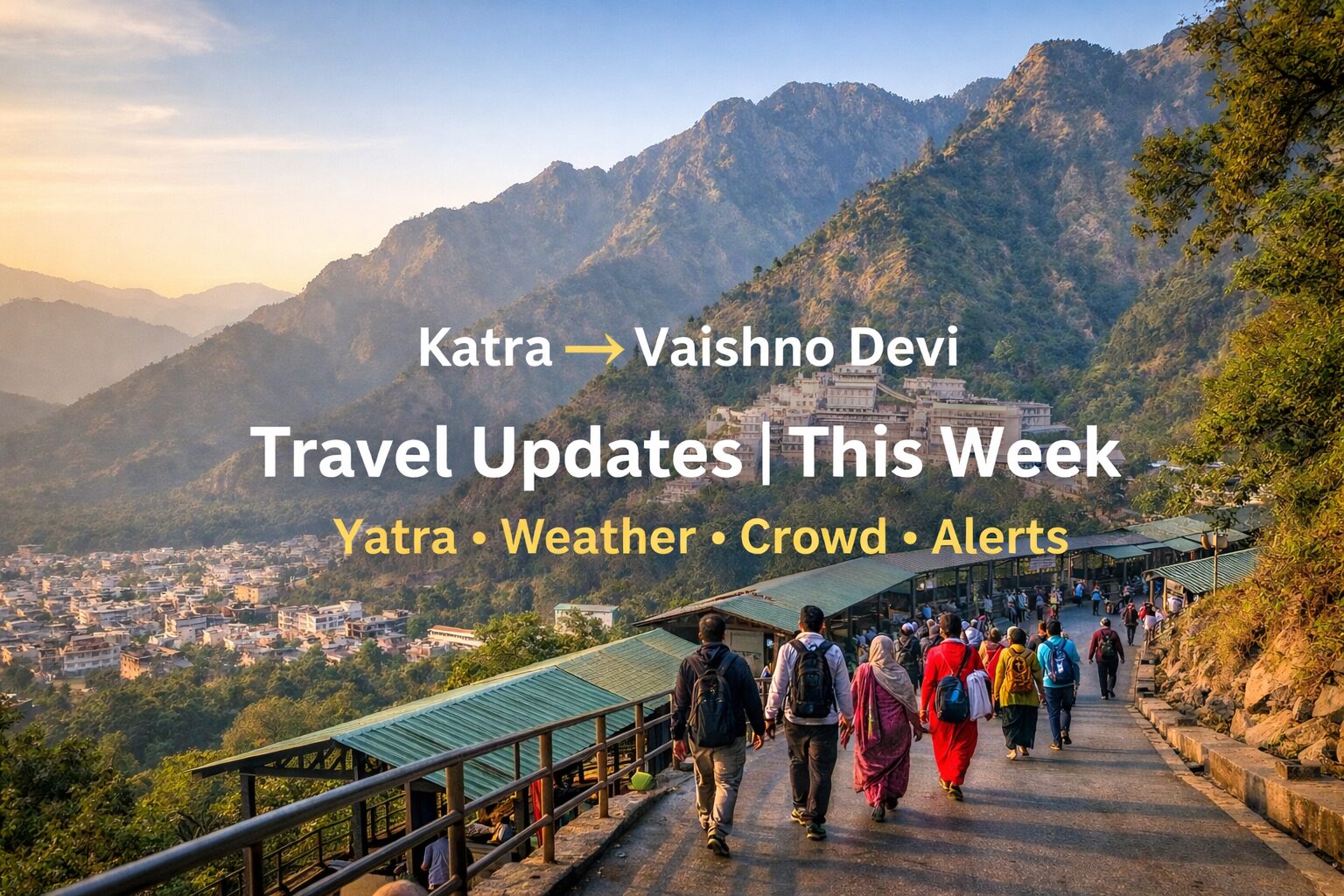
Katra–Vaishno Devi Weekly Travel Update: 13–19 January 2026
This weekly update covers conditions for pilgrims traveling to Katra and undertaking the Vaishno Devi yatra from 13 to 19 January 2026. It focuses on current winter weather, yatra operations, crowd patterns, and practical considerations for those already on the move or planning a visit in the coming days. Conditions may change based on weather or official advisories, so treat this as a planning aid rather than a final guarantee.
Current Yatra Status & Operational Updates
As of mid-January 2026, the Vaishno Devi yatra from Katra is operational, with winter protocols in place. The Shrine Board typically keeps the track and darshan open throughout winter, but may introduce temporary restrictions or slower movement during spells of heavy rain, snow, or fog at higher elevations.
Key points for this week (13–19 January 2026):
- Yatra open: Pilgrims can undertake the trek from Katra to Bhawan, but should be prepared for cold, potentially wet conditions, especially at night and in the early morning.
- Yatra slip & RFID: Registration (yatra slip) at Katra remains mandatory. RFID-based tracking, where implemented, helps manage crowd movement and safety; follow all instructions given at counters and check posts.
- Helicopter services: Helicopter operations between Katra and Sanjichhat generally run on a normal winter schedule but are highly weather-dependent. Low visibility, strong winds, or rain can cause delays or cancellations at short notice.
- Battery cars & ponies: Availability may be affected on days of heavy rain or slippery track sections. Priority generally goes to elderly, differently abled, and those with medical needs.
- Sanitation & facilities: Toilets, medical posts, and refreshment points along the track are open, but services can feel stretched during specific rush windows (weekends and long weekends).
For broader year-round planning context, including route options, helicopter details, and seasonal considerations beyond this week, see the Katra Vaishno Devi Travel Guide: Yatra, Stay & Best Time to Visit.
Weather Conditions & Forecast Impact (13–19 January 2026)
This week falls in the heart of winter in the Jammu region. While Katra itself is at a lower altitude and usually avoids heavy snowfall, the route toward Sanjichhat and Bhawan is higher and more exposed to cold winds, fog, and occasional snow or sleet.
Expected Conditions
- Temperature in Katra: Approximate daytime highs in the mid-teens °C and nighttime lows potentially dropping into single digits. Early mornings and late evenings feel distinctly cold, especially if windy or damp.
- Temperature at Bhawan: Often 3–6°C lower than Katra, with a sharper wind chill. Night and pre-dawn hours can feel near-freezing, especially in open sections of the track.
- Rain & moisture: Light to moderate rain is possible on some days, with cloud cover and mist more likely in the early morning and evening.
- Fog & visibility: Fog in the plains and lower hills (including approach roads and rail routes) may lead to travel delays, especially for overnight trains and early-morning flights.
Weather-related advisories and updates for the Jammu region can be cross-checked through the India Meteorological Department’s official portal, which provides current forecasts and warnings. Keep in mind that hill weather can shift faster than forecasts suggest, particularly late in the day.
Practical Weather Implications for Pilgrims
- Clothing: Layered winter wear is essential this week: thermal innerwear, fleece or wool layer, a windproof or water-resistant outer jacket, gloves, warm cap, and woollen socks. Avoid relying on a single heavy coat without layers.
- Footwear: Use shoes with a good grip and closed toes. The track, especially near Banganga, Ardhkuwari, and Sanjichhat, can become slippery after rain or mist.
- Night trekking: Conditions during 11 pm–4 am are substantially colder. If your darshan slot or plan involves night walking, carry extra warm clothing and a light rain protector.
- Health considerations: Respiratory or cardiac patients should discuss their travel with a doctor beforehand. Cold air, combined with exertion and altitude gain, may cause breathing difficulty or fatigue.
Crowd Levels & Rush Expectations
The week of 13–19 January 2026 sits between the New Year rush and the build-up to late-winter and spring pilgrim peaks. Overall, crowd levels are likely to be moderate, with noticeable variations between weekdays and weekends.
- Weekdays (Tuesday–Thursday): Generally the most manageable days for darshan, with comparatively shorter waits and smoother movement on the track.
- Weekends (especially Friday evening to Sunday): Expect higher footfall from regional pilgrims and weekend travelers. Waiting time for darshan, cloakroom, and food outlets can increase.
- Early morning vs. late night: Late-evening and post-midnight treks may feel less crowded, but this comes with colder temperatures and limited visibility in some areas.
- Darshan queue time: Queue times can change quickly based on arrivals and weather. Winter usually sees shorter queues than peak festivals, but sudden surges still occur.
If you are elderly, traveling with children, or have health constraints, favor mid-morning or early afternoon starts over crowded or very cold hours, when possible.
Transport & Connectivity Updates
Rail Connectivity to Katra
- Train operations: Rail services to Shri Mata Vaishno Devi Katra station are running, but winter fog in north India can cause significant delays, especially for long-distance trains originating in the plains.
- Delays & rescheduling: Be prepared for late arrivals and departure changes. Allow buffer time between your train’s scheduled arrival and any fixed darshan or helicopter slots.
- Night arrivals: If your train is scheduled late at night, keep in mind that delays could push your arrival into early morning, which is colder and may affect your planned start time for the trek.
Road Connectivity to Katra
- Jammu–Katra road: The main road from Jammu to Katra is typically open, with usual winter traffic. However, fog and occasional rain may reduce visibility and slow travel.
- Highway conditions (for those approaching via Jammu–Srinagar axis): Higher stretches of the highway are more prone to closures or delays due to snowfall or landslides. Check local advisories if you are combining Vaishno Devi with Kashmir or Patnitop travel.
- Local transport: Taxis, shared cabs, and buses between Jammu and Katra generally operate through the day. In late evenings and at night, availability can be thinner; pre-arrange transport when arriving after dark.
Air Connectivity via Jammu
- Flights to Jammu: Winter fog and low visibility may affect flight schedules, especially morning departures and arrivals. Keep your mobile reachable and monitor airline messages for any changes.
- Transfer to Katra: The road transfer from Jammu airport to Katra usually takes around 1.5–2.5 hours, but can be longer if weather reduces visibility or causes slow traffic.
Accommodation & Facilities Availability
Mid-January is not peak tourist season, but Vaishno Devi sees a relatively steady pilgrim flow year-round. This week, you can generally expect adequate availability in and around Katra, with some variations around Fridays and Saturdays.
- Katra town: A wide range of dharamshalas, guesthouses, and hotels is open. Last-minute check-ins are usually possible, but families and large groups should still aim to reserve in advance, especially for weekend arrivals.
- Near the track & Bhawan: Accommodation options closer to the track and at Bhawan may be more limited. Winter nights can fill up more quickly than expected on weekends or auspicious dates.
- Heating & hot water: Not all budget facilities provide strong heating. Confirm availability of room heating and hot water before committing, as both are important this week.
- Food & water: Langars, canteens, and private food outlets are functioning, with simple vegetarian options widely available. Hot tea, soup, and basic meals are helpful in cold conditions, but queues may form during peak hours.
Safety Advisories & Official Guidelines
During this winter week, safety is closely linked to weather, track conditions, and health preparedness. Follow all instructions from Shrine Board personnel, police, and medical staff along the route.
- Track safety: Walk on the designated pedestrian side, avoid running, and be extra cautious on slopes and turns. Rain can make tiled or concrete sections slippery.
- Overcrowding spots: Near Ardhkuwari, Sanjichhat, and Bhawan, follow queue discipline. Pushing, rushing, or trying to bypass lines can cause accidents, especially when surfaces are wet.
- Health precautions: Carry personal medicines, basic pain relief, and any prescribed inhalers or cardiac medication. Use masks in crowded indoor spaces if you are vulnerable to respiratory infections.
- Hydration & fatigue: Pilgrims sometimes drink less water in the cold, which can worsen fatigue and muscle cramps. Sip warm fluids regularly and rest at waypoints if you feel exhausted.
- Children & elderly: Keep children close, particularly at bends and railings. Elderly pilgrims should avoid sudden exertion and should consider breaks and assistive options (ponies, palkis, or battery cars where allowed).
- Luggage & valuables: Use cloakrooms rather than attempting the full trek with heavy bags. Keep valuables and important documents minimal and well-secured.
Conditions may change based on updated official advisories, weather developments, or operational decisions by authorities. Check for the latest announcements on arrival in Katra and monitor any local notice boards or public-address updates.
What Pilgrims Should Expect This Week (13–19 January 2026)
If you are traveling during this specific week, it is reasonable to anticipate a cold but manageable pilgrimage environment with generally operational services and moderate crowd levels. Your main variables are likely to be weather swings and isolated transport delays.
- On arrival in Katra: Expect cool weather, busy but not overwhelming streets, and accessible registration/yatra slip counters. Evening arrivals may feel more rushed if you are trying to begin the trek the same night.
- During the trek: The initial stretches from Banganga to Ardhkuwari can feel crowded at certain times, but you should be able to maintain a steady walking pace outside peak weekend hours. Take advantage of rest points for warmth and stretching.
- At Bhawan: Depending on your arrival time and crowd levels, darshan waiting time may range from relatively quick movement during non-peak hours to noticeably slower progress during weekend clusters. Prepare mentally for some waiting in cold conditions.
- Return journey: Many pilgrims underestimate how tiring the return can be, particularly after a night of limited sleep and cold exposure. Factor in time to rest, rehydrate, and warm up before undertaking the downhill walk or onward travel.
Practical Tips Based on This Week’s Conditions
- Time your start: For this week, a late morning or early afternoon start from Katra often balances manageable temperatures and decent visibility, especially for families.
- Carry a compact rain/wind layer: Even if the forecast seems dry, sudden light showers or mist can make you uncomfortably cold if you are not protected.
- Use layers, not bulk: It is easier to add or remove layers than to manage one very heavy jacket on steep inclines.
- Keep basics in a small daypack: Warm cap, gloves, a light shawl or stole, basic medicines, and a small bottle of water should be with you rather than in checked or cloakroom luggage.
- Account for delays: When planning your train or flight back from Jammu, include buffer time after your expected descent to Katra, especially if traveling over the weekend or during foggy mornings.
- Stay informed locally: Upon reaching Katra, note any notices regarding temporary route changes, heavy rush warnings, or specific timing advisories for darshan.
- Respect rest & health limits: If you feel breathless, dizzy, or unusually fatigued, slow your pace and consider seeking medical help at the nearest facility on the route.
Quick Weekly Summary (13–19 January 2026)
- Yatra status: Open, with standard winter protocols; temporary slowdowns possible in case of fog, rain, or poor visibility.
- Weather: Cold to very cold, especially at night and at Bhawan; chance of light rain or mist on some days.
- Crowds: Moderate overall; relatively lighter on midweek days, higher on weekend and on select auspicious dates.
- Transport: Rail, road, and air links functional, but expect possible delays due to winter fog and occasional weather disruptions.
- Accommodation: Generally available; confirm heating and hot water, especially in budget stays.
- Helicopters: Scheduled but strictly weather-dependent; be mentally prepared for last-minute changes.
- Key focus: Warm clothing, flexible timings, and a safety-first mindset will make the yatra more comfortable this week.
FAQ: Vaishno Devi Yatra via Katra – 13–19 January 2026
1. Is it safe to do the Vaishno Devi yatra this week in winter conditions?
The yatra is generally considered safe this week for reasonably fit pilgrims who are properly equipped for cold weather. Safety depends on following official instructions, walking carefully on potentially slippery stretches, and respecting your own health limits. Those with serious medical conditions should obtain medical advice before traveling.
2. Will I face snow on the way from Katra to Bhawan?
Katra itself rarely sees snow, but higher sections near Bhawan can experience sleet, frost, or light snow during colder spells. This varies from day to day and is not guaranteed. Even without visible snow, wind chill and damp surfaces can make the walk feel wintry and require warm clothing and good footwear.
3. Are train delays common during this week?
Winter fog in north India does increase the likelihood of train delays, particularly for long-distance services coming from the plains. If you are traveling between 13 and 19 January 2026, build enough buffer into your itinerary so that a delayed train does not force you into a rushed or unsafe trek schedule.
4. Should I book my stay in Katra in advance for this week?
While last-minute accommodation is often available in January, advance booking is still advisable, especially for families, elderly pilgrims, or those arriving on weekends. Pre-booking can help you secure a place with proper heating and hot water, which matters more than usual in mid-winter.
5. Is night trekking recommended in mid-January?
Night trekking is possible, and many pilgrims choose it, but conditions this week are particularly cold between late evening and early morning. If you opt for a night trek, bring extra warm layers, cover your head and hands, and move carefully, especially on wet or misty sections. Those vulnerable to cold or with health concerns may be better off starting in daylight hours.
6. Will food and drinking water be easily available along the route?
Yes, basic vegetarian food, snacks, tea, and drinking water are generally available at intervals along the route from Katra to Bhawan. During busier periods or late-night hours, choice may be limited, and queues slightly longer, but essential refreshments remain accessible.
7. How long should I plan for the full yatra, including return?
For this week’s conditions, many pilgrims find that a comfortable pace—from Katra to Bhawan, darshan, rest, and then return—requires most of a full day, and often an overnight element if you prefer to rest properly. Rushing the yatra in winter is not advisable; instead, allow extra time for slow sections, queues, and weather-related delays.
8. Can elderly pilgrims manage the yatra in this weather?
Many elderly pilgrims do complete the yatra in winter, but they typically do so with careful planning. Using support options like ponies, palkis, or battery cars (where permitted), taking frequent breaks, dressing warmly, and avoiding the coldest hours can make a significant difference. A pre-trip health check and honest assessment of stamina are important.
9. What should I absolutely not skip carrying this week?
For mid-January, do not skip a warm cap, gloves, layered clothing, good walking shoes with grip, any prescribed medicines, and a small torch or headlamp if you might walk in low-light hours. A light rainproof layer is useful even on days that start out dry, as conditions can shift.
10. Are day trips from Jammu to Katra and back realistic this week?
A same-day in-and-out from Jammu to Katra with a full yatra and return is challenging in winter and may become unsafe if you try to rush. If you must attempt it, start very early, expect delays, and be prepared to adjust plans if weather or crowd conditions slow your progress. An overnight stay in Katra or near the track is more practical for most pilgrims.
11. Will my mobile network work reliably along the yatra route?
Mobile coverage is available on much of the route, but signal strength can fluctuate in some stretches and inside tunnels or enclosed spaces. It is best not to depend entirely on live phone connectivity for coordination; pre-decide meeting points with your group in case of separation.
12. How flexible should I keep my schedule for this week?
In winter, and particularly during 13–19 January 2026, it is wise to keep your itinerary flexible. Build room for train or flight delays, slower walking times, and possible congestion at darshan. A slightly relaxed schedule typically leads to a safer, less stressful pilgrimage experience.