
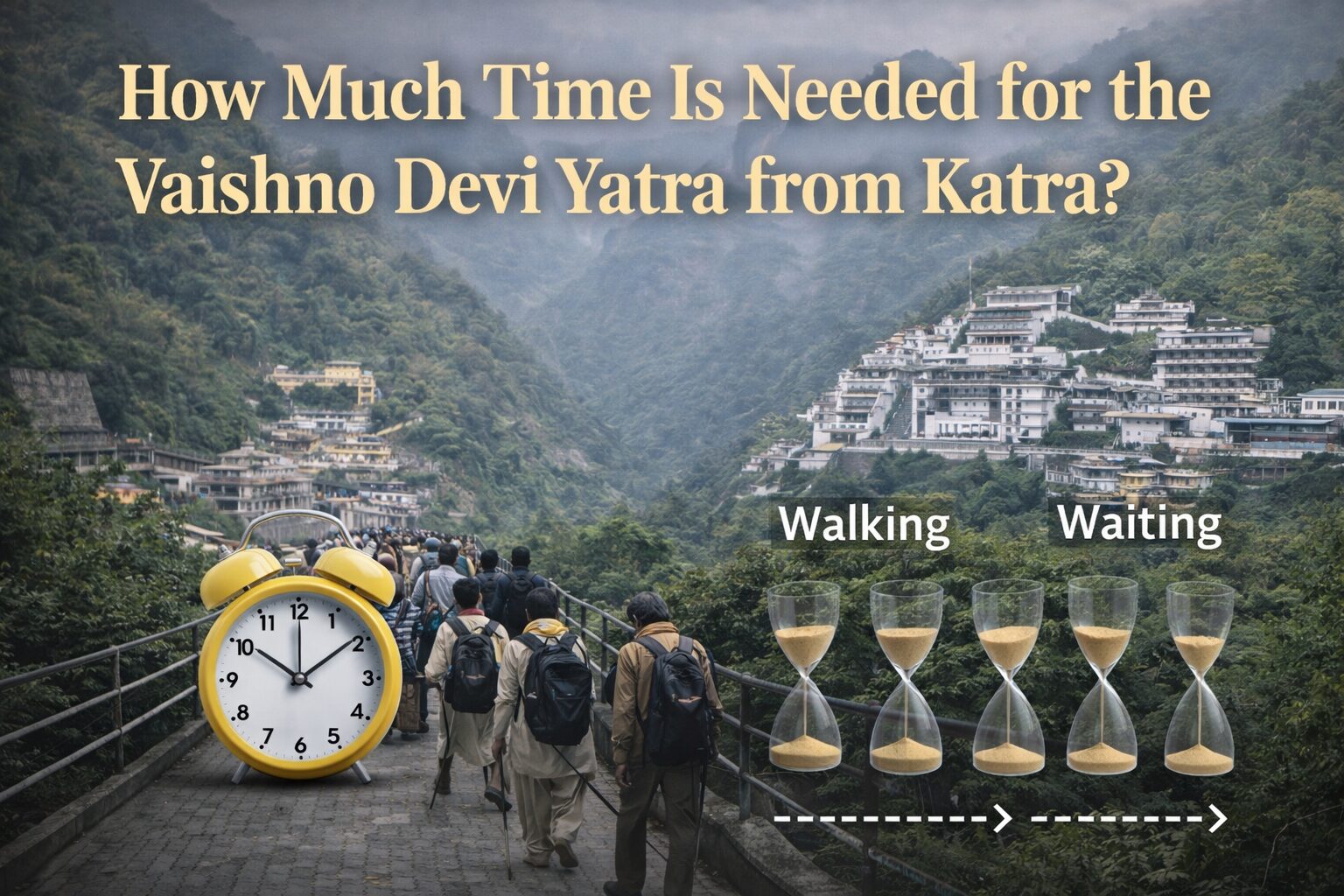
One of the first planning questions pilgrims ask when arriving in Katra is how much time the Vaishno Devi Yatra actually takes. It sounds like a simple calculation, but in reality, time on this pilgrimage is shaped by far more than distance alone. Walking pace, crowd management, weather, rest needs, and waiting at key points all play a role.
Some pilgrims complete the yatra within a single long day, while others spread it over two or three days to stay comfortable. Neither approach is right or wrong. What matters is understanding where time is realistically spent—on the path, at checkpoints, near the shrine, and during recovery.
This guide explains time requirements in a practical, experience-based way. It helps first-time visitors, families, senior citizens, and travelers extending their stay plan without rushing or underestimating the journey.
Why Time Planning for the Yatra Is Not Straightforward

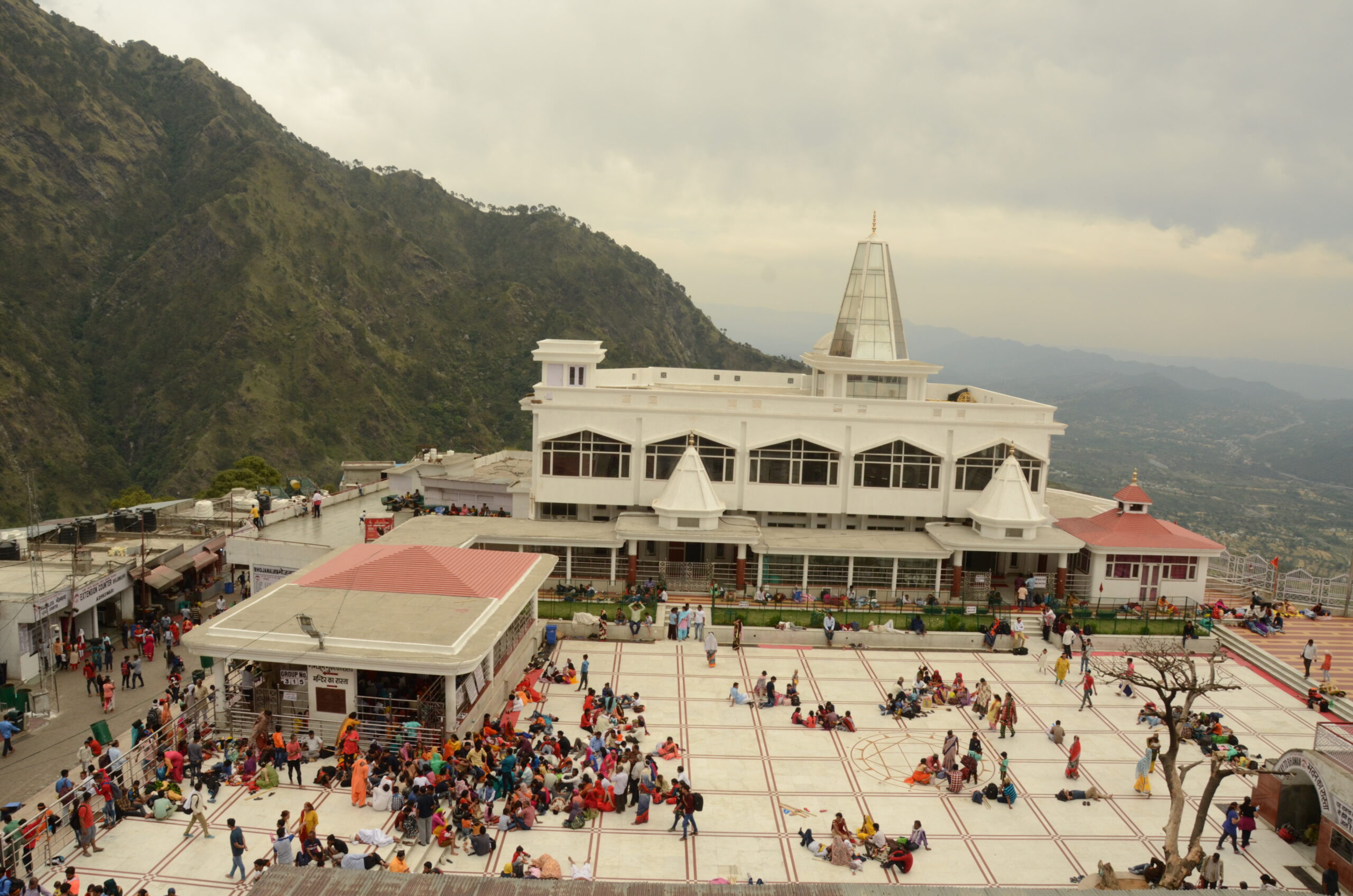
The Vaishno Devi Yatra is often described as a walk, but it functions more like a sequence of managed stages. Once pilgrims leave Katra and begin the ascent into the Trikuta Mountains, movement is guided by checkpoints, regulated entry, and controlled queues.
This means that time is not spent only on walking. Registration verification, RFID checks, crowd flow control, and darshan queues all add layers that are difficult to predict precisely. Even physically fit pilgrims may find themselves waiting longer than expected during busy periods.
Another factor is recovery. The yatra places steady strain on the body, and time spent resting—whether planned or unplanned—often determines how smooth the overall experience feels. Treating the yatra as a fixed-hour activity usually leads to frustration. Treating it as a flexible journey tends to work better.
How Most Pilgrims End Up Structuring Their Time
In practice, pilgrims usually fall into a few common patterns, even if they don’t plan them deliberately. Some aim for a same-day yatra, starting very early and returning late. Others prefer to break the journey with an overnight halt, either mid-route or near the shrine.
First-time visitors often underestimate how much time is lost to waiting rather than walking. Families tend to slow down naturally due to differing energy levels. Senior citizens usually benefit from longer rest periods, which naturally extend the timeline.
What most pilgrims discover is that time expands as the journey unfolds. Those who allow for this mentally tend to feel calmer and less pressured, even if the yatra takes longer than initially expected.
Time Spent Walking vs Time Spent Waiting
A useful way to think about the yatra is to separate active walking time from passive waiting time.
| Part of the Journey | Where Time Goes |
|---|---|
| Walking uphill | Pace, fatigue, rest breaks |
| Checkpoints | Crowd regulation |
| Shrine area | Darshan queues |
| Return journey | Joint strain, recovery |
Many pilgrims assume walking is the main time factor. In reality, waiting—especially near Vaishno Devi Bhawan—often takes as long as the walk itself on busy days.
Understanding this balance helps set realistic expectations and reduces frustration when progress feels slow.
One-Day vs Two-Day Yatra: What the Difference Feels Like
| Time Approach | How It Usually Feels | Who It Suits |
|---|---|---|
| Same-day yatra | Long, tiring, tightly paced | Experienced, fit pilgrims |
| Two-day yatra | Steadier, less rushed | First-time visitors, families |
| Extended (2–3 days) | Comfortable, flexible | Senior citizens |
A one-day yatra compresses effort into a single stretch. It can be done, but often leaves pilgrims exhausted. A two-day approach spreads walking and waiting more evenly and allows better recovery.
Extended timelines are less common but useful for those who prioritize physical comfort over speed.
How Different Travelers Experience Time Differently
Time on the yatra feels very different depending on who you are traveling with.
| Traveler Type | Typical Time Frame | What Slows Things Down |
|---|---|---|
| Solo pilgrims | 1–2 days | Crowds, darshan queues |
| Families | 2 days | Group coordination |
| Senior citizens | 2–3 days | Rest and recovery |
| Tight itineraries | 1 day | Limited flexibility |
Families often move at the pace of the slowest member, which naturally extends the journey. Senior citizens usually benefit from additional rest, making a longer timeline more comfortable.
Matching expectations to your group’s needs is more important than matching someone else’s schedule.
Seasonal and Crowd Conditions That Change Time Estimates
Season and crowd density often matter more than walking ability. Summer heat slows pace. Monsoon weather adds caution. Winter cold affects joints and endurance.
Crowds have the biggest impact. Peak pilgrimage periods can significantly increase waiting times at every stage.
| Condition | Effect on Total Time |
|---|---|
| Peak season | Much longer waits |
| Off-season | Smoother flow |
| Bad weather | Pauses and delays |
| Early starts | Fewer crowds |
Choosing when to start the yatra can sometimes save hours, but conditions are never fully predictable.
Common Time-Related Assumptions That Don’t Hold Up
One common assumption is that distance equals duration. On this yatra, management systems and waiting time matter as much as walking speed.
Another mistake is planning only for the ascent and forgetting the return. Many pilgrims feel the return journey more sharply due to accumulated fatigue.
Some believe starting late conserves energy. Often, it does the opposite by placing pilgrims in heavier crowds with fewer recovery options.
Time planning works best when it allows room for the unexpected.
Practical Time Planning Advice for First-Time Visitors
If this is your first Vaishno Devi Yatra, plan for flexibility rather than precision. Build buffer time into your schedule and avoid commitments that force rushing.
Arriving in Katra with an extra day helps. Start walking early. Rest before exhaustion sets in. Think in stages—Banganga, Ardhkuwari, Sanjichhat, Bhawan—rather than hours.
When time is treated as something to move with rather than control, the journey feels far less stressful.
Frequently Asked Questions
Can the yatra be completed in one day?
Yes, but it can feel rushed and physically demanding.
Is two days enough for most pilgrims?
For many first-time visitors, two days feels balanced and manageable.
Do senior citizens usually need more time?
Yes, especially if rest and joint comfort are priorities.
Does crowd level affect time more than fitness?
Often, yes. Heavy crowds slow everyone down.
Is the return journey quicker?
Usually, but it can still be tiring due to joint strain.
Should timing plans change in peak season?
Yes. Extra waiting time should always be expected.
Closing Thoughts
Time on the Vaishno Devi Yatra is shaped less by speed and more by rhythm—of movement, rest, waiting, and recovery. While it is possible to complete the journey quickly, most pilgrims benefit from allowing more time than they think they need. When planning is flexible and expectations are realistic, the yatra feels steadier and more humane. Treating time as part of the pilgrimage itself often leads to a calmer, more grounded experience.