
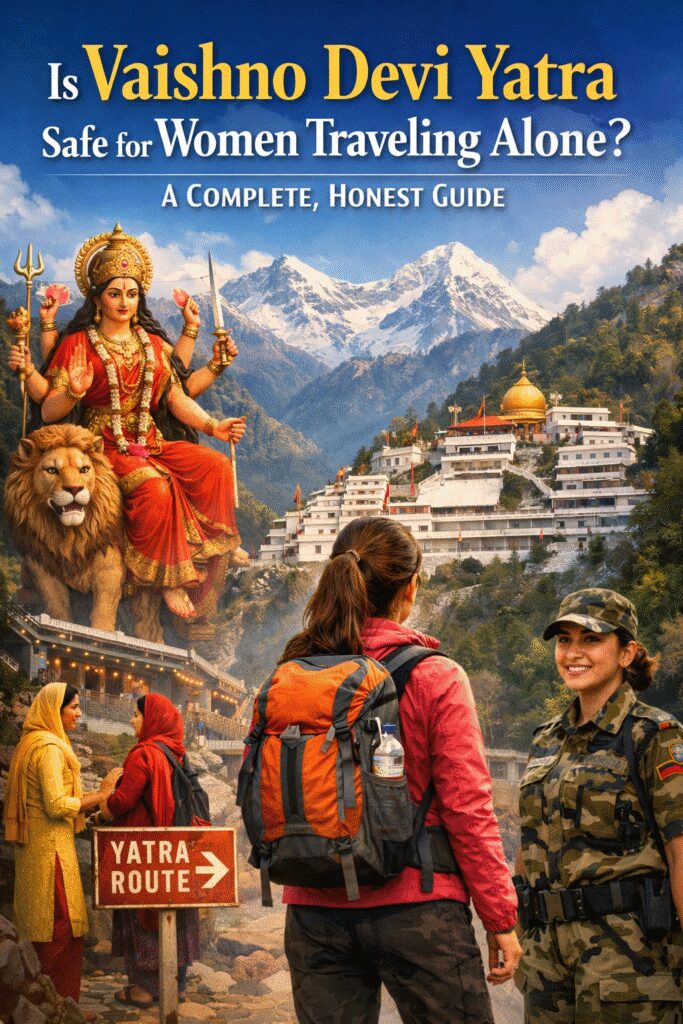
Is Vaishno Devi Yatra Safe for Women Traveling Alone? A Complete, Honest Guide
Planning a solo pilgrimage to Mata Vaishno Devi and wondering if it is genuinely safe for women traveling alone? You are not the only one. Every year, many women — college students, working professionals, widows, NRIs, and even first-time solo travellers — choose to undertake the Vaishno Devi Yatra on their own. The question is not just “Is it safe?” but “What is it really like, and how can I do it comfortably and confidently?”
This guide brings together practical safety advice, on-ground realities, and small but important details you usually only get from people who have actually done the yatra. It does not sugarcoat the challenges, but it also highlights why Vaishno Devi is one of the more supportive and structured routes in India for solo women pilgrims.
Short Answer: Is Vaishno Devi Safe for Solo Women Travellers?
In most situations, yes, Vaishno Devi Yatra is considered relatively safe for women traveling alone, especially compared to many unorganized pilgrimage routes. The area is highly regulated, there is a continuous flow of pilgrims, security presence is strong, and facilities are designed to handle families, seniors, and solo travellers alike.
However, “safe” does not mean “effortless” or “risk-free.” You will still need to:
- Plan your timings to avoid the most crowded or late-night rush (unless you are comfortable with it).
- Stay alert about your belongings and personal space in dense crowds.
- Prepare physically for a demanding uphill trek (or book ponies/ battery cars/ helicopter if needed).
- Choose your accommodation and travel mode carefully.
Understanding what awaits you from Katra to Bhawan is the key to feeling safe, prepared, and empowered rather than anxious.
Understanding the Vaishno Devi Yatra: Route & Experience

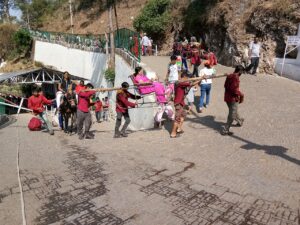
The Vaishno Devi shrine is located near Katra in Jammu & Kashmir, in the Trikuta hills. The classic yatra route most solo women follow looks like this:
- Reach Katra – by train, road, or air (via Jammu airport, then taxi/bus to Katra).
- Start from Banganga/ Darshani Deodi – the formal entry point where your yatra actually begins.
- Trek or ride up to Bhawan – around 12–13 km uphill, with multiple stops, food joints, security checks, and rest points.
- Darshan at the Bhawan – the sanctum where the holy cave and pindis are located.
- (Optional) Visit Bhairon Baba Temple – located higher up, traditionally done after darshan at Bhawan.
- Return to Katra – by the same or an alternate route (like the new Tarakote route).
At every stage, the presence of other pilgrims, families, security personnel, pony handlers, shopkeepers, and shrine board staff creates a very public, watchful environment. This high visibility is actually one of the biggest safety positives for solo women.
How Safe Is Katra Town for Women Alone?
Katra is the base town for the Vaishno Devi Yatra and is almost entirely dependent on pilgrims. This makes it relatively organised and focused on hospitality and services.
Safety Snapshot: Katra for Solo Women
- Petrol pumps, pharmacies, and ATMs: Easily available in and around the main market and bus stand areas.
- Police & security: Local police presence, plus additional security because Katra is a prominent religious destination.
- Women visibility: You will see many women — solo, in small groups, and with families — at hotels, eateries, ticket counters, and the registration points.
- Street vibe at night: The market usually stays active well into the evening, especially in peak season; late nights (post-midnight) are calmer but not deserted on major yatra days.
Usual urban common sense applies: avoid unlit alleys, check hotel reviews before booking, and keep your valuables out of sight in crowded areas.
Registration, Permits & First Checks: Where Safety Starts
All yatris are expected to have a Yatra Registration Slip (Yatra Parchi). This registration system is not just administrative — it is also a basic safety net.
Why Registration Helps Solo Women
- Your entry and expected route/timeframe are recorded.
- In case of emergencies (health, weather, overcrowding), authorities know the approximate movement of pilgrims.
- Digital and on-ground checkpoints are designed to prevent overcrowding on the track.
You can register online through the Shri Mata Vaishno Devi Shrine Board website or use counters in Katra. Keep a digital copy and a printout if possible.
The Trek: What Solo Women Can Expect on the Route
The walk from Katra to Bhawan is the part women worry about most — long hours, crowds, and the fact that you may be out late at night if you start in the evening. Here is what the ground reality usually looks like.
Crowds & Companionship
- On most days, you are almost never alone on the track; there is a steady or heavy flow of people.
- Families with children, elderly groups, office colleagues, and student groups dominate the crowd, creating a generally safe, public environment.
- During festivals, Navratri, long weekends, and holiday seasons, the route can get extremely crowded, which comes with both pros (safer in numbers) and cons (comfort, personal space, fatigue).
Lighting & Facilities on the Path
- The main tracks are well-lit at night.
- There are frequent toilets (ranging from basic to reasonably maintained, depending on crowd and time of year).
- Drinking water taps, tea stalls, and small eateries are available almost throughout.
- Resting sheds, benches, and enclosed areas are placed at intervals, which is useful if you need a break away from the main crowd.
Security Presence
- Multiple security checkpoints exist along the way, including baggage scanning at certain points.
- Armed personnel, CCTV cameras in key stretches, and the shrine board’s own staff add layers of safety.
- Random checks and patrolling are common, particularly during sensitive times.
For most women, the combination of strong public presence and security systems makes the yatra feel safe, even at odd hours. The trade-off is managing fatigue, crowd pressure, and personal comfort.
Best Time of Day & Season for Solo Women to Start the Yatra

Time of Day
While the yatra runs round the clock in many periods, some timings feel more comfortable for solo women:
- Early morning (3 am – 7 am): Quiet but not empty, cooler weather, fewer crowds. Good if you are comfortable starting in the dark and want to avoid midday heat.
- Morning to late afternoon (7 am – 4 pm): Bright daylight, families around, easier to coordinate lodging and food stops. Ideal for first-timers.
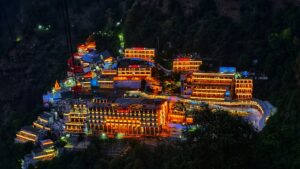
- Evening/ night (after 7 pm): Popular for those who like night treks or want cooler weather. The route is active, but you need to be mindful of fatigue and late-night returns.
If you are a first-time solo woman traveller, starting between morning and early afternoon usually feels the most secure and manageable.
Best Season for Comfort & Safety
- October–March: Cooler months, more comfortable for walking. Winter (Dec–Jan) can be cold; carry adequate warm clothing.
- April–June: Pleasant at times but can get hot, especially at lower altitudes. Hydration, sun protection, and breaks are essential.
- Monsoon (July–September): Potentially slippery paths, rain disruptions, and visibility issues. Not unsafe by default but more physically demanding and unpredictable.
For solo women prioritising comfort and crowd balance, post-monsoon to early winter (October–early December) is often a sweet spot, avoiding both extreme heat and peak festival crowd spikes (except Navratri).
Route Options: Choosing the Safest & Most Comfortable Path
There are multiple paths and transport options from Katra to Bhawan. Choosing the right one makes a big difference to how safe and comfortable you feel.
Main Route vs. Tarakote Route
- Main Track (via Banganga, Charan Paduka, Adhkuwari):
- Traditional, more crowded, lined with shops and services.
- Plenty of people at almost all hours; good if you feel safer in a crowd.
- More noise and occasional chaos, especially in peak season.
- Tarakote Route:
- Newer, broader, and designed for walkers.
- Cleaner and often less chaotic than the main route.
- Fewer ponies on some stretches, which some women find more comfortable.
If your priority is calmer surroundings and cleaner paths, Tarakote is often a good option. If you want maximum services, shops, and constant crowd presence, the main track is more reassuring.
Ponies, Palkis & Battery Cars: Are They Safe for Women?
Many solo women choose to use ponies, palkis, or battery cars for part of the journey, especially if they have knee problems, are short on time, or simply do not want to be exhausted.
- Ponies:
- Handle with care: choose licensed handlers, negotiate clearly, and do not overload.
- Not ideal if you are anxious about heights or sudden movements; tracks with ponies can feel crowded and occasionally chaotic.
- Palkis (palanquins):
- Carried by groups of men; physically more stable than ponies but more expensive.
- Reasonably safe if booked through authorised channels and negotiated fairly.
- Battery cars:
- Operated by the Shrine Board on specific routes (subject to availability and route rules).
- Often preferred by seniors and women seeking a more regulated option.
As a solo woman, try to book through official or clearly regulated services, avoid last-minute, pushy touts, and do not hesitate to say no or walk away if any handler makes you uncomfortable during negotiation.
Staying at Bhawan & Katra: Accommodation Safety for Women
Where you sleep, store your bags, and freshen up is central to feeling secure.
Types of Accommodation
- Shrine Board accommodations (Bhawan and Katra):
- Generally well-managed, basic to mid-range rooms and dormitories.
- Booking can be done online in advance; ID is mandatory.
- Popular choice among families and women looking for more structured, official stays.
- Budget hotels and guesthouses in Katra:
- Wide range of options near bus stand, railway station, and main market.
- Quality and security levels vary; check reviews and ask clearly about locks, 24-hour reception, and CCTV.
- Mid-range and premium hotels:
- Better security, clearer policies, dedicated staff, and sometimes in-house travel guidance.
- Often preferred by solo women who prioritise safety over the lowest price.
Practical Safety Tips for Stays
- Choose properties with good online ratings and multiple recent reviews specifically mentioning cleanliness and safety.
- Request a room on a higher floor but near staircases/ lifts, not at the extreme end of an isolated corridor if that makes you uneasy.
- Use the door chain/secondary lock at night whenever available.
- Avoid loudly disclosing that you are completely alone to strangers in the hotel.
Health, Fitness & Physical Safety on the Trek
For many solo women, the biggest challenge is not crime or harassment — it is physical strain, especially if they are not used to long uphill walks.
Realistic Trek Difficulty
- The Katra–Bhawan stretch is roughly 12–13 km uphill.
- Pace varies widely; some complete it in 4–5 hours, others take 8–10 hours with breaks.
- Steps, sloping ramps, and mixed gradients mean you should expect leg fatigue and possible knee/ankle strain.
Tips to Reduce Health Risks
- Start slow: Do not race others; walk at a pace you can sustain for hours.
- Hydration: Sip water regularly; avoid overloading on sugary fizzy drinks.
- Food: Light, frequent meals are better than one heavy meal before the climb.
- Footwear: Closed walking shoes or sports shoes with grip; avoid brand-new shoes that may cause blisters.
- Medical conditions: If you have asthma, heart issues, or serious knee problems, consult a doctor before the yatra and keep necessary medicines handy.
There are medical facilities and first-aid centres along the route, but they are meant for emergencies, not as substitutes for basic self-care.
Social Safety: Harassment, Unwanted Attention & How Common It Really Is
Most women report feeling respected and largely safe on the Vaishno Devi route. The religious context and the dominance of families act as a natural deterrent against overt misbehaviour. That said, no public space is entirely free from the risk of discomfort or mild harassment.
What You Might Encounter
- Accidental physical contact in crowds (often harmless but can be uncomfortable).
- Occasional staring, especially if your clothing stands out or you are visibly foreign.
- Rare but possible instances of men walking too close or trying to start unnecessary conversation.
How to Handle These Situations
- Maintain a neutral but firm demeanour; avoid overengaging with strangers if you feel uneasy.
- If someone is persistently bothering you, move closer to families or groups of women and adjust your walking pace.
- Do not hesitate to approach a security guard, police personnel, or Shrine Board staff for help.
- Trust your instincts: if a stretch feels too crowded or chaotic, take a short break and let that particular group pass ahead.
Overall, deliberate harassment is not widely reported along the yatra path, but staying alert and assertive is always wise.
What to Wear: Comfort, Respect & Practicality
Your clothing has three jobs: respect the religious setting, protect you from weather changes, and keep you comfortable during continuous movement.
Recommended Clothing for Solo Women
- Bottoms: Track pants, leggings, loose trekking pants, or salwar — anything that allows easy walking and does not chafe.
- Tops: T-shirts, long tunics/ kurtas, or sweatshirts; avoid outfits that are too tight or require constant adjustment.
- Layers: Light jacket or shawl in winter or nights; the temperature can drop considerably at higher altitudes.
- Head cover: Scarf or dupatta if you prefer; also helpful for sun and dust.
Footwear
- Sturdy walking or sports shoes with good grip.
- Avoid flat, thin slippers, heels, or brand-new shoes you have not broken in.
Dressing modestly and practically tends to reduce unwanted attention and makes it easier to blend in with the crowd.
Money, Phones & Documents: Staying Organised & Safe
Managing your belongings smartly is a key part of feeling safe when you are alone.
Money & Payments
- Carry a mix of cash and digital payment options (UPI, cards) as smaller shops may be cash-only.
- Keep small denominations handy for tea, snacks, and minor purchases.
- Split cash into two or three different pockets or pouches rather than one big wallet.
Phones & Connectivity
- Mobile connectivity is generally available but can be patchy in some stretches.
- Keep a power bank charged, especially if you are using your phone for photos, maps, and calls.
- Share your itinerary and rough timing with a trusted contact before you start.
Documents
- Carry at least one government-issued ID (Aadhaar, passport, etc.).
- Store soft copies of your ID, hotel bookings, and yatra registration in your email and phone.
Approximate Costs: What Solo Women Should Budget For
Costs will vary depending on your city of departure and comfort level. The figures below are indicative and meant to help you plan. Pricing is approximate and may vary.
| Expense Head | Budget Range (INR) | Notes |
|---|---|---|
| Accommodation in Katra (per night) | ₹800 – ₹3,000+ | Budget lodges at lower end; mid-range hotels & Shrine Board rooms in mid-range. |
| Meals (per day) | ₹300 – ₹1,000 | Simple veg thalis and snacks to more elaborate restaurant meals. |
| Transport Katra–Jammu (one way) | ₹100 – ₹1,500 | Shared bus at lower end; private taxi at higher end. |
| Ponies/ Palkis (one way, partial or full) | ₹800 – ₹4,000+ | Depends on distance, negotiation, and type of service. |
| Battery car tickets | Usually a few hundred rupees | Rates and availability as per Shrine Board notifications. |
| Helicopter (Katra–Sanjichhat, one way) | Often in the ₹1,000–₹3,000+ range | Subject to season and operator; check current official rates. |
Solo women often choose to spend slightly more on safer feeling transport and more reliable hotels, which is usually a sensible decision for peace of mind.
Sample 1–2 Day Itinerary for a Solo Woman Yatri
This is a suggested structure, not a rigid schedule. Adjust it based on your fitness, crowd conditions, and darshan timings.
Day 1: Arrival & Preparation
- Arrive in Katra by morning or afternoon.
- Check into your pre-booked accommodation; keep copies of ID and booking ready.
- Register for the yatra (online beforehand or at Katra).
- Organise your backpack: water, light snacks, power bank, light jacket, basic medicines.
- Sleep early if you plan to start the trek in the early hours of the morning.
Day 2: Trek, Darshan & Return
- Start between 4 am and 7 am (or a time you feel comfortable with).
- Walk at a steady pace, using rest points as needed.
- Reach Bhawan, freshen up in designated facilities, deposit belongings as required before darshan.
- Have darshan at the Bhawan; check signage or staff for approximate waiting times.
- If you wish, visit Bhairon Baba after Bhawan, then descend back to Katra.
- Rest, hydrate, and either stay another night in Katra or depart depending on your energy and transport schedule.
If you prefer not to rush, stretch the plan into 2 nights in Katra, with one full-day window just for the yatra.
Common Mistakes Solo Women Should Avoid
- Underestimating the trek: Taking it as a casual walk without accounting for distance, gradient, and your fitness level.
- Overpacking: Carrying a heavy backpack makes the journey harder; pack light but smart.
- Starting late without a plan: Beginning your yatra late evening and ending up exhausted in the middle of the night without clear rest arrangements.
- Ignoring hydration and food: Skipping meals to “save time” can lead to dizziness and fatigue.
- Trusting pushy touts: Overpaying for ponies or services, or agreeing to anything that feels uncomfortable just because you feel rushed.
- Not checking official updates: Weather advisories, route diversions, or capacity controls are sometimes issued; it helps to stay informed.
Lesser-Known Tips That Make a Big Difference
- Break the climb mentally: Think in stages (Katra to Adhkuwari, Adhkuwari to Bhawan) rather than one long route; it feels less overwhelming.
- Use cloakrooms effectively: Deposit large bags and keep only essentials for the trek.
- Join natural groups: Many solo women casually sync their pace with families or other women for stretches without formally “travelling together.”
- Earplugs or soft cotton: Helpful if you are sensitive to constant noise, music, or loud announcements.
- Carry a small scarf: Serves multiple roles — warmth, modesty, pillow substitute during short rests.
Who Is This Yatra Especially Suitable For?
Vaishno Devi can be a deeply moving experience for women at different life stages, but some profiles particularly benefit from the structure and environment:
- First-time solo women travellers: Because the route is organised, busy, and not isolated.
- Women seeking a spiritual reset: The combination of physical effort and devotion can be grounding and cathartic.
- Women comfortable with basic facilities: If you are fine with simple food, shared spaces, and functional accommodation, the yatra feels smoother.
- Moderately fit women: Those who can handle several hours of walking or are willing to use assistance (ponies, battery cars, etc.).
Women with severe mobility restrictions or serious medical conditions can still visit, but it requires more planning, official transport options, and sometimes a companion for added support.
FAQs: Solo Women & Vaishno Devi Yatra
1. Is it safe for a woman to do the Vaishno Devi Yatra entirely alone?
Yes, many women complete the Vaishno Devi Yatra alone every year. The route is busy, highly monitored, and commercialised, which helps from a safety standpoint. While absolute guarantees are impossible anywhere, basic precautions and awareness are usually enough to feel secure.
2. Should I avoid night trekking as a solo woman?
Night trekking is not inherently unsafe because the path is lit and there are plenty of people around. However, if you are not used to walking long distances at night or feel uneasy in crowds when you are tired, prefer early morning or daytime starts for better comfort and peace of mind.
3. Are there women-only or family-only spaces along the yatra?
There are common rest areas and cloakrooms, and certain queues or sections may have separate lines for women depending on crowd conditions. Accommodation is mostly mixed-family oriented, but the general pilgrim profile (families, elders, women) helps keep the environment safe and community-focused.
4. Can I easily find vegetarian food and clean water?
Yes. The entire route is dominated by vegetarian food stalls and dhabas serving simple meals, snacks, and beverages. Drinking water taps are provided at regular intervals. During peak seasons, cleanliness may vary by stall and crowd level, so use your judgment.
5. Is it safe to share rooms or transport with strangers to save money?
It is generally better to avoid sharing private rooms with strangers, especially as a solo woman. For transport, sharing authorised buses, shared jeeps, or clearly regulated taxis is common and usually safe, but avoid unregistered or poorly documented options where your co-passengers and driver details are unclear.
6. What if I get my period during the yatra?
Many women undertake the yatra during their periods. Sanitary products are usually available in Katra, though not always on the higher stretches, so carry your own supply. Use restrooms whenever possible and pack discreet disposal options. Religious practice varies by personal belief; safety-wise, it is manageable with preparation.
7. Are there locker or cloakroom facilities to keep my luggage safe?
Yes, cloakrooms and locker facilities are available at Katra and near Bhawan for pilgrims to store bags and belongings. Use official or clearly marked facilities, secure your items properly, and avoid storing irreplaceable valuables unless absolutely necessary.
8. Are helicopters a safer option for solo women?
Helicopter services reduce the physical strain and time spent on the track, which some women find more comfortable and manageable. From a personal safety standpoint, these services are regulated and commonly used by families, seniors, and solo women. However, bookings can be competitive and weather-dependent.
9. Is there any dress code for women at Vaishno Devi?
There is no rigid official dress code, but modest, comfortable clothing is expected and practical. Avoid overly revealing outfits or anything that restricts movement. Many women choose salwar-kameez, track pants with long tops, or simple western wear that covers shoulders and knees.
10. What emergency support is available on the route?
Medical aid posts, security personnel, and Shrine Board staff are available along the route and at major points like Adhkuwari and Bhawan. In case of a health issue, injury, or serious concern, you can approach the nearest official staff member or security point for assistance.
Final Thoughts: Balancing Faith, Preparation & Independence
Vaishno Devi is one of those rare journeys where devotion, physical endurance, and community protection come together. For women traveling alone, the yatra offers a mix of challenge and reassurance: you are very much on your own, yet rarely alone.
With realistic expectations, simple precautions, and a bit of prior planning, solo women can undertake the Vaishno Devi Yatra with confidence. Listen to your body, respect your limits, stay aware of your surroundings, and use the systems in place — from registration and security to official transport and accommodation — to make your pilgrimage not just safe, but deeply meaningful.