
Is Vaishno Devi Yatra Suitable for Elderly With Knee Problems?
Planning the Vaishno Devi Yatra for an elderly parent or relative with knee pain can feel like a mix of devotion, worry, and uncertainty. The climb to the holy shrine is famous for its steep stretches and long distance, and it is natural to wonder: is it really safe and practical for seniors with knee problems?
This guide gives a calm, realistic, and detailed picture of what to expect, the latest options available, and how to make informed decisions that balance faith, safety, and comfort.
Short Answer: Yes, But Only With Careful Planning
Vaishno Devi Yatra can be suitable for many elderly people with knee problems, provided:
- Their doctor has cleared them for travel and mild exertion.
- You choose the right mode of travel to the Bhawan (battery car, helicopter, or pony/palki, depending on fitness and budget).
- You avoid walking long or steep sections if knees are severely affected.
- You plan rest, warm clothing, and medicines properly.
However, for some seniors with severe osteoarthritis, recent knee surgery, uncontrolled heart disease, or serious mobility limitations, the full trek is not advisable. In those cases, limited travel, darshan via helicopter + short walk, or even symbolic darshan from home might be safer.
Understanding the Vaishno Devi Yatra Route (From a Senior’s Perspective)
To decide whether the Yatra is suitable for an elderly person with knee pain, it helps to understand what the route actually involves.
Distance and Elevation
- Katra to Bhawan (main shrine): about 12–13 km one way.
- Total trek (up and down): roughly 24–26 km if done entirely on foot.
- Elevation gain: from about 2,500 ft (Katra) to around 5,200 ft (Bhawan).
The old route used to be steeper and narrower in parts. In recent years, new paths and facilities have made it much more senior-friendly, but the distance is still significant for anyone with knee issues.
Paths and Surfaces
The main paths are:
- Traditional Track (via Adhkuwari): Longer, with mixed gradients and more crowd.
- New Track (Tarikote / Himkoti side): Relatively smoother, less steep in many stretches, and closed to ponies, which many elderly find safer and quieter.
The paths are paved, with railings and frequent rest spots. There are ramps at many places, but there are still inclines and some stair-like sections, which can aggravate knee pain if walked for hours.
Key Stretch to Consider for Knee Issues
The portions that are often toughest for elderly pilgrims with knee problems are:
- Steep inclines near Adhkuwari on the older route.
- Final ascents closer to Bhawan if done on foot.
- Descending back to Katra — downhill is often more painful for knees than uphill.
This is why many families opt for a combination of helicopter + battery car + short walk instead of attempting the entire 12–13 km trek.
Who Should Consider the Yatra – And Who Should Be Very Cautious
Relatively Safe (With Assistance) for Many Seniors If:
- The person has mild to moderate knee pain but can walk small distances on level ground.
- They can climb a few stairs slowly with support.
- They have stable blood pressure, sugar, and heart function.
- They are not severely short of breath while walking on flat ground.
- You plan to avoid long walking and use available transport (helicopter, battery car, palki/pony).
High-Risk (Talk to a Doctor Very Seriously) If:
- They have severe osteoarthritis with significant deformity or inability to walk even 200–300 meters.
- They had recent knee replacement or knee surgery (generally within the last 3–6 months or as per doctor’s advice).
- There is uncontrolled hypertension, serious heart disease, recent stroke, or advanced lung disease.
- They are very unstable on their feet, prone to frequent falls.
In such situations, even with lots of assistance, the combination of altitude, crowds, and long hours outside can be risky. A clear medical clearance is essential.
Options for Elderly With Knee Problems: How to Reach the Shrine Without Trekking
One of the biggest changes in recent years is that the Vaishno Devi Shrine Board and local authorities have added multiple transport options between Katra and Bhawan. For an elderly person with knee issues, choosing the right combination is crucial.
1. Helicopter Service (Katra – Sanjhichhat)

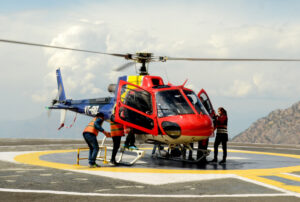
Route: Katra Helipad → Sanjhichhat Helipad (near Bhawan)
From Sanjhichhat, the remaining distance to the Bhawan is roughly 2–2.5 km, mostly downhill or moderate gradient.
Is Helicopter Suitable for Seniors With Knee Problems?
Generally, yes, if they can manage a short walk or take a palki/pithoo for the final stretch.
- Reduces a large part of the climb and distance.
- Useful for seniors who cannot walk 10–12 km but can manage short walks with rest.
- Boarding involves some walking and steps; staff usually help, but it’s not fully wheelchair-style boarding.
Approximate Cost and Booking
Pricing is approximate and may vary.
- One-way per person: usually in the range of a few thousand rupees.
- Round-trip tickets are sometimes available.
- Bookings typically open on the official website of the Shri Mata Vaishno Devi Shrine Board and get booked out quickly in peak season.
For elderly pilgrims, try to book the earliest possible morning slots when the weather is cooler and queues are shorter.
2. Battery Cars (E-Rickshaw Type) – Bhawan Area and New Routes
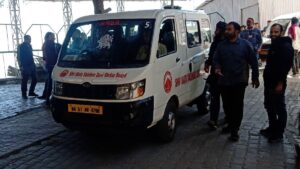

Battery-operated vehicles run on certain stretches closer to the Bhawan, and on some newer tracks, especially designed to help elderly, disabled, and medically fragile pilgrims.
Benefits for Knee Problems
- Greatly reduces the amount of walking on steep gradients.
- Seats are relatively comfortable but may be cramped during rush.
- Ideal for seniors who can get in and out of a low vehicle with some help.
3. Ponies and Palkis (Palanquins)

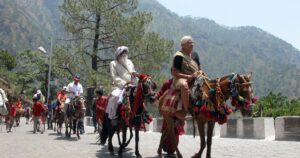
Ponies (horses/mules) and palkis (carried by porters) are a traditional way for those unable to walk to reach the Bhawan.
Ponies
Pros:
- Cover long distances (Katra to Bhawan) without the person walking.
- Can be more affordable than helicopter for some families.
Cons for Elderly With Knee Problems:
- Can be bumpy and unstable, especially for those with back and hip issues.
- Mounting and dismounting the pony can be difficult for very stiff knees.
- Some seniors feel anxious or unsafe on a moving animal on steep tracks.
Palkis (Palanquins)
A palki is a chair-like or stretcher-like seat carried by 4 porters.
Pros:
- Offers better stability than ponies for very elderly or frail pilgrims.
- No active effort needed from the pilgrim apart from sitting steadily.
Cons:
- Can be more expensive than ponies. Pricing is approximate and may vary by season and demand.
- Requires the person to sit for several hours; can be tiring if they have back problems.
4. Wheelchairs
Basic wheelchair assistance is often available at some points (e.g., near Bhawan and waiting areas), but practical use is limited because:
- The track is long and has inclines.
- Continuous wheelchair pushing for many kilometers is hard, especially in crowds.
Wheelchairs can be very helpful for short internal distances (e.g., from nearby accommodation to the Bhawan gate), but you should not rely on them for the whole trek.
Planning the Yatra Step by Step for an Elderly Person With Knee Pain
The key to a safe and meaningful Yatra is thoughtful planning. Below is a practical, step-by-step approach.
Step 1: Medical Consultation (Non-Negotiable)
- Visit your orthopedic doctor or family physician at least a few weeks before the trip.
- Explain that you are planning the Vaishno Devi Yatra and share honest details about walking distances, steps, and elevation.
- Ask specifically about:
- Maximum safe walking distance per day.
- Whether steep climbs or descents are safe for the knees.
- Any blood thinner or heart medications that impact exertion.
- Carry a brief written note or prescription list, especially if the senior has heart or lung issues.
Step 2: Choose the Best Season
Weather has a big impact on knee pain and senior comfort.
- Best for elderly with knee issues: March–April and September–November (mild temperatures, generally safer for joints and breathing).
- Be cautious in:
- Peak winter (Dec–Feb): Very cold, risk of stiffness, icy patches, and respiratory issues.
- Monsoon (July–August): Slippery paths, humidity, possible landslides in surrounding areas.
- Avoid major festival rush if the senior gets overwhelmed in crowds.
Step 3: Decide Your Mode of Ascent
For elderly with knee problems, these combinations often work best:
- Option A: Helicopter + Short Walk / Palki
Ideal for seniors who can walk 500–800 meters with help. - Option B: Palki From Katra
For those who should avoid walking almost entirely. - Option C: Mix of Battery Car + Short Walk
Useful if the senior can handle some walking but not continuous climbs.
Step 4: Book Accommodation Wisely
Where you stay matters a lot for recovery and comfort.
- In Katra:
- Choose a hotel or guesthouse close to the Yatra registration counters or the starting point so there is minimal extra walking.
- Look for lifts/elevators and ground-floor options.
- Near Bhawan:
- The Shrine Board runs bhawans and dormitories; private rooms are better for seniors who need rest.
- Book in advance so the elderly person does not have to stand in long queues with luggage.
Step 5: Plan for Rest and Pacing
- Do not attempt the entire journey up and down in a single stretch with an elderly knee patient.
- Plan for frequent breaks every 20–30 minutes if walking any part of the route.
- Use rest shelters (bhojanalayas, sheds) for sitting and stretching the legs.
- Encourage slow, steady movement instead of trying to keep up with the crowd.
Practical Tips for Managing Knee Pain During the Yatra
Medication and Aids
- Carry an adequate supply of prescribed painkillers and anti-inflammatory medicines.
- Use knee braces or supports if recommended by the doctor.
- Bring a walking stick with a rubber tip; it can significantly reduce strain on the knees.
- Keep any topical gels, sprays, or patches that the senior finds helpful for flare-ups.
- Never start new medicines during the Yatra without medical advice, especially for those with heart, kidney, or liver issues.
Footwear and Clothing
- Use well-cushioned walking shoes or sports shoes with good grip; avoid slippers or heels.
- Prefer thick, moisture-absorbing socks to prevent blisters and keep feet warm.
- Dress the elderly person in layers – light inner layers and a warm outer jacket – so they can adjust to changing temperatures.
- A woolen cap, gloves, and a scarf are important in cooler months to prevent stiffness.
Hydration and Food
- Encourage regular sips of water instead of large amounts at once.
- Carry light, easily digestible snacks like biscuits, dry fruits, or bananas.
- Avoid very heavy, oily meals right before any walking stretch.
- If the elderly person is diabetic, keep small sugar candies or glucose on hand as advised by the doctor.
Crowd and Queue Management
- Try to avoid peak crowds and public holidays if the senior gets stressed or claustrophobic.
- Look for any special arrangements or priority queues that may be available for elderly and differently abled pilgrims (these policies can change, so check the Shrine Board’s latest advisories).
- Always keep the senior accompanied by a calm, patient family member.
Realistic Expectations: What the Elderly Person Will Actually Need to Do
Even with the best planning, it helps to be honest about the minimum physical effort involved.
At Katra
- Walk from hotel to Yatra registration counter (unless you use a vehicle).
- Climb some steps or ramps around the starting point of the Yatra or helipad.
- Stand briefly in queues for registration or security checks.
With Helicopter Booking
- Walk from vehicle to helipad check-in and security area.
- Climb a few steps/stairs while boarding and deboarding.
- Walk 2–2.5 km from Sanjhichhat helipad towards Bhawan (or use a palki/pony for part of this stretch).
Without Helicopter (Using Pony/Palki)
- Walk a short distance to the pony or palki stand.
- Get on/off the pony or palki, which may require bending the knee, lifting the leg, and a bit of balance.
- Climb or descend a few steps near Bhawan.
Inside and Around the Bhawan
- Walk through security, cloakrooms (for shoes/bags), and queue systems to reach the sanctum.
- Stand for some time in slow-moving lines, though you can pause if the senior feels unwell.
- Some amount of standing, gradual movement, and short stair sections is likely.
If the elderly person cannot handle these minimum activities safely, you should very carefully reconsider whether the physical Yatra is appropriate at this time.
Safety, Risks, and When to Turn Back
Warning Signs to Watch For
During the Yatra, pay attention to the senior’s body language and complaints. Stop immediately and seek help if you notice:
- Severe knee pain that does not improve with rest.
- Sudden swelling or locking of the knee.
- Chest pain, tightness, or pressure.
- Severe shortness of breath, giddiness, or faintness.
- Confusion, slurred speech, or difficulty in moving one side of the body.
Medical Facilities
Basic medical facilities and first-aid centers are available at different points along the Yatra route and at Bhawan. Staff can provide:
- First aid for minor injuries and sprains.
- Basic pain relief, bandaging, and rest facilities.
- Guidance in case someone needs to be moved down quickly.
However, these are not full-fledged multi-specialty hospitals. For serious cardiac events or complex emergencies, golden hour care still depends on how quickly the person can be transported to a larger facility.
It Is Okay to Turn Back
Many families feel emotional pressure to “complete” the Yatra at any cost. For elderly people with knee or health issues, it is important to remember:
- There is no spiritual failure in turning back if health demands it.
- Prioritizing safety is also an act of responsibility and faith.
- If the elderly person is clearly in distress, ending the physical journey early can be the wisest choice.
Cost Overview for Senior-Friendly Options
Exact prices change regularly, but this overview can help you budget. All pricing is approximate and may vary.
- Helicopter Tickets: Generally priced per person for one-way or round-trip. Check the official Shrine Board website for the latest rates.
- Palkis (Katra–Bhawan): Charges depend on distance and season; usually a few thousand rupees or more for a full way. Clarify the total amount before starting.
- Ponies: Cheaper than palkis, usually charged per trip and per person. Confirm rate in advance.
- Battery Cars: Per-seat charges for specific stretches, often lower than helicopter or palki. Lines may be longer during rush.
- Accommodation:
- Shrine Board accommodation: Comparatively economical and clean; book in advance.
- Private hotels in Katra: Range from budget to premium; choose based on lift access and proximity rather than only price.
If you are traveling specifically with an elderly person with knee issues, it is wiser to budget more for comfort and safety rather than trying to minimize every rupee.
Mistakes to Avoid When Taking an Elderly Person With Knee Problems to Vaishno Devi
- Underestimating the distance: 12–13 km each way is significant, even with a good path.
- Leaving planning to the last minute: This can mean no helicopter slots, poor accommodation, or long queues.
- Pressuring the elder to walk “for punya”: Devotion does not require suffering that endangers health.
- Ignoring early discomfort: Mild pain or breathlessness should not be pushed through blindly.
- Not carrying enough layers or rain protection: Sudden weather changes can worsen joint pain.
- Skipping a medical check-up: A brief consultation before the journey can prevent serious complications later.
Who Is the Vaishno Devi Yatra Best Suited For, From a Senior Health Angle?
Considering both spiritual and physical aspects, the Yatra is generally well-suited for:
- Seniors with mild to moderate knee arthritis who can manage short walks with support.
- Elderly people with reasonably controlled chronic conditions (like blood pressure or diabetes).
- Families who are ready to invest in safer transport options such as helicopters, palkis, and better stays.
- Those who are willing to go slowly, rest frequently, and adapt plans on the spot.
It is less suitable, or only advisable with great caution, for:
- Seniors who are almost non-ambulatory without assistance.
- Those with recent major surgery (not only knees but also heart/bypass/angioplasty) unless specifically cleared.
- Elderly with advanced respiratory or cardiac disease.
Emotional and Spiritual Considerations
For many elderly devotees, Vaishno Devi is a once-in-a-lifetime wish. When joints are painful and health is delicate, the decision can be emotionally heavy for the whole family.
It may help to remember:
- The value of the Yatra is not measured only in how much you walk, but in the sincerity of your devotion.
- Supporting an elderly parent’s faith, while also protecting their health, is itself a deeply respectful act.
- If the full climb is not possible, even a partial journey with helicopter or palki can be meaningful.
- For those who cannot travel at all, many families choose to perform prayers, kanya bhoj, or donations in the deity’s name from home.
Frequently Asked Questions
1. Can an elderly person with severe knee pain do the Vaishno Devi trek on foot?
For someone with severe knee pain, attempting the full 12–13 km trek on foot is usually not advisable. The continuous incline and distance can worsen pain, cause joint damage, or trigger other health problems. In such cases, consider helicopters, palkis, or postponing the Yatra until their condition is better managed.
2. Is a helicopter ride enough to avoid strain on the knees?
A helicopter ride significantly cuts down the distance, but does not completely remove walking. From Sanjhichhat, there is still a walk of a couple of kilometers to reach the Bhawan, unless you hire additional assistance like a palki. For elderly with moderate knee problems, this is often manageable; for severe issues, more support may be needed.
3. Which is better for elderly with knee problems: pony or palki?
For very elderly or those with serious balance or joint issues, a palki is often safer and more stable than a pony. Ponies can be jerky on inclines and may feel insecure to frail seniors. However, palkis are usually more expensive. If budget allows, many families prefer palkis for maximum stability and control.
4. Are there any special facilities for senior citizens at Vaishno Devi?
Facilities like sheltered resting spots, drinking water, medical aid posts, and battery-powered vehicles on certain stretches help elderly pilgrims. Policies regarding priority in queues or special arrangements can change, so it is wise to check the latest information from the Shri Mata Vaishno Devi Shrine Board before traveling.
5. What is the best time of year for elderly with knee issues to visit?
Generally, March–April and September–November are considered more comfortable for seniors with joint problems, as temperatures are moderate and paths are less slippery. Extreme winter and peak monsoon can be harsh on joints and carry extra risks like cold, ice, or heavy rains.
6. How can we manage knee pain during the Yatra itself?
Use a mix of doctor-approved pain medication, knee braces, and a walking stick, and encourage frequent short breaks. Ensure proper footwear, stay hydrated, and avoid sudden jerky movements like running or jumping off steps. If pain becomes sharp or the knee swells suddenly, stop and seek medical help on the route.
7. Is it safe for someone with a knee replacement to go to Vaishno Devi?
Many people with knee replacements do travel, but it depends on how long ago the surgery was and how stable the joint is. Those who have fully recovered and have their surgeon’s explicit permission may be able to go with limited walking and assisted transport. Fresh post-surgery patients are generally advised to avoid such trips until they are completely rehabilitated.
8. How long does the Yatra typically take for elderly pilgrims?
With a helicopter and limited walking, the entire journey from Katra to Bhawan and back can still take most of the day, including waiting times and darshan. If going by palki or pony, or walking part of the way, you may need to plan for an overnight stay near the Bhawan to ensure enough rest for the senior.
9. Are there places to rest or lie down on the way?
Yes, there are multiple rest shelters, benches, and bhojanalayas where pilgrims can sit, rest, and sometimes even lie down briefly. However, these can be crowded during peak season. Booking accommodation at Bhawan or nearby is the best way to ensure proper rest for very elderly pilgrims.
10. Should we carry our own wheelchair?
If the elderly person regularly uses a wheelchair, bringing a foldable chair can help in hotels, stations, and short flat stretches. But do not expect to use it for the full track to Bhawan, as the route is long and sloped. It is more practical as a support tool for limited areas rather than the primary means of completing the Yatra.
Conclusion: Balancing Devotion and Health
Vaishno Devi Yatra holds deep emotional and spiritual meaning, especially for elderly devotees. With today’s helicopters, battery cars, palkis, and improved paths, it has become much more accessible than it was a generation ago. Yet, for seniors with knee problems, it is still not a casual outing.
If you combine honest medical advice, realistic planning, and compassionate pacing, many elderly people with manageable knee issues can visit the shrine safely and peacefully. And if the situation is too risky right now, it is perfectly valid to wait, adapt, or seek blessings in other ways—without guilt.
The most important part of the journey is not how many steps are climbed, but how carefully you care for the person making it.